


Two Vice Deans, One Shared Vision
Vice Deans of Graduate and Medical Education at Cedars-Sinai Health Sciences University Discuss Their Plan for Training, Growth
Together, Laurence Katznelson, MD, and Joshua I. Goldhaber, MD, are leading the education, training and shaping of the healthcare and biomedical sciences professionals of tomorrow at the Cedars-Sinai Health Sciences University.
“These highly accomplished physician-scientists are more than clinicians; they are professors, mentors and supporters of all trainees studying at Cedars-Sinai,” said Jeffrey Golden, MD, executive vice dean for Research and Education at Cedars-Sinai. “Their unique yet complementary leadership roles will further advance our academic health system and bring continued excellence to our Health Sciences University.”
Katznelson, vice dean of Medical Education, and Goldhaber, vice dean of Graduate Education, sat down with the Cedars-Sinai Newsroom to discuss their shared vision for preparing generations of academic scientists, physician leaders and allied health professionals.
What does the role of vice dean of Graduate Education encompass?
Goldhaber: I am responsible for overseeing, strengthening and expanding the educational programs offered by the Cedars-Sinai Graduate School of Biomedical Sciences. Our programs serve more than 300 scientists in training, ranging from master’s and PhD students to advanced postdoctoral fellows in dozens of scientific research disciplines. I also have oversight responsibility for our clinical scholars and physician-scientist training programs, as well as high school, undergraduate and graduate research programs for visiting students from around the world.
What does the role of vice dean of Medical Education encompass?
Katznelson: I am responsible for all aspects of medical education, including Cedars-Sinai’s Graduate Medical Education, Continuing Medical Education, the Women’s Guild Simulation Center for Advanced Clinical Skills, the Chuck Lorre Allied Health School and the Medical Library, as well as medical student rotations from local, national and international institutions.
What are the priorities for Graduate Education and Medical Education?
Goldhaber: We currently have a Basic and Translational Sciences PhD program with four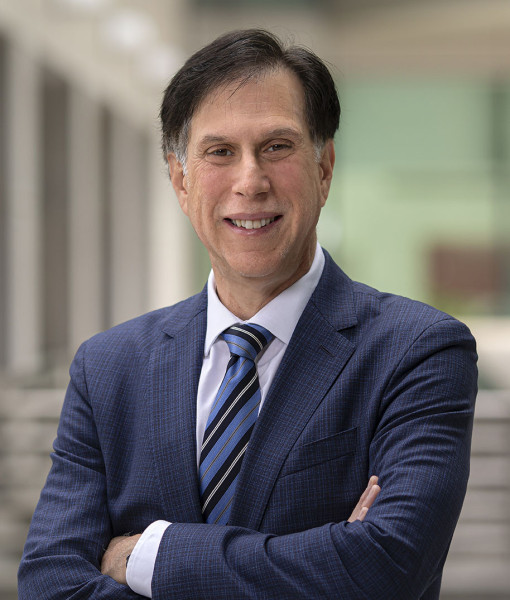 tracks along with a new PhD in Health Artificial Intelligence. Aside from our two master’s programs, in health systems and magnetic resonance medicine, we are adding new programs in regenerative medicine and translational immunology. We anticipate broadening our educational portfolio with additional master’s and certificate programs in the near future.
We would also like to make it easier for our clinical trainees, residents and fellows focusing on patient care to enroll in our degree and certificate programs as part of their preparation for careers in academic medicine. To help fund these students, we are instituting more organized and streamlined support systems for our faculty to submit training grants to the National Institutes of Health and elsewhere.
Additionally, we are focused on improving our ability to provide federal financial aid to our students, continuously refreshing the curriculum within our existing programs, and providing our faculty with more robust and formal training in the most up-to-date and evidence-based teaching techniques.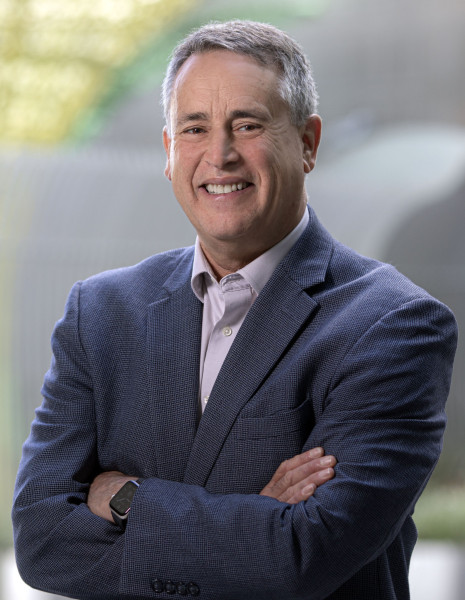
Katznelson: I am dedicated to building an infrastructure for medical education, including growing education technology; providing mentorship to our students, residents, fellows and faculty; advising on curricular development and teaching; enhancing medical education research; and creating a community fostering career development in medical education. Strategic planning will be at the heart of my work this year, which focuses on engaging the medical education community in devising the necessary medical education infrastructure, including forming a teaching academy.
Together with Dr. Goldhaber, we will be engaging our medical trainees in research by creating more opportunities, as well as advancing options for scholarly education, as an integrated component of their clinical training.
How do you envision these programs will grow over the next five years?
Goldhaber: My hope is to double the number of programs and students—including clinical trainees—from what we have today, and to continuing building the Cedars-Sinai Health Sciences University recognition internationally.
Katznelson: I hope to foster and strengthen the medical education community at Cedars-Sinai. Within five years, we look to have a university that ties together our medical and graduate education programs, with an infrastructure that includes support for our education community. Through this effort, we will strive to have an community that fosters innovation in education and translational sciences, both locally and internationally.
What excites you most about serving as vice dean of Graduate Education?
Goldhaber: I hope that as a leader here, I can serve the students and faculty so that they can exceed their own expectations, which translates into amazing cures for patients everywhere.
What excites you most about serving as vice dean of Medical Education?
Katznelson: There are so many opportunities at Cedars-Sinai. As a top medical center in the nation, we are committed to strengthening all aspects of education and research, and to continuing to offer training positions to the highest-tier candidates for our residency, fellowship, as well as master’s and PhD programs. I am excited to work in an academic medical center fully envisioning and committed to achieving this future.
Cedars-Sinai Health Sciences University is advancing groundbreaking research and educating future leaders in medicine, biomedical sciences and allied health sciences. Learn more about the university.