

Cedars-Sinai Cancer ‘Smart Bomb’ to Get Development Boost
Nanotechnology Characterization Laboratory Will Test and Study the Cedars-Sinai Therapy Intended for Brain Metastatic Breast Cancer
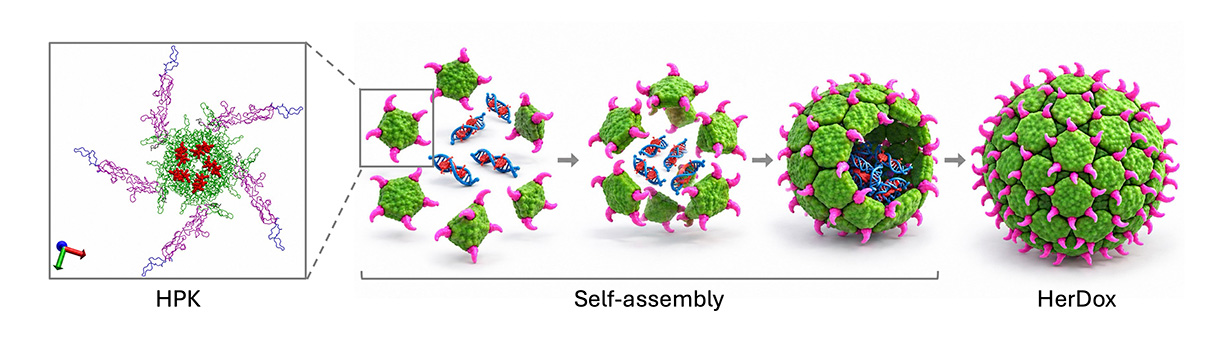
An experimental nanoparticle developed by Cedars-Sinai Health Sciences University investigators, which delivers cancer treatment directly to tumors in the brain, has been selected for evaluation by the Nanotechnology Characterization Laboratory (NCL). The program, funded by the National Cancer Institute, is designed to help promising nanotechnologies advance toward clinical trials.
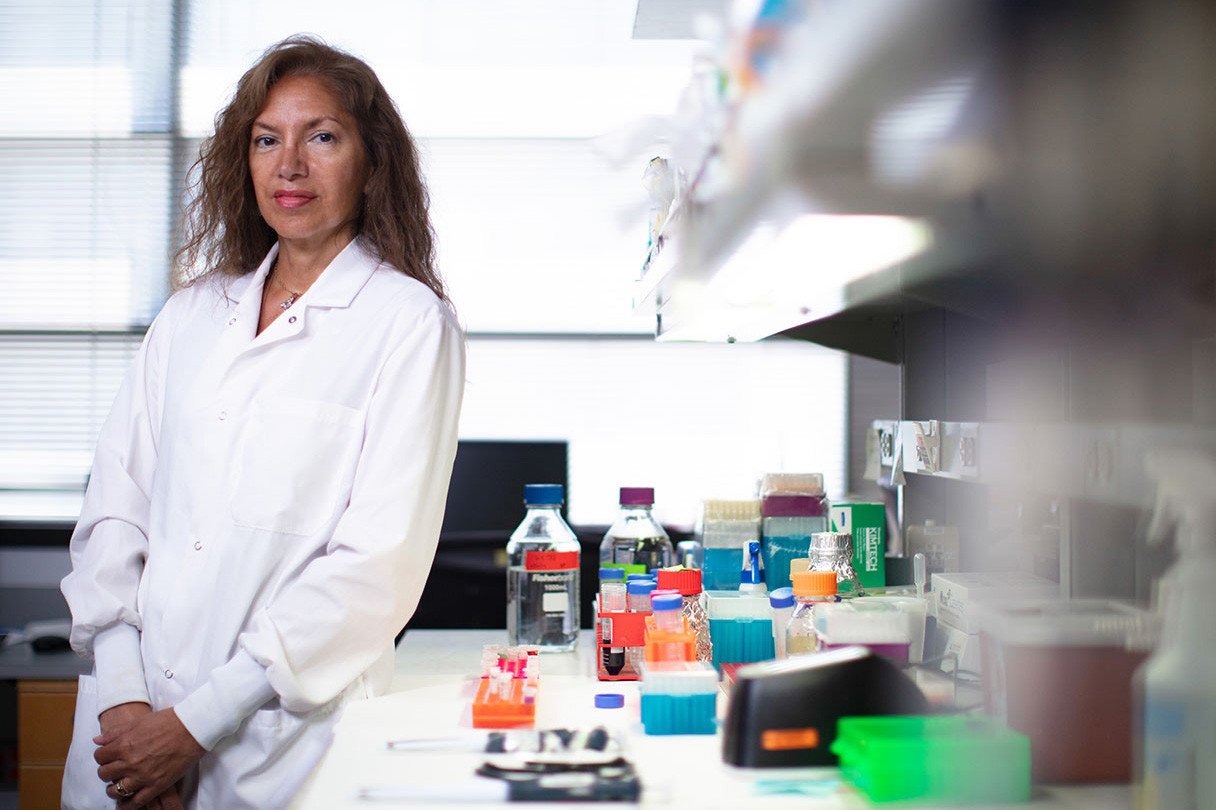
The therapeutic nanoparticle, called HerDox2.0, was developed by Lali Medina-Kauwe, PhD, professor of Biomedical Sciences at Cedars-Sinai and associate director of Basic Research at Cedars-Sinai Cancer.
“Acceptance into the elite Nanotechnology Characterization Laboratory program will provide thorough testing of HerDox2.0 by top experts in the field, moving us toward our goal of submitting it to the Food and Drug Administration as an Investigational New Drug,” Medina-Kauwe said.
The particle works like a cancer “smart bomb,” connecting with a protein called HER3, which helps it cross the protective blood-brain barrier and target and penetrate tumor cells. Medina-Kauwe has been working on the particle for decades and most recently described it in a 2025 paper in Nature Nanotechnology.
“We’ve put a huge amount of preclinical work into this, so I knew the technology was ready. Having the program help move it to the next stage is a huge jump for us,” Medina-Kauwe said. “The program will provide advanced-level analysis that otherwise would have required hiring a third party at a cost of hundreds of thousands of dollars.”
The Nanotechnology Characterization Laboratory analysis will help determine the physical and chemical properties of the formulation, evaluate the particle’s compatibility with and stability in human blood, assess potential immune responses the particle might elicit, and evaluate general toxicity of the formulation. Testing will also evaluate whether the particle can be manufactured consistently and in larger-scale batches for clinical use.
 The Nanotechnology Characterization Laboratory, operated at the Frederick National Laboratory for Cancer Research, was founded in 2004 in collaboration with the Food and Drug Administration and the National Institute of Standards and Technology to expedite the development of promising nanotech therapies and diagnostics. To date, the laboratory has tested more than 1,000 nanomaterials and worked with more than 250 academic researchers and companies.
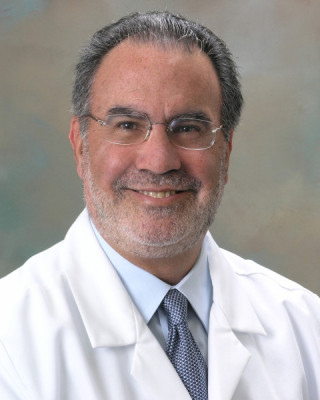
“We are happy to welcome Dr. Medina-Kauwe’s team to the NCL’s Assay Cascade Characterization Program,” said Marina Dobrovolskaia, PhD, NCL co-director and director of Operations.
Acceptance into the program required a written application describing key features of the particle, followed by a live presentation to a panel of nanotechnology, pharmacological and pharmaceutical experts regarding the particle’s possible path to clinical use.
“Even as we are offering patients leading-edge therapies, we are looking to new treatments on the horizon,” said Robert Figlin, MD, associate dean of Cedars-Sinai Cancer Care. “Acceptance of HerDox2.0 into this prestigious program highlights the level of translational work Dr. Medina-Kauwe and her team are doing to bring novel therapies to our patients.”
Medina-Kauwe said HerDox2.0 has advantages over currently available therapies, as well as some in development. And while it has potential against several cancer types, breast cancer that has spread to the brain will be the team’s first target if the therapy makes it to clinical trials.
“The best treatment currently available for brain metastatic breast cancer is systemic chemotherapy, which can be hard on the body,” Medina-Kauwe said. “And metastatic tumors are generally resistant to chemotherapy. Our work so far has shown that our particle penetrates tumor cells but spares healthy tissue. We’re focusing on these tumors first because we believe we can make a big difference for patients.”
Cedars-Sinai Health Sciences University is advancing groundbreaking research and educating future leaders in medicine, biomedical sciences and allied health sciences. Learn more about the university.