


Weight Loss Drugs May Protect Against Heart Failure
Low Doses of GLP-1s Provide Powerful Heart Health Benefits Independent of Weight Control, Preclinical Research Finds
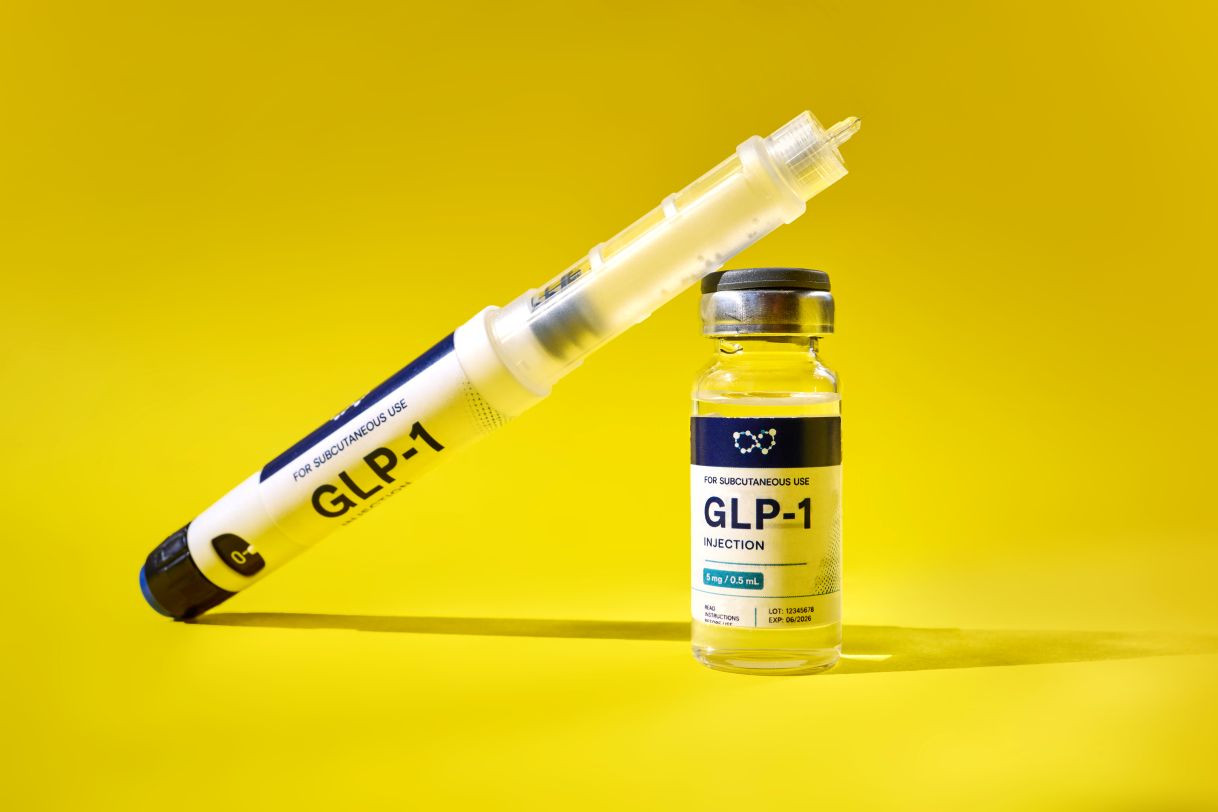
Weight loss drugs known as GLP-1s may help protect against heart failure even at doses too low to produce significant weight loss, according to a laboratory study led by Cedars-Sinai Health Sciences University investigators.
 “Our findings provide a strong mechanistic rationale for studying GLP-1 medicines as potential treatments for heart failure,” said David Lefer, PhD, director of Translational Research in the Department of Cardiac Surgery in the Smidt Heart Institute at Cedars-Sinai.
The study, published in the European Heart Journal, investigated the drugs’ effects on heart failure with preserved ejection fraction. The incurable disorder, in which the heart pumps out blood normally but is too stiff to fill properly, accounts for more than half of the roughly 6.7 million heart failure cases in the U.S. each year, according to the American College of Cardiology.
Investigators administered low doses of semaglutide, a GLP-1 drug, to laboratory rats and minipigs with a condition that mimics a subtype of heart failure with preserved ejection fraction that is associated with obesity. They found that while the drug didn’t reduce overall body weight, it significantly reduced the heart’s stiffness. The drug also reduced heart enlargement and tissue scarring. The researchers were encouraged to observe that the drug also cleared damaging fat around the heart and liver.
“This opens the door to potentially prescribing GLP-1s at low doses to achieve major cardiovascular protection while minimizing common side effects,” said Traci Goodchild, PhD, professor of Cardiac Surgery in the Smidt Heart Institute and co-senior author of the study.
The authors emphasized that the study’s findings do not diminish the well-established benefits of weight loss for the heart. Instead, the results indicate that GLP-1 therapy may provide additional, direct cardiovascular benefits independent of weight loss.
“These data suggest that low-dose semaglutide has powerful protective effects on the heart independent of its impact on weight loss,” said Mahmoud Elbatreek, PhD, a project scientist in the Department of Cardiac Surgery in the Smidt Heart Institute and lead author of the study.
Additional Cedars-Sinai authors include Zhen Li, Xiaoman Yu, Miguel Huerta, Xinheng Zhang, Hsin-Jung R. Yang and Michael E. Bowdish.
Additional authors include Natalie D. Gehred, Tatiana Gromova, Jingshu Chen, Naoto Muraoka, Martin Borch Jensen, Vinay Kartha, Chris Carrico, Timothy D. Allerton, Sanjiv J. Shah, Kathleen C. Woulfe, Timothy A. McKinsey, Edwin Yoo, David J. Polhemus and Thomas M. Vondriska.
Funding: This study was supported by NIH HL181016 (D.J.L.), NIH HL105699 (T.M.V.), NIH HL174996 (T.M.V. and D.J.L.), NIH HL159428 (T.T.G.). D.J.L. was supported by the California Institute for Regenerative Medicine (CIRM, PDEV-19141). N.D.G. was supported by the American Heart Association Predoctoral Fellowship PRE1026591. T.A.M. was supported by the National Institutes of Health grants R01HL171711 and HL181226 and an American Heart Association Collaborative Sciences Award (24CSA1255857). H.-J.R.Y. was supported by National Institutes of Health grants 1R01HL165211 and1R01HL181091. D.J.P. was supported by a (NIH) Ruth L. Kirschstein National Research Service Award Institutional Training Grant (5T32HL007227).
Disclosure of interest: J.C., N.M., M.B.J., V.K., and C.C. work for Gordian Biotechnology. S.J.S. is a consultant for Abbott, Alleviant, Amgen, Aria CV, AstraZeneca, Axon Therapies, Bayer, Boehringer-Ingelheim, Boston Scientific, Bristol Myers Squibb, Corvia, Cyclerion, Cytokinetics, Edwards Lifesciences, Eidos, Eli Lilly, Imara, Impulse Dynamics, Intellia, Ionis, Merck, MyoKardia, Novartis, Novo Nordisk, Pfizer, Regeneron, Rivus, Shifamed, Tenax, Tenaya, and Ultromics. T.A.M. is a co- founder of Myracle Therapeutics, is on the scientific advisory boards of Eikonizo Therapeutics and Revier Therapeutics and is a consultant for Augustine Therapeutics. All other authors declare no disclosure of interest for this contribution.
Cedars-Sinai Health Sciences University is advancing groundbreaking research and educating future leaders in medicine, biomedical sciences and allied health sciences. Learn more about the university.