

The Wallock Women and Cedars-Sinai: A Legacy of Healing, Philanthropy, Progress
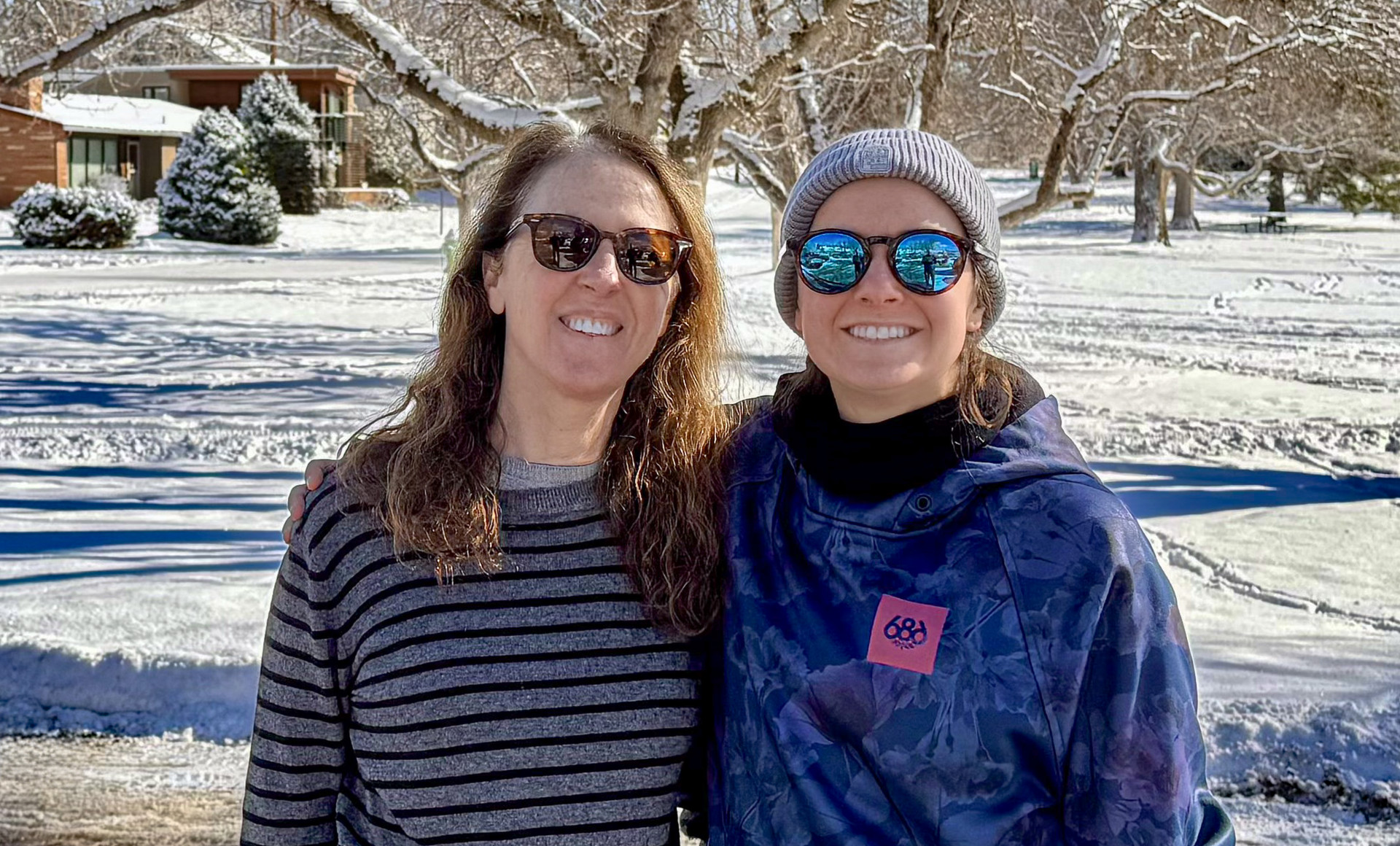
Nearly 100 Years of Family Ties Connects Brain Cancer Patient to Cedars-Sinai and Keith Black, MD
For nearly a century, Dana and Sarah Wallock’s family has been intertwined with the evolution of Cedars-Sinai and the city of Los Angeles. What began as one woman’s commitment to service in the 1920s has grown into a powerful legacy—one that has shaped not only Cedars-Sinai but the lives of those who call Los Angeles home. That includes Sarah, who received life-saving care here nearly a century after her great-grandmother first walked into a small local hospital named Cedars of Lebanon.
It was in 2023, when Sarah underwent brain surgery with Keith Black, MD, that her mother, Dana, began to uncover the depth of her family’s ties to Cedars-Sinai. What Dana thought were fragments of family history—memories of her grandmother Reba Dubin’s volunteer work and her aunt Maxine Dunitz’s philanthropy—turned out to be a remarkable story of multigenerational dedication to advancing healthcare, championing women’s leadership and transforming a city.
The Pioneering Spirit of Reba Dubin and Maxine Dunitz
Dana’s childhood revolved around Cedars-Sinai, largely because of Helping Hand, which her grandmother Reba founded. The medical center was a constant presence in the family’s conversations, and visits to her grandmother’s house were filled with stories of philanthropy and service. Reba’s impact had started in 1929 when she’d created Helping Hand at Cedars of Lebanon—decades before the hospital merged with Mount Sinai—as a volunteer-run gift shop that was the first woman-run non-profit in Los Angeles. But her contributions went far beyond selling gifts. She was a trailblazer dedicated to supporting women and children in need. Inspired by her own mother’s activism and leadership, Reba, who was a college-educated pharmacist at a time when the roles of women were constrained, was determined to make a difference.
Through Helping Hand, she led initiatives to assist immigrants and refugees, provide medical support to the underserved and offer aid to low-income and expectant mothers. In an interview nearly 60 years after she established Helping Hand, Reba recalled visiting a woman’s apartment where a newborn slept in a dresser drawer for lack of a crib. She saw to it that the woman received a crib. Helping Hand also provided essentials for people in need, such as eyeglasses, artificial limbs and baby supplies—small gestures with big impacts. Over the coming decades, Reba’s work not only supported those who needed it most but also helped cement Cedars-Sinai as a major force for good in Los Angeles. One prominent example: In 1984, Helping Hand funded the first full-time endowed chair at Cedars-Sinai, the Miriam Jacobs Chair of Maternal Fetal Medicine.
Reba’s example inspired her niece, Maxine Dunitz, who first volunteered at Cedars-Sinai in 1948 as a teenager. Years later, Maxine took Reba’s dedication even further. Her generosity helped establish Cedars-Sinai’s Maxine Dunitz Neurosurgical Institute and endow the position held by Black, who serves as the institute’s director. Maxine donated the funds the same year her great-niece Sarah was born. She could not have known that one day, Sarah would walk through the doors of that institute and that Black would free the young woman of a brain tumor.
Dana and Sarah: A Legacy Comes Full Circle
Dana and her siblings were born at Cedars-Sinai in the 1960s, but her relationship to the medical center became far more personal in 1996. That year, her newborn son Daniel was rushed to Cedars-Sinai for emergency cardiac surgery with Alfredo Trento, MD. Born with an exceedingly rare condition that entailed seven heart anomalies, Daniel underwent a life-saving operation at just 24 hours of age. Dana had never wavered on where to turn for his care.
Then, some 25 years later, her daughter Sarah faced a medical crisis of her own. Athletic, independent and full of life, Sarah had always taken care of her health and rarely needed to see a doctor. She had grown up with a sense of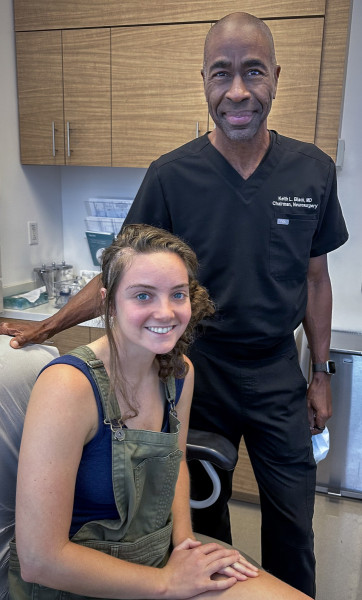 perseverance, shaped by the knowledge that her brother Daniel had defied the odds—and that her mom had borne two other girls, both of whom succumbed to medical conditions in the early months of their lives. When Sarah began having seizures—the same symptom that had presaged the tragic deaths of the sisters she never knew—her family reached out to Cedars-Sinai again. “Through gasps and tears, I asked if we could meet Dr. Black,” Dana recalls.
Uncomfortable in medical settings, Sarah was anxious until she met Black. Unlike in previous medical encounters, where she often felt dismissed, here was a doctor who treated her with respect and compassion. “Dr. Black made me feel seen as a person, not just a case,” said Sarah, recalling that the Patient Relations Department also supported her parents as they dealt with the terrifying prospect of another severely ill child. Sarah was diagnosed with a ganglioglioma, a type of growth that accounts for only 0.4% of all brain tumors.
In July 2023, she successfully underwent surgery with Black. While Sarah lay recovering in her room, Dana, a historian by training, wandered into Helping Hand. What happened next was one of the most powerful experiences of her life. She unexpectedly met a 91-year-old volunteer who remembered her grandmother, Reba, and who brought out scrapbooks dating back to 1929. As Dana turned the pages, she discovered a treasure trove of stories, images, programs and more, and learned the full scope of both Reba and Maxine’s roles in the medical center’s growth. “It was both surreal and deeply nourishing,” said Dana. “My aunt was the reason that the institute existed and that my daughter could see the famous Dr. Black right here in L.A.”
A Sense of Connection
Since receiving her diagnosis, Sarah had been asking herself existential questions: Who am I? Where do I fit in? As her mother shared her discoveries about the family’s history with Cedars-Sinai, Sarah felt an overwhelming sense of belonging—she was part of something bigger than herself. And she had survived a serious health threat thanks to the skill of a surgeon whose position was endowed by her great-aunt. Her own progress was inextricably linked to Cedars-Sinai’s century-long story of progress and growth, highlighting the ties between each patient’s journey and the journey of the institution itself.
Knowing what her ancestors had achieved—and what she owed them—made her even more determined to keep fighting. It deepened her commitment to giving back and embracing life fully. Four months after her surgery, Sarah went bike riding in India. Her remarkable recovery is yet another testimonial to the resilience that runs through her family—and to Cedars-Sinai’s commitment to providing the very best care, and to making progress toward that goal by making sure each patient makes progress in their own health journey.
Read more on the Cedars-Sinai Blog: Faces of Cedars-Sinai--Neurosurgeon Keith Black