


Medscape: Training Reduces Clinicians’ Obesity Bias, Improves Practice
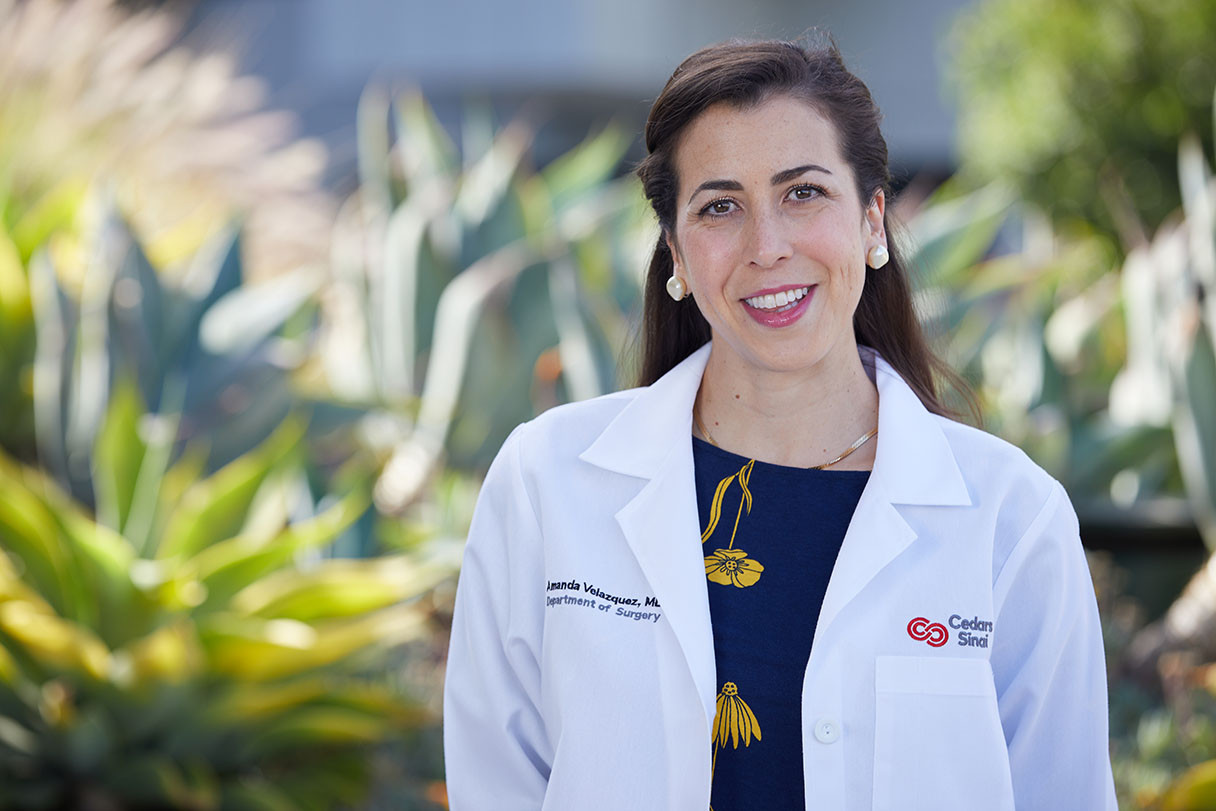
Medscape recently interviewed Amanda Velazquez, MD, director of Obesity Medicine in the Department of Surgery at Cedars-Sinai, about research she led into educating healthcare specialists about their biases against overweight or obese patients.
To address a persistent gap in obesity education, Velazquez hosted a four-hour, continuing medical education program in 2021 with 472 healthcare providers, including plastic surgeons, obstetricians and gynecologists, nurses, and emergency medical technicians. She told the audience that obesity can worsen health conditions, such as psoriasis, cardiometabolic disease and fertility issues, but stigma toward overweight patients also can negatively impact their care and overall health.
Velazquez told Medscape that she surveyed participants’ impressions of overweight patients before and after the session to study the program’s impact. Her research showed that the program significantly reduced the providers’ negative stereotypes while significantly increasing their empathy and confidence in caring for this patient population.
“Our goal was to move the needle toward greater comfort in referring their patients to appropriate obesity management,” Velazquez said.
Velazquez told Medscape that after the program, healthcare professionals diagnosed obesity more often, and they more frequently referred these patients to healthy lifestyle programs and obesity clinics. Referrals to bariatric surgery for patients with a high body mass index (BMI) also rose. These changes in behavior persisted for a year following the event.
“The increase in the number of referrals to obesity care was so overwhelming, we had to change the BMI eligibility criterion to handle the influx,” Velazquez said.
Velazquez told Medscape that future programs will address questions about GLP-1 therapy and gauge the educational impact on providers over a longer period of time.
Click here to read the complete article from Medscape.