

Children Affected by Wildfires Navigate New Disruption: Summer
Cedars-Sinai Guerin Children’s Pediatric Surgeon—a Parent Whose Home Burned—and Share & Care Founder Therapist Discuss Maintaining Connections, Routine
It was a sunny day in L.A.— typical, aside from unusually strong winds—and Eugene Kim, MD, surgeon-in-chief at Cedars-Sinai Guerin Children’s, was seeing patients when he got a text message from his daughter’s school.
The tone was urgent: “Please pick up your child now.” Moments later, Kim, director of the Division of Pediatric Surgery, learned his Pacific Palisades community was on the brink of a wildfire evacuation order. He raced home to help his family pack, but he felt certain, based on past experience, they’d be back soon.
The Kim family is now marking four months in a Santa Monica apartment: The L.A. wildfires, which began Jan. 7, 2025, and also devastated the Altadena community, destroyed their home.
Kim’s daughters, 13 and 16, were uprooted from their home, school and community. In a flash, they were separated from friends and unable to participate in local activities. And now, with summer break approaching, they and many other affected students could experience more disruption in their daily routines.
Connections and Consistency
Suzanne Silverstein, MA, ATR, founding director of Cedars-Sinai’s Share & Care, a program at 30 L.A.-area schools helping at-risk children through trauma, said parents should be prepared to guide children—many of whom are still grieving—through that disruption.
“The Pacific Palisades and Altadena communities were very tight-knit, and they are still suffering,” Silverstein said. “Children and parents have had to deal with losing homes as well as their community connections. It’s a double whammy, and it’s normal to still be grieving.”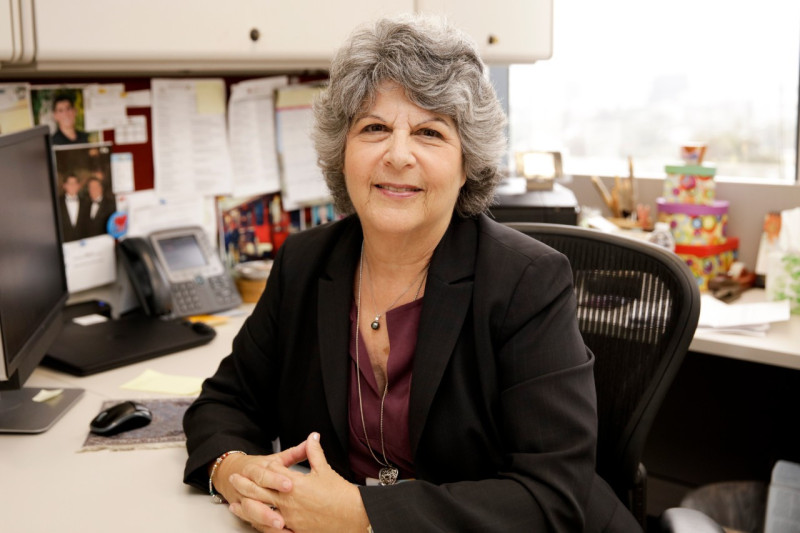
Silverstein said children in the Share & Care program have received donated items, and she often hears them say, “I had this in my house that burned down.”
She added, “They’re also struggling because they’ve changed schools—their family moved, or their original school is no longer there—and their friends are at different schools. They’ve had to start over.”
Silverstein emphasized the importance of maintaining connections, especially during the summer break. She encourages parents to set up playdates with friends who have moved to different areas, saying, “Whole families can reconnect, which can be a gift to have everyone together for some positive experiences, and to see that everyone is OK.”
Consistency also is key, Silverstein said. If children have always attended summer camp and their camp is taking place this summer, it could be healing for them to go again, “if it’s something that’s familiar to them and something they can connect to, from before the fire.”
An art therapist, Silverstein also encourages children to express themselves in the ways they are most comfortable.
“Is it writing, is it drawing, is it through poetry or acting? Give them more of those experiences this summer,” she tells parents.
Art is a healing tool in Share & Care—younger children are encouraged to draw what they’re experiencing, while older ones are encouraged to write or draw in a journal, and then share if they’d like.
Also taught are mindfulness, calming breathing techniques, and how to sit quietly together and listen to what others in the group are sharing.
These are activities parents can continue with their children during summer recess, Silverstein said.
“We’ve been teaching parents the breathing techniques we’ve used with their children,” she said. “Parents also can benefit, as this continues to be a stressful and overwhelming time for them, too.”
Silverstein noted that the healing process is different for every child, and a strong parent-child connection can lead the way in best addressing the needs of each individual.
Leaning on Each Other
In the weeks following the fire, Kim’s family stayed in Orange County with relatives. He remembers kindness on full display when his daughters—competitive swimmers—were invited to swim with the local team. His older daughter took them up on the team’s offer.
“That was a huge part of maintaining some semblance of connection, and it helped her recovery,” he said, because she could participate in a routine activity she enjoys while also making new friends.
Kim said both daughters, as well as he and his wife, have benefited from social time with former neighbors and friends who are recovering from the fires.
“Talking about the complete loss we’ve experienced with people who’ve also been through it is a huge help,” he said.
Kim said he hopes to create a “normal” summer experience for his daughters, even though the family is living in a different place—filling it with swim meets and a vacation to the East Coast, a family tradition. His older daughter also will volunteer at Cedars-Sinai, an activity she finds fulfilling.
For the Kim family, time together may prove to have been the most healing.
“My wife and I were quite concerned about the stress of this trauma on the girls,” he said. “Earlier on, there were teary days and sleepless nights, but it’s been a while since we’ve seen emotions bubble up. We continue to watch them closely and make sure they know we’re here for them. I’m in awe of their resilience—it gives me strength to see them get up every morning, go to school and carry on to the next day.”
As the school year ends, these moments are more important than ever.
“We can’t get back the things we lost,” Kim said, “but we can help each other write the next chapter.”
Read more on the Cedars-Sinai Blog: Five Deep Breathing Exercises for Kids and Teens