


Cedars-Sinai Transplant Immunology Innovator Earns Top Distinction
American Society of Transplantation Honors Stanley Jordan, MD, With Lifetime Achievement Award
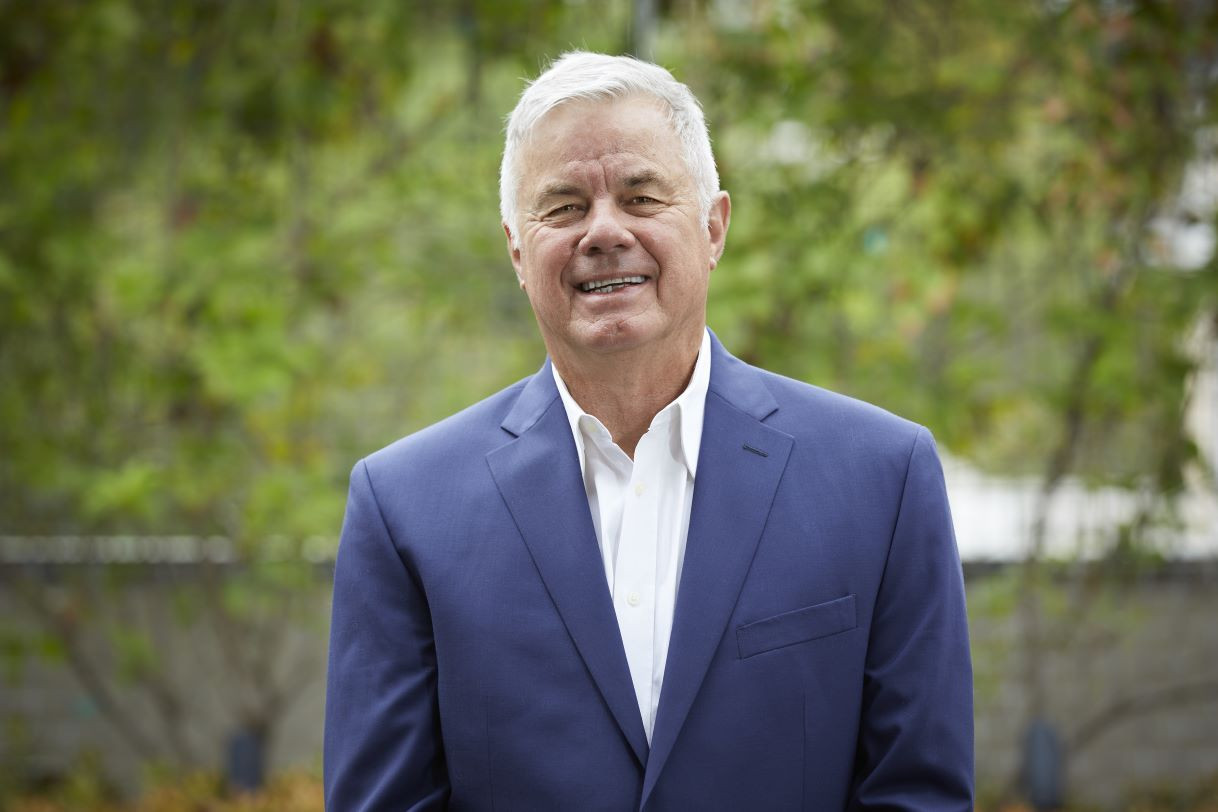
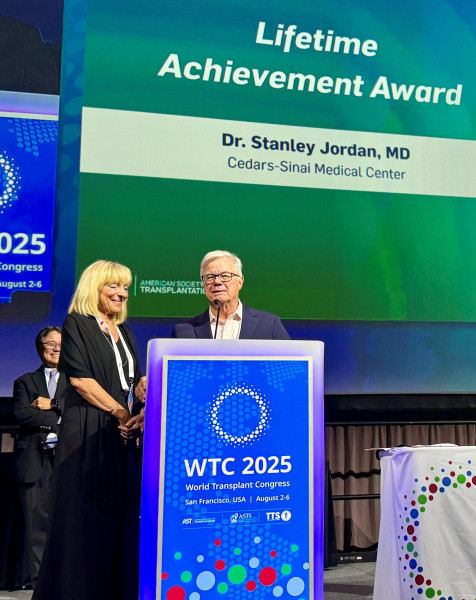
Innovative transplant nephrologist and investigator Stanley Jordan, MD, has received the 2025 Lifetime Achievement Award from the American Society of Transplantation.
Jordan, the director of Nephrology and medical director of the Cedars-Sinai Kidney Transplant Program, is widely admired for pioneering immunomodulatory therapies—treatments that regulate or suppress the body’s immune system so that it does not reject a transplanted donor organ. Jordan, also the director of Cedars-Sinai’s Human Leukocyte Antigen and Transplant Immunology Laboratory, led the development of therapies aimed at overcoming blood type incompatibility between donors and recipients.
 “Dr. Jordan’s groundbreaking contributions to transplant immunology have fundamentally changed the field and improved the lives of countless patients,” said Irene Kim, MD, director of the Comprehensive Transplant Center at Cedars-Sinai. “This well-deserved honor acknowledges Dr. Jordan’s significant scientific contributions to solid organ transplantation. We are fortunate that such a world-renowned scientific leader represents our transplant center and our institution.”
Jordan is an expert in plasmapheresis, a procedure he pioneered at Cedars-Sinai to reduce transplant rejection by removing harmful antibodies from the blood of kidney transplant recipients. When combined with other therapies, this protocol can enable organ transplantation in a patient who may otherwise have been ineligible.
Jordan also developed intravenous immunoglobulin (IVIG) therapy, which adds helpful antibodies to a transplant patient’s blood—calming the immune system to lower the chance of organ rejection without suppressing the entire immune system.
“I am deeply honored and grateful to receive this special recognition from the American Society of Transplantation,” Jordan said. “It is reflective of the many remarkable people who have shaped my journey—mentors, leaders and my dedicated colleagues at Cedars-Sinai, whose commitment to improving transplant outcomes continues to inspire me. At the heart of it all, our greatest reward is helping patients reclaim their lives. Receiving this award is icing on the cake.”
Jordan decided to become a doctor at 5 years old, when he was hospitalized with polio for four months. Temporarily paralyzed below the waist and surrounded by others ill with the virus, he was cared for by an especially kind medical intern and compassionate doctors and nurses.
“That’s what I want to do,” he remembers thinking at the time. “That’s who I want to be like.”
Two decades later, while completing his immunology fellowship at Scripps Clinic in La Jolla, California, Jordan had a chance encounter with local virologist and researcher Jonas Salk, MD—the inventor of the polio vaccine.
“What an inspiration,” Jordan said, “to go from being in the cauldron of death and human suffering caused by polio to meeting the person who had a positive impact on so many lives by eradicating the virus.”
Meeting Salk bolstered Jordan’s desire to devote his career to clinical care and translational research.
In 1990, Jordan’s research led to Cedars-Sinai performing the first successful kidney transplant from a nonmatching donor after the recipient was treated with one of the antirejection techniques Jordan developed.
Jordan went on to create the Transplant Immunotherapy Program at Cedars-Sinai in 2004. Today the medical center is known for transplant patient care and research and is an international referral center for transplant patients who need antirejection therapies.
Jordan has received numerous honors in addition to the Lifetime Achievement Award, including the prestigious 2020 Medawar Prize from The Transplantation Society.
“It’s a great feeling to know that I’ve done something good with my life,” Jordan said after accepting the Lifetime Achievement Award. “I wake up every morning excited to go to work and gratified that we are helping make more people’s lives better. I never could have imagined a life like this.”
Read more on the Cedars-Sinai Blog: Making Kidney Transplants Possible for More Patients