


The Strength to Survive
When Bodybuilder Bryan Thompson Was Diagnosed With Pancreatic Cancer, He Needed All His Strength
Bryan Thompson spent years building his body. He never imagined that the muscle he worked so hard to develop would help him survive pancreatic cancer.
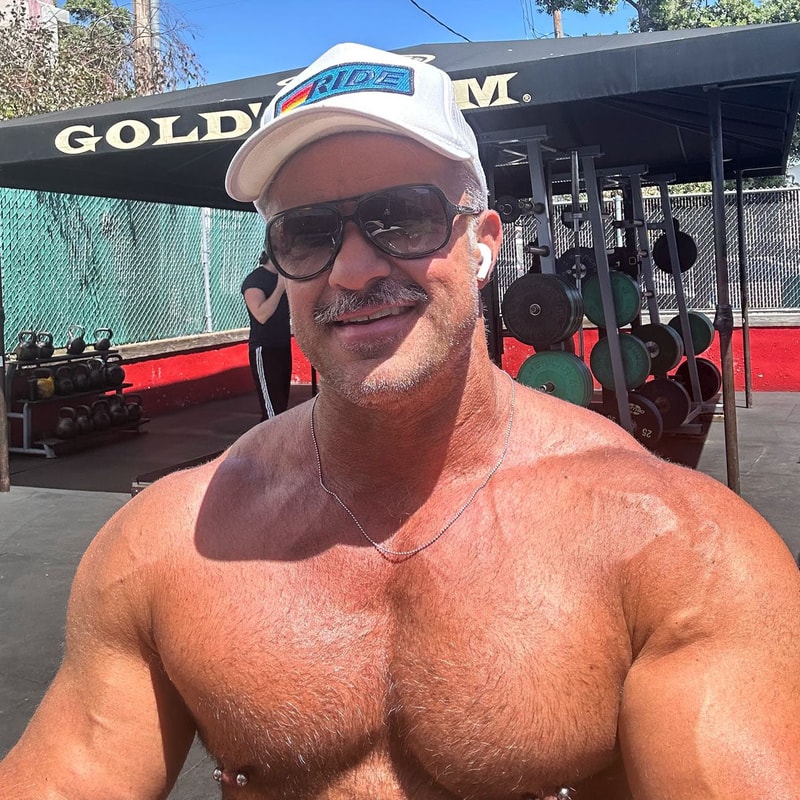 The Hollywood, California, bodybuilder was accustomed to pushing his physical limits. But nothing prepared him for the diagnosis that followed a bout of persistent indigestion and an observation by his husband that the whites of his eyes had turned yellow.
In 2024, blood tests revealed elevated levels of bilirubin, prompting his physician to send him to an emergency department immediately. There, a scan revealed a tumor on the head of his pancreas, pressing on the bile duct, which was causing his jaundice.
The diagnosis was pancreatic cancer, one of the world’s toughest cancers, with a five-year survival rate of just 13%, according to the American Cancer Society.
“It’s hard to not get emotional right away just thinking about it because it was such a big life shift,” Thompson said. “Life was going along one way and then it took a hard right.”
A Team He Could Trust
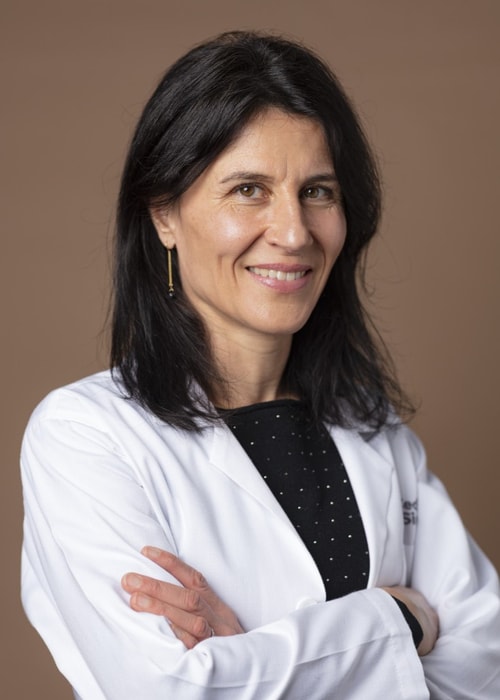 Thompson knew he faced a daunting course of treatment. Determined to find a medical team he could trust, he researched his options and came to Cedars-Sinai, where he met Cristina R. Ferrone, MD, chair of the Jim and Eleanor Randall Department of Surgery.
“Dr. Ferrone was the first person who treated me like a human being, and not like a case,” Thompson said. “I remember she put her hand on my shoulder, and she didn’t use the word ‘you’ as much as the word ‘we.’ She said, ‘We are going to attack this and our goal is curative.’”
Ferrone explained that because the tumor was still localized, the complicated Whipple surgery to remove the cancer would be Thompson’s best chance at survival.
“In the Whipple operation, we remove the head of the pancreas where the cancer is, along with the gallbladder, part of the bile duct, a portion of the small intestine called the duodenum, and sometimes even a third of the stomach,” said Ferrone, the Lippman Family Endowed Chair in Surgical Oncology. “It is a complex procedure often lasting five or more hours.”
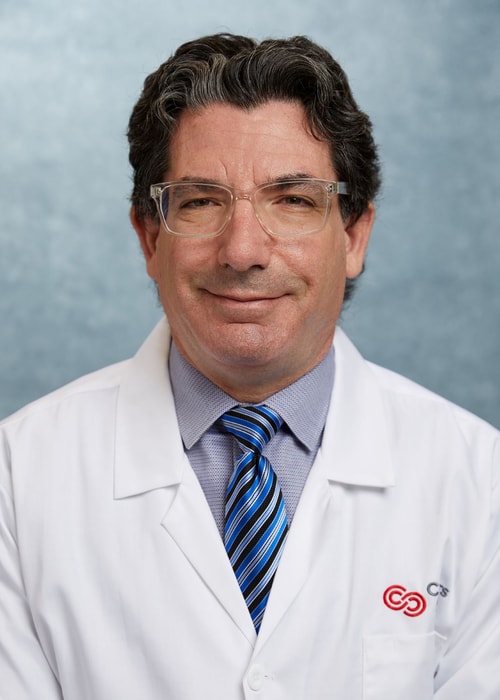 First though, Thompson had to undergo a few rounds of chemotherapy to help shrink the tumor and give him the best chance at a successful surgery. He worked closely with Cedars-Sinai medical oncologist David M. Hoffman, MD, throughout the process.
“We learned through testing of Bryan’s tumor that he was positive for a BRCA1 mutation,” Hoffman said. “This helped us tailor his treatment because BRCA mutations are typically sensitive to platinum chemotherapies.”
Thompson’s healthy lifestyle also gave him an advantage as he prepared for treatment.
“Muscle is like money in the bank,” Hoffman said. “I told Bryan he needed as much ‘money’—or as much muscle—as he could get before starting chemotherapy, and he really took that to heart. Coming from a place of high-performing fitness, it gave him the reserve to get through.”
A Test of Strength
Four months of chemotherapy before surgery took a toll on Thompson, but through every step of the way, Thompson’s husband was by his side.
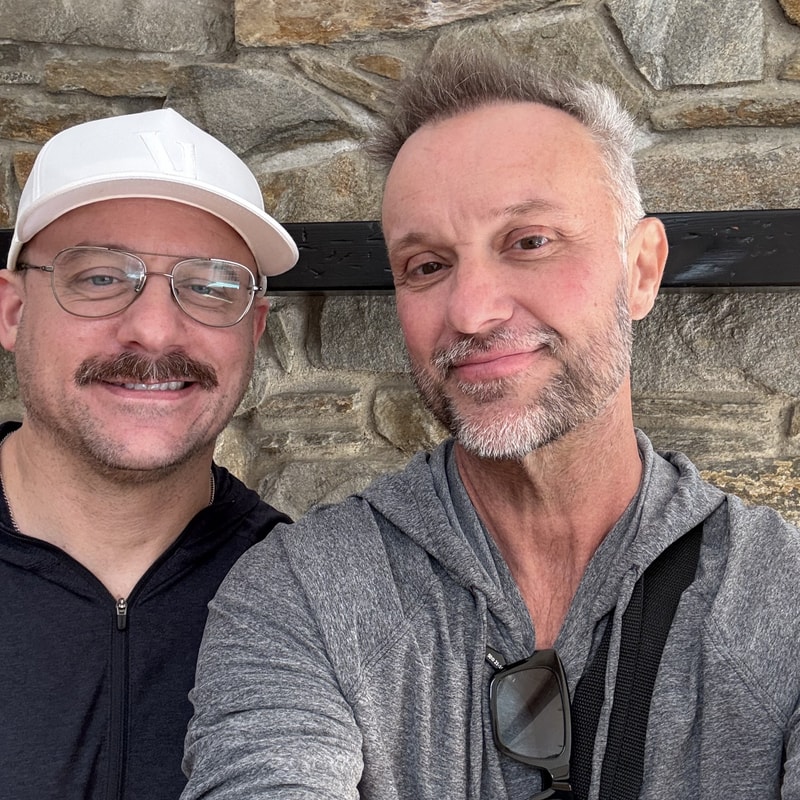 “We committed to ‘for better or worse,’ and the universe decided to start with worse,” Thompson’s husband, Andrew Evans, said. “We like to say that to beat this, we needed love and science. The doctors handled the science. We handled the love.”
Evans was in the hospital waiting room when Ferrone emerged after Thompson’s successful Whipple procedure.
“I just remember her telling me that she got all the cancer out, and I was so relieved,” Evans said.
“It is a nice feeling to let the family members know that everywhere you divided, the pathologist checked under the microscope while the patient was asleep to make sure that all of the cancer was out,” Ferrone said. “That is a great feeling for everyone.”
After recovering from surgery, Thompson completed another two months of chemotherapy, and when he was done, he was ready to get back to regular life, but he realized that was going to be easier said than done.
“Before I was even cleared to work out again, I would go to the gym just to absorb the energy there,” Thompson said. “But I had lost nearly 100 pounds. I would have a conversation with a friend at the gym only to realize they didn’t recognize me. To be honest, I didn’t recognize myself.”
Finding His Spark Again
Slowly, but surely, Thompson began to regain his strength, starting small, with 3-pound weights and building back from there.
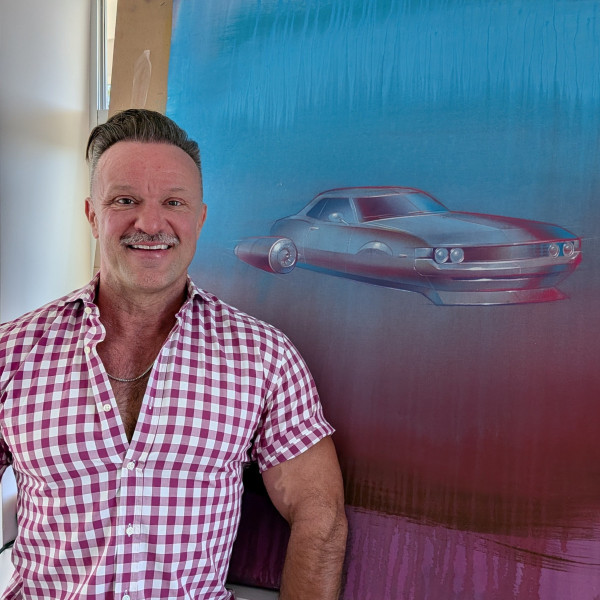 “I remember thinking, ‘How do I find my spark?’ because I’m usually a bright person. But the spark was dim,” Thompson said. “But I realized that guy was still inside of me. With the support of my husband and giving myself the self-love of knowing I had survived something that was almost insurmountable, I was able to bring that spark back to a roaring fire.”
Today, he’s cancer free and continues to undergo surveillance scans twice a year, the standard protocol.
Besides bodybuilding, Thompson’s other passion is art and design, having spent many years as a car designer.
As an outlet for his post-treatment creativity, Thompson designed and built miniature trucks, gifting them to Hoffman and Ferrone as a thank-you for getting him through his cancer journey. Each is emblazoned with the word “courage.”
“It’s one of the best gifts I’ve ever gotten,” Ferrone said. And Hoffman agrees.
“Bryan is an open guy with an open heart, and he was the one with the courage,” Hoffman said. “There is so much care that went into this gift. I look at this truck every day and it reminds me why we do what we do.”
Read more from Cedars-Sinai Stories and Insights: Pancreatic Cancer Clinic Saves Time and Lives