



Beverly Hills Courier: Prevention and the Quest to Cure Alzheimer’s Disease
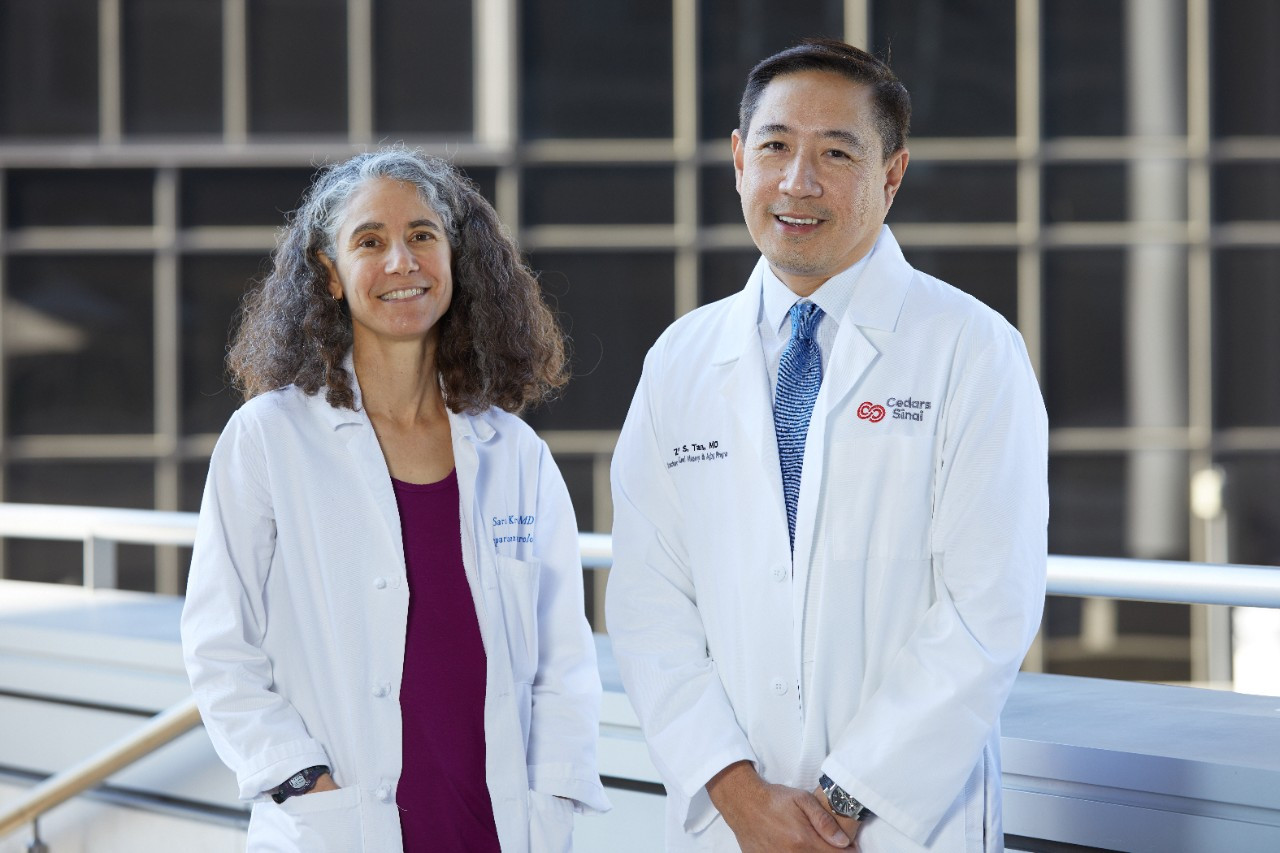
The Beverly Hills Courier recently featured an article about Alzheimer’s disease risk factors, prevention and treatments written by Cedars-Sinai experts Zaldy Tan, MD, MPH, medical director of the hospital’s Jona Goldrich Center for Alzheimer’s and Memory Disorders, and Sarah Kremen, MD, who leads the Alzheimer’s Disease Clinical Trial Program in the Department of Neurology.
Nearly 7 million people in the U.S. have Alzheimer’s disease—the most common form of dementia.
Tan, who is the Carmen and Louis Warschaw Chair in Neurology and director of the Maxine and Bernard Platzer Lynn Family Memory and Healthy Aging Program, and Kremen, who is the director of the Neurobehavior Program, wrote in the Beverly Hills Courier that there is no cure for Alzheimer’s disease. But they also explained that as many as half of all dementia cases are preventable, and early, consistent preventive measures could delay disease onset by up to eight years.
“By understanding your risk, adopting healthy habits and staying abreast of the latest treatment options, you can keep your brain in the best possible health at every stage of life,” they wrote. “Almost everyone has something they can improve on.”
Tan and Kremen wrote in the Beverly Hills Courier that daily exercise, eating whole foods, taking on new or challenging hobbies, and not smoking are a few ways to keep the brain sharp.
They added that although there is no blood or imaging test to determine a person’s risk for Alzheimer’s, “A thorough risk assessment should include a comprehensive medical history, family health history, a detailed neurologic exam and cognitive testing.”
Tan and Kremen wrote in the Beverly Hills Courier that new treatments can slow disease progression, but they are expensive and have side effects.
“Even with successful treatment to slow the disease, there is no known way to reverse the memory loss or stop its progression,” they wrote, “so for Alzheimer’s disease, prevention is always better than cure.”
Click here to read the complete article from the Beverly Hills Courier.