

Weeding Out Cancer With CAR T
The 100th Cedars-Sinai Patient to Receive the Cellular Therapy Is in Remission, Back in Her Garden
In 2023, Sixta Georgina Calderón Hernández planted a garden to help her cope with a diagnosis of lymphoma and the side effects of chemotherapy. A year later, like a vicious weed, the cancer came back. But thanks to the CAR T-cell therapy Calederón Hernández received this spring at Cedars-Sinai, her cancer is now in remission and she is back to tending the garden she has grown to love.
Calederón Hernández, who goes by the nickname “Gina,” is the 100th patient to receive CAR T-cell therapy at Cedars-Sinai, said Akil Merchant, MD, Lymphoma Program co-director.
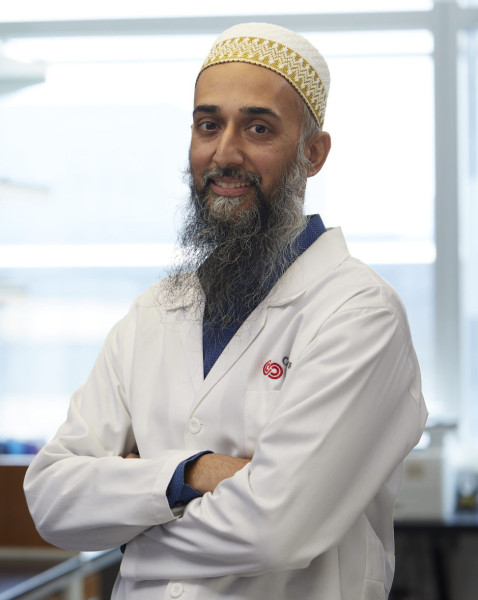 “In cancers such as lymphoma, immune cells, which are some of the most powerful anticancer tools that we have, don’t work very well,” said Merchant, who is Calderón Hernández oncologist. “In CAR T-cell therapy we remove those immune cells from the patient, engineer them in the lab to target the cancer cells, then give them back to the patient so they can kill the cancer.”
Since the Cedars-Sinai CAR T program opened in 2020, it has seen rapid, exponential growth, said Justin Darrah, MD, co-director of the Lymphoma Program and director of the CAR T Program.
“Cedars-Sinai is now able to offer this great treatment to many more patients,” Darrah said. “The fact that we have been able to treat 100 patients so far is just an incredible feeling. And the program continues to grow.”
Calderón Hernández, who will turn 60 in August, said her illness began with what she thought was a throat infection.
“I went to the ER in Long Beach. They admitted me and started many tests,” she said. “They removed my tonsils and sent them to pathology. That’s when they said, ‘We’re sorry, but you have lymphoma. You have cancer.’”
When chemotherapy treatment caused Calderón Hernández to lose her hair—for her the most difficult part of treatment—her great nephew Mateo, who is 7, was there to comfort her.
“I was crying in my room,” she said. “He came in and saw me crying. He said, ‘I know why you’re sad, Auntie. It’s because you don’t have hair. But you know what? That haircut doesn’t look bad. You look good, Auntie.’”
Calderón Hernández was cancer free for just under a year and had returned to work as a nanny. But soon she found herself back in the hospital receiving news that her lymphoma had returned.
“Starting over was very hard,” Calderón Hernández said. “The only thing that’s held me up has been God. I thank God for this new chance at life and for the doctors.”
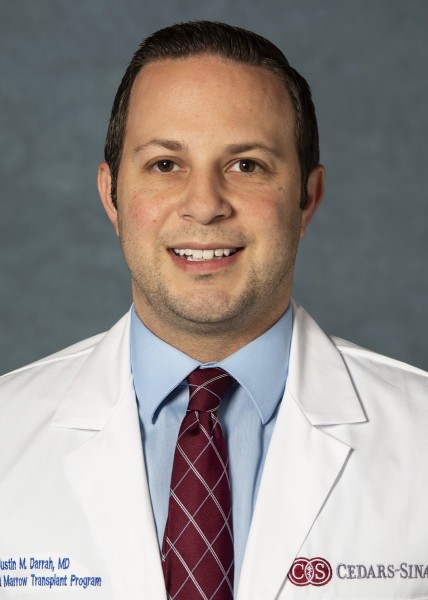 Her oncologist in Long Beach connected Calderón Hernández with the CAR T Program at Cedars-Sinai. This therapy gave Calderón Hernández an alternative to a bone marrow transplant, which is more difficult on the body, said Darrah, a member of Calderón Hernández's care team.
“CAR T-cell therapy is designed for patients who are having a poor response to other treatment and allows us to cure patients who otherwise were incurable,” Darrah said.
And while Merchant warned Calderón Hernández that CAR T-cell therapy could come with side effects—including memory issues, nausea and dizziness—she said that she didn’t experience those during her seven-day hospital stay.
“After the second day of treatment, I walked 20 minutes around the hospital and took selfies to send my sister,” Calderón Hernández said. She was doing so well she was sent home three days early.
In an active clinical research program, scientists are working to understand which patients are most likely to benefit from existing CAR T-cell therapies and to develop new ones, Merchant said.
“Patients whose cancers may not be treatable with currently approved CAR T-cell therapies could access the next generation of therapies here through clinical trials,” said Robert Figlin, MD, interim director of Cedars-Sinai Cancer. “Some of those options could be more effective than those currently FDA [Food and Drug Administration] approved, and making them available is part of our commitment to pair each patient with the most effective possible treatment.”
He said that most patients who are still in remission nine to 12 months after CAR T treatment are cured, and that is his hope for Calderón Hernández.
“We're going to continue to do scans to look for lymphoma,” Merchant said. “Her scans are negative, and I hope that they stay that way. Fingers crossed for Gina.”
Cedars-Sinai Health Sciences University is advancing groundbreaking research and educating future leaders in medicine, biomedical sciences and allied health sciences. Learn more about the university.