


Spectrum News 1: Measles Concerns Rise as Kindergarten Vaccination Rates Drop
Spectrum News 1 recently interviewed Vikram Anand, MD, PhD, a pediatric infectious disease specialist at Cedars-Sinai Guerin Children’s, about an uptick in measles cases nationwide and in Los Angeles as a result of declining vaccination rates.
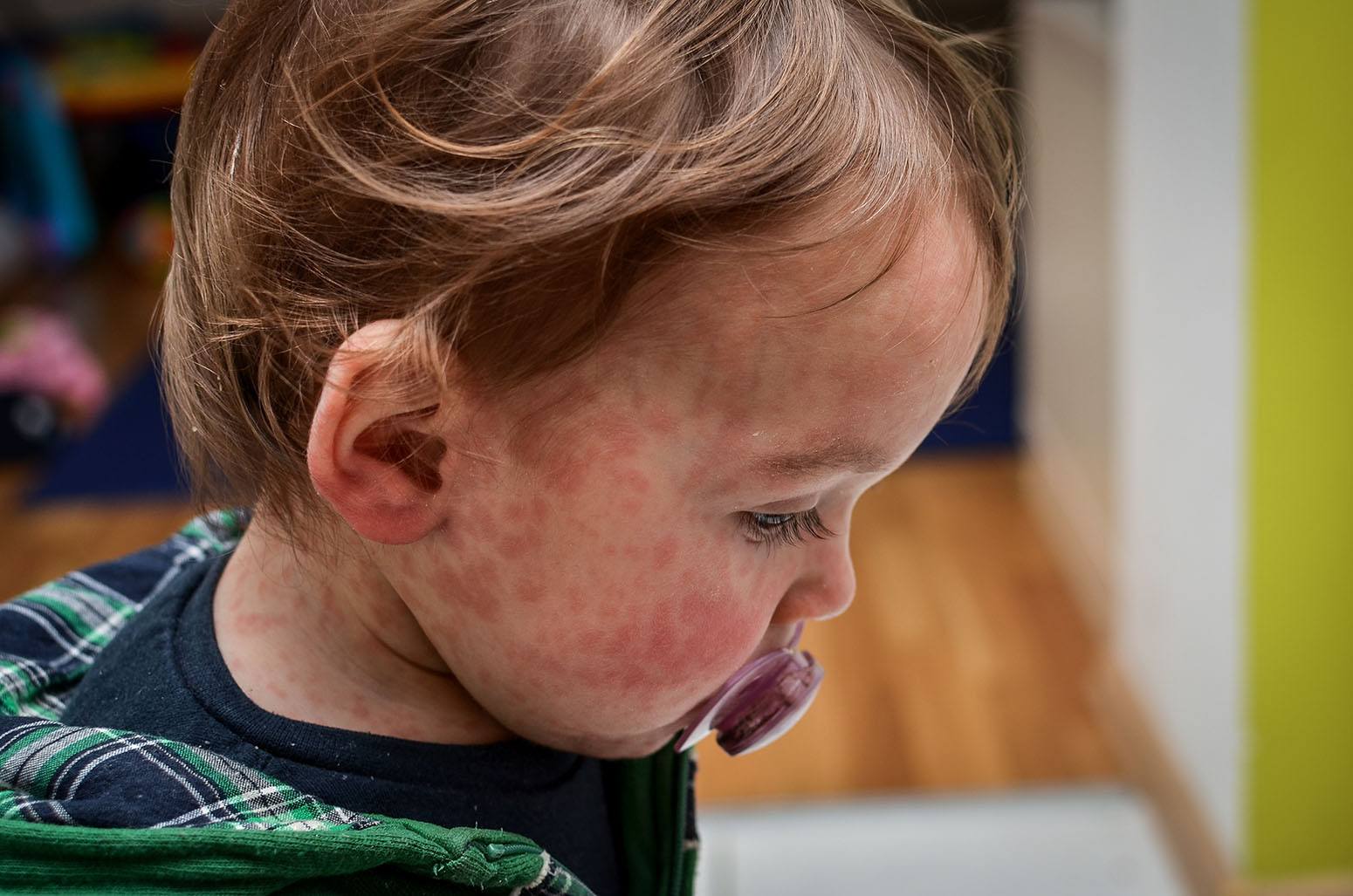
Anand, an associate professor of Pediatrics, told Spectrum News 1 reporter Genevieve Glass that measles is a highly contagious airborne virus. Because early symptoms—including fever, muscle aches, cough and runny nose—resemble a cold, Anand said people can infect others for days before the telltale sign of measles—a rash on the face and body—appears.
“It just takes a tiny little droplet in the air that’s being coughed out and somebody breathing it in who’s unimmunized to become infected,” he said. “You really don’t need very much exposure to measles. Some of these droplets can hang around for up to two hours in a poorly ventilated situation or setting.”
Anand told Glass the two-dose measles, mumps and rubella (MMR) vaccine is safe and effective at protecting against the virus. The first dose is typically given to children between 12 and 15 months old, and a second dose is given when they’re between 4 and 6.
“It is 97% effective after the second dose,” he said. “The vast majority of reactions are fever—sometimes you can get a rash about a week later—but the vast majority of children will do very well with the measles vaccine. Serious side effects or complications are extremely rare.”
Anand told Glass that if measles cases continue to rise in Los Angeles, vaccine recommendations may change to include infants under 1 year old.
Click here to watch the complete segment from Spectrum News 1.