


Women More Likely to Die From the Combination of Cardiovascular, Kidney, Metabolic Disease

Investigators Report Sex Differences in Very Common Syndrome
Although women are less likely than men to develop a combination of cardiovascular, kidney and metabolic disease, they are more likely to die from it, according to research co-led by a Cedars-Sinai investigator and published in the journal Arteriosclerosis, Thrombosis, and Vascular Biology.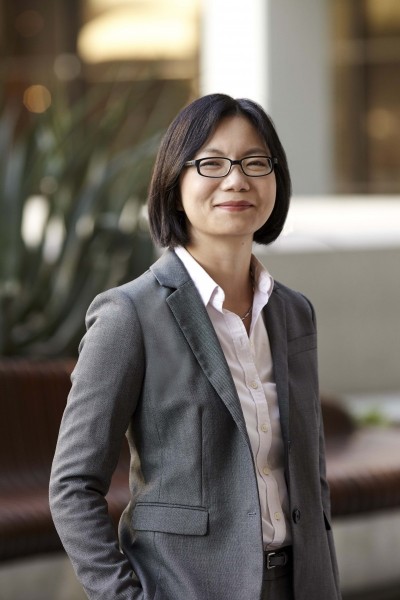
People with metabolic disease who have three or more cardiovascular risk factors—such as high blood sugar, low levels of HDL (good) cholesterol and high blood pressure—often develop cardiovascular disease and kidney disease. People who have two or more of these diseases or are at risk of developing them are described by medical experts as having cardiovascular-kidney-metabolic (CKM) syndrome.
“We need additional research to understand the biologic processes that cause men and women to experience disease differently,” said Susan Cheng, MD, MMSc, MPH, the Erika J. Glazer Chair in Women’s Cardiovascular Health and Population Science in the Department of Cardiology in the Smidt Heart Institute, and co-corresponding author of the study. “The more we know, the better we’ll be able to prevent women from dying from less severe forms of CKM syndrome.”
The number of people with CKM syndrome increased steadily from 1988 to 2018, according to investigators. They also found stage 3 disease occurred more among men (from 18.9% to 22.4%) as compared with women (13.9% to 15.2%). Although women were less likely to develop stage 3 disease, they were more likely to die during any stage of the disease.
Other authors include: Hongwei Ji, Charumathi Sabanayagam, Kunihiro Matsushita, Ching-Yu Cheng, Tyler Hyungtaek Rim, Bin Sheng, Huating Li, Yih-Chung Tham, and Tien-Yin Wong.
Funding: This study was funded in part by the National Key Research and Development Program of China (grant 2022YFC2502800), the National Natural Science Foundation of China (grants 82388101 and 82103908), the China Postdoctoral Science Foundation (grant 2024M751733), the Beijing Natural Science Foundation (grant IS23096), the Shandong Provincial Natural Science Foundation (grant ZR2021QH014), the Shuimu Scholar Program of Tsinghua University (grant 2023SM196), the National Postdoctoral Innovative Talent Support Program (grant BX20230189), the Erika J Glazer Family Foundation, and the National Institutes of Health grant U54AG065141.
Cedars-Sinai Health Sciences University is advancing groundbreaking research and educating future leaders in medicine, biomedical sciences and allied health sciences. Learn more about the university.