



Earlier Valve Replacement Benefits Some Patients With Moderate Aortic Stenosis

Clinical Trial Co-Led by Cedars-Sinai Finds Earlier Treatment May Reduce Heart-Failure Events in Certain Patients
Patients with moderate aortic stenosis, a narrowing of the heart’s aortic valve, may benefit from undergoing transcatheter aortic valve replacement (TAVR) before the disease becomes severe, according to findings from a clinical trial co-led by Cedars-Sinai investigators.
 The study found that earlier TAVR treatment lowered the combined risk of death or a heart-failure event over two years in certain patients with moderate aortic stenosis.
Findings from the PROGRESS clinical trial were published in The New England Journal of Medicine and presented Nov. 2 at the Transcatheter Cardiovascular Therapeutics (TCT) 2026 symposium in San Diego.
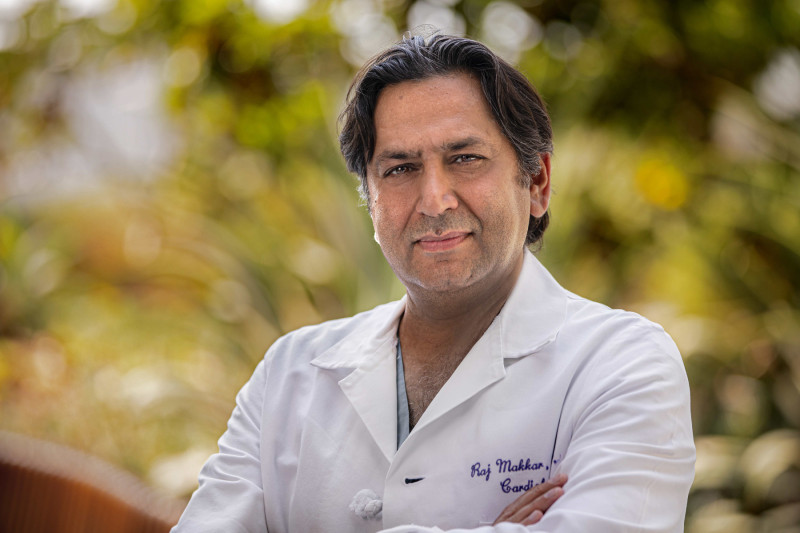
Raj Makkar, MD, vice president of Cardiovascular Innovation and Intervention in the Smidt Heart Institute at Cedars-Sinai, is the national principal investigator for the trial.
The benefit of earlier treatment was shown by patients experiencing fewer heart-failure events, including hospitalizations, Makkar said.
“Patients with moderate aortic stenosis can already have symptoms and signs that their heart is under strain. These results show that for selected patients with at-risk features, treating the valve earlier can reduce the risk of heart-failure events before the narrowing becomes severe.”
The Smidt Heart Institute at Cedars-Sinai enrolled more patients than any other participating center, giving patients a key role in advancing research into the disease.
“Our extensive experience with treating valvular heart disease, along with our ability to integrate research into routine patient care, powered our ability to enroll a significant number of patients,” said Makkar, the Karsh Distinguished Chair in Interventional Cardiology.
 Aortic stenosis, which reduces blood flow from the heart to the body, affects more than 3% of adults 65 and older. Current guidelines recommend an echocardiogram every one to two years in patients with moderate disease, and valve replacement only when the stenosis becomes severe or another indication for surgery develops.
The PROGRESS trial enrolled 744 patients 65 or older at 74 centers in six countries. All had moderate aortic stenosis and at least one feature indicating increased risk, such as symptoms or abnormalities in heart structure or function. Investigators randomly assigned 373 patients to TAVR and 371 to clinical surveillance, with valve replacement available when indicated.
After two years, 23.9% of those assigned to surveillance had experienced heart failure or died, compared with 16.7% of patients assigned to TAVR. Patients who underwent TAVR were hospitalized for heart failure at half the rate of surveillance patients: 7.4% compared with 14.9% of those in the surveillance group.
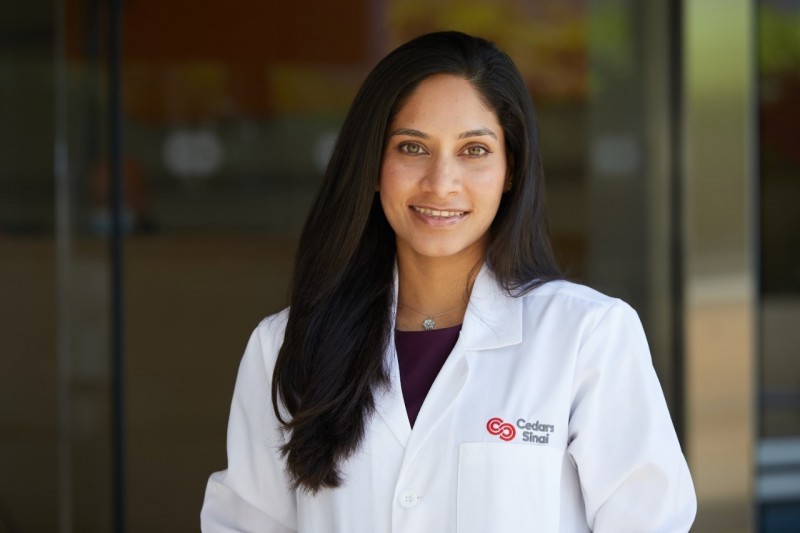
“More than half of the patients initially assigned to surveillance underwent valve replacement within two years, suggesting that the disease can progress quickly from moderate to severe in some patients,” said Aakriti Gupta, MD, study co-author and an assistant professor in the Smidt Heart Institute.
The findings do not mean that every patient with moderate aortic stenosis should undergo TAVR. Researchers plan to follow participants for 10 years to determine whether the early reduction in heart-failure events translates into longer survival. They also will assess valve durability, the potential need for future procedures and which patients are most likely to benefit.
 Because participants were an average of 78 years old, researchers also will examine whether the findings apply to younger patients or those without the at-risk features studied in PROGRESS.
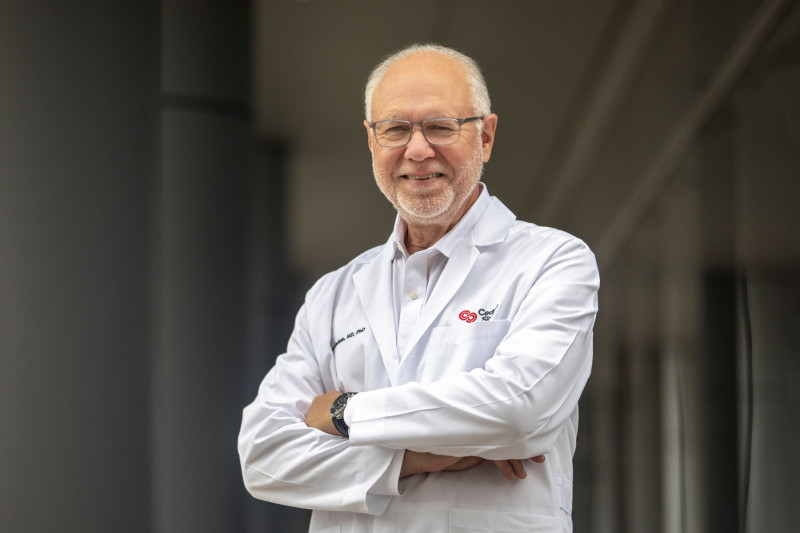
“Helping patients avoid heart-failure episodes and the hospital stays that come with them is an important goal,” said Eduardo Marbán, MD, PhD, executive director of the Smidt Heart Institute and the Mark Siegel Family Foundation Distinguished Chair. “As an institution that is well-positioned to treat the most complex heart valve cases, we are grateful to our patients, who were willing to participate in a clinical trial to help answer a question that could improve care for others.”
Additional authors include Philippe Généreux, MD, Raj Makkar, MD, Philippe Pibarot, DVM, PhD, Jeroen J. Bax, MD, Brian R. Lindman, MD, Kamran Muhammad, MD, J. Bradley Oldemeyer, MD, Mark Pirwitz, MD, Colin M. Barker, MD, Vinod H. Thourani, MD, Pradeep K. Yadav, MD, Roberto Rodriguez, MD, MSc, Justin Strote, MD, Rahul Sakhuja, MD, MPP, MSc, Ramzi Khalil, MD, Rahul Sharma, MD, Adnan Chhatriwalla, MD, Jacob M. Mishell, MD, Biswajit Kar, MD, Sameer Gafoor, MD, Joseph Walsh, MD, Daniel Spoon, MD, Andrew Frutkin, MD, Andrei Pop, MD, Nicolas M. Van Mieghem, MD, Ruby Satpathy, MD, Kenji Ando, MD, Joseph Montarello, MD, John Webb, MD, Sreekanth Vemulapalli, MD, David J. Cohen, MD, MSc, Brandon Park, PhD, Heather Prince, PhD, Philipp Blanke, MD, Michael Mack, MD, Martin B. Leon, MD on behalf of the PROGRESS Trial Investigators.
Disclosures: Raj Makkar – Consultant for and research grants from Edwards Lifesciences, Medtronic, Abbott, Jena Valve, Boston Scientific. Scientific Advisory board and equity for iCardio.ai, AllHeart, and PiCardia.
Funding: The PROGRESS trial was funded by Edwards Lifesciences (PROGRESS ClinicalTrials.gov number, NCT04889872).
Cedars-Sinai Health Sciences University is advancing groundbreaking research and educating future leaders in medicine, biomedical sciences and allied health sciences. Learn more about the university.