



Study Reveals Potential Immunotherapy Advance for Pancreatic Cancer
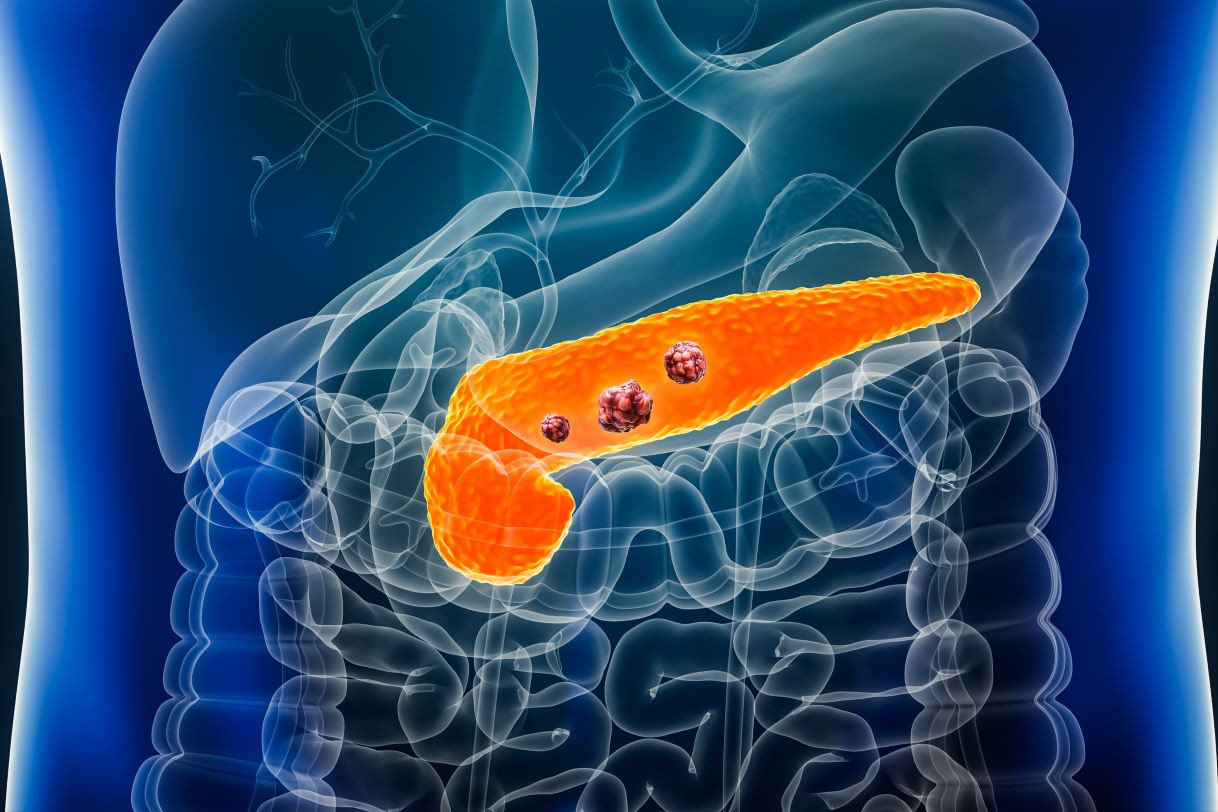
New Research Suggests Targeting Specific Proteins in an Individual’s Immune System Could Lead to More Targeted and Effective Immunotherapies for Pancreatic Cancer Patients
A new study published in the peer-reviewed journal Cancer Letters uncovered information about how the immune system can recognize and kill cancer cells, revealing a potential immunotherapy target for the treatment of pancreatic ductal adenocarcinoma, the most common and lethal form of pancreatic cancer.
Pancreatic cancer is one of the most aggressive types of cancer, with an incidence rate that is steadily rising each year. While treatments have improved over the past decade, the five-year overall survival rate for the disease is still just 13%.
 The research, led by Cristina Ferrone, MD, the Lippman Family Chair in Surgical Oncology and chair of the Cedars-Sinai Jim and Eleanor Randall Department of Surgery, sought to understand two elements of pancreatic cancers.
First, Ferrone and fellow investigators studied how human leukocyte antigen (HLA) class I complex—a system that presents targets to the immune system, thereby alerting the immune system that a cell is defective—is expressed to a varying degree in pancreatic cancers. If a patient has high levels of HLA class I expressed on the pancreatic cancer, it suggests that their body is better at fighting the cancer.
Next, investigators aimed to target a molecule called B7-H3, which is expressed on malignant cells to escape recognition and destruction by the immune system. In many patients, a high level of B7-H3 means that cancer cells can evade the body’s immune system.
The study, which was completed when Ferrone was a professor of Surgery at Harvard Medical School, found that B7-H3 was highly expressed in the majority of pancreatic cancers studied, and its immune-evading presence was associated with significantly worse patient survival.
Patients whose tumors had a low or negative B7-H3 expression but positive HLA class I expression—alerting the immune system of defective cells—had significantly improved survival.
However, patients with high B7-H3 expressions had consistently poor prognoses, regardless of their tumor’s HLA class I expression.
“Our research suggests that the positive impact provided by high HLA class I expression in pancreatic cancer may be overpowered by a high B7-H3 expression,” said Ferrone, corresponding author of the study. “These findings provide the rationale to leverage B7-H3 suppression as a target for immunotherapeutic approaches, such as CAR-T cells directed to B7-H3, as a strategy for pancreatic cancer patients to potentially improve survival.”
Ferrone said that, in recent years, physicians are trying to shift the therapeutic paradigm for the treatment of pancreatic cancer from a generalized chemotherapy approach to a more patient-specific precision medicine approach based on the individual characteristics of a patient’s tumor. She said that the results of this study indicate a rationale for the design of new Phase I/II clinical trials investigating the effectiveness of anti-B7-H3 monoclonal antibodies alone or in combination with standard of care chemotherapy regimens, as well as a CAR-T therapy aimed at B7-H3 for patients with pancreatic cancer.
“If trial results from this approach are positive,” Ferrone said, “targeting B7-H3 has the potential to significantly improve the efficacy of immunotherapies for pancreatic cancer patients and, eventually, overall survival rates for the disease.”
Additional authors include Giulia Cattaneo; Marco Ventin; Shahrzad Arya; Filippos Kontos; Theodoros Michelakos; Yurie Sekigami; Lei Cai; Vincenzo Villani; Francesco Sabbatino; Francine Chen; Ananthan Sadagopan; Vikram Deshpande; Paul A. Moore; David T. Ting; Nabeel Bardeesy; Xinhui Wang; Soldano Ferrone.
Funding: This work was supported by National Cancer Institute/National Institute of Health (NCI/NIH) grants [R03CA223886 and R03CA231766 to Cristina Ferrone and Soldano Ferrone; R01DE028172 and R01CA226981 to Xinhui Wang], Department of Defense Breakthrough Award Level 2 [W81XWH-16-1-0500 (BC190615) to Soldano Ferrone], Department of Defense Breakthrough Award Level 4 [W81XWH-20-1-0315 (BC190615) to Cristina Ferrone and Soldano Ferrone], Department of Defense Idea Award [W81XWH-20-PCRP-IDA (W81XWH2110433) to Xinhui Wang] grants, and Internal funding from the Department of Surgery at the Massachusetts General Hospital.
Read more from the Cedars-Sinai Blog: How to Manage Your Pancreatic Cancer Risk