


AI-Developed Brain Cancer Treatment Successful in Laboratory Mice
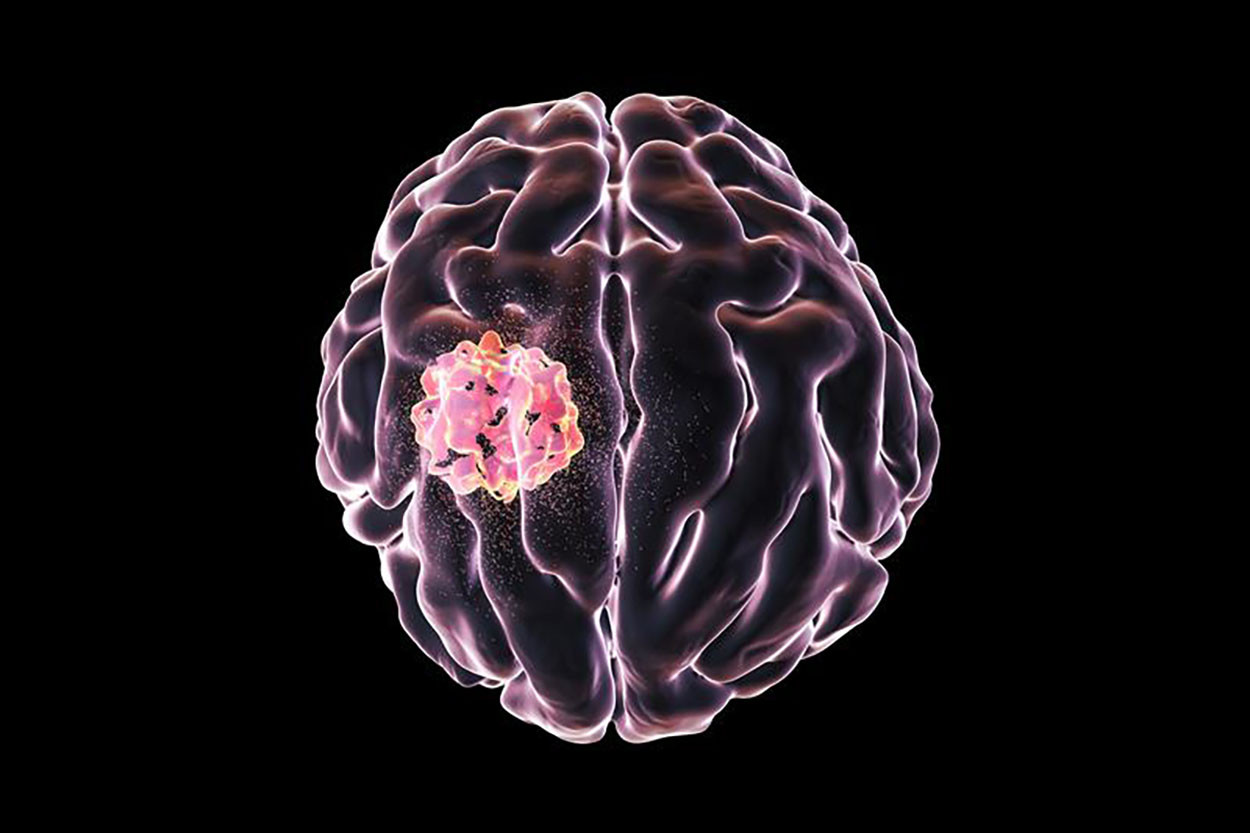
A new therapeutic system, developed with the assistance of artificial intelligence, significantly improved survival of laboratory mice with primary central nervous system lymphoma. This advance could lead to future clinical trials and might eventually improve outcomes for human patients with this rare but deadly type of brain cancer. The findings were published in the peer-reviewed Journal of Controlled Release.
“We combined a multifunctional nano drug that suppresses a cancer gene with an immune checkpoint inhibitor, which helps the immune system recognize and attack cancer cells,” said Vladimir Ljubimov, MD, assistant professor of Neurosurgery at Cedars-Sinai and first author of the multicenter study. “The tiny, nano-sized polymers enabled the treatment to cross the blood-brain barrier that blocks many anticancer drugs from reaching the brain.”
Other Cedars-Sinai authors include: Tao Sun, Paul Z. Wang, Alexander V. Ljubimov and Keith L. Black.
Other authors include: Jiawei Wang, Lian Li, Eggehard Holler, Jindrich Kopeček, Julia Y. Ljubimova and Jiyuan Yang.
Funding: Research was supported in part by NIH/NCI R01 Grants CA188743, CA206220, CA230858 (JYL), CA209921 (EH), CA284247 (AL), CA246716 (JK) and NIH/NIGMS GM95606 (JK), and the University of Utah Research Foundation (JK, JY). The authors thank Dr. Anna Galstyan and Dr. Oliver Braubach for their professional contribution during data development.
Cedars-Sinai Health Sciences University is advancing groundbreaking research and educating future leaders in medicine, biomedical sciences and allied health sciences. Learn more about the university.