


Cedars-Sinai Sends New Stem Cell Experiments to Space
$10 Million NASA Grant Will Support Six Additional Missions to International Space Station
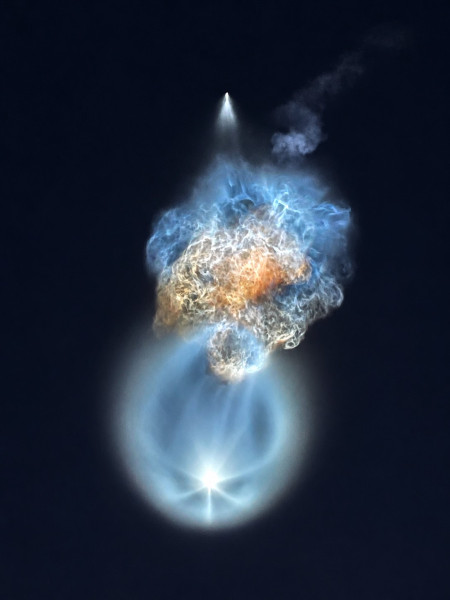 When NASA’s SpaceX CRS-35 mission docks with the International Space Station Oct. 15, it will deliver two experiments from the Cedars-Sinai Center for Space Medicine Research. This marks the seventh flight of projects designed to test whether microgravity can improve the production of stem cell-derived structures used to study disease and test potential treatments.
And more experiments will soon be on the way into low-Earth orbit: NASA recently awarded Cedars-Sinai a $10 million NASA In Space Production Applications (InSPA) grant that will fund projects on six additional missions over the next four years. The research will be conducted in continued partnership with Axiom Space and BioServe Space Technologies.
On this month’s flight, one experiment, called Stellar Stem Cells Mission 3, will focus on the manufacturing of heart and brain organoids. These tiny, three-dimensional groups of cells are created from induced pluripotent stem cells, which have been reprogrammed so that they can be turned into virtually any cell type. The organoids mimic some of the structure and function of actual organs.
The second experiment will explore the creation of cardiac spheroids, simpler three-dimensional clusters of heart cells that can be used in similar ways but are faster and easier to create.
“We are continuing to explore whether creating organoids and spheroids in the microgravity environment of space has advantages over creating them on Earth,” said Arun Sharma, PhD, director of the Center for Space Medicine Research and the Ben Winters Chair in Regenerative Medicine at Cedars-Sinai. “This could translate into advantages for science—and patients—on Earth.”
 Stellar Stem Cells is an extension of a previous experiment that flew in 2025.
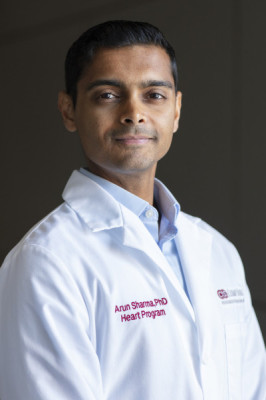
“We saw such beautiful 3D formation of organoids on that mission that NASA extended our InSPA grant to cover this extra flight,” said Clive Svendsen, PhD, executive director of the Board of Governors Regenerative Medicine Institute and, like Sharma, a co-investigator on the grant. “This is a larger-scale mission that allows us to do more analysis of the organoids in flight and after we bring them back to Earth.”
To create the cardiac spheroids, investigators bring together heart muscle cells and cells that line the heart’s blood vessels.
“On Earth, we use a centrifuge to force them to come together. In space, they come together on their own because the cells are able to float and they are attracted to each other,” Sharma said.
Investigators hope to determine whether they can leverage microgravity of space to produce large quantities of the spheroids. The investigators will also be examining blood vessel formation in the spheroids, which has been achieved to a limited extent on Earth but could be improved in microgravity.
 The project is funded through the International Space Station National Laboratory Igniting Innovation award, designed to fund basic science.
Sharma Lab members Maedeh Mozneb, PhD, Madelyn Arzt, and Jemima Moses are traveling to the Kennedy Space Center in Florida to prepare the science for this launch. But even as these projects lift off, the Sharma and Svendsen labs will begin work on projects funded by the newly announced NASA grant.
In these missions to the International Space Station, investigators will attempt to prove that human induced pluripotent stem cells and organoids derived from those cells can be manufactured in large-scale batches, using established best manufacturing practices. The missions will focus on creation of disease models and therapies using heart, brain and pancreatic cells and organoids.
“Our experiments on Earth have shown us that there are many, many applications for these cells and the organoids we create with them,” Svendsen said. “If we can leverage the microgravity of space to scale up our production, there is so much more that we can achieve.”
Cedars-Sinai Health Sciences University is advancing groundbreaking research and educating future leaders in medicine, biomedical sciences and allied health sciences. Learn more about the university.