

School’s in Session at Cedars-Sinai Health Sciences University
First Enrollees Begin Classes in the Cedars-Sinai Chuck Lorre Allied Health School, PhD Program in Health Artificial Intelligence and Master of Science in Regenerative Medicine Program
School is in session for more than 860 students, postdoctoral researchers, medical residents and fellows enrolled in Cedars-Sinai’s newly established Health Sciences University (HSU). They are the first to enroll in the new Chuck Lorre Allied Health School, Health Artificial Intelligence PhD program in the Graduate School of Biomedical Sciences and the Master of Science in Regenerative Medicine program.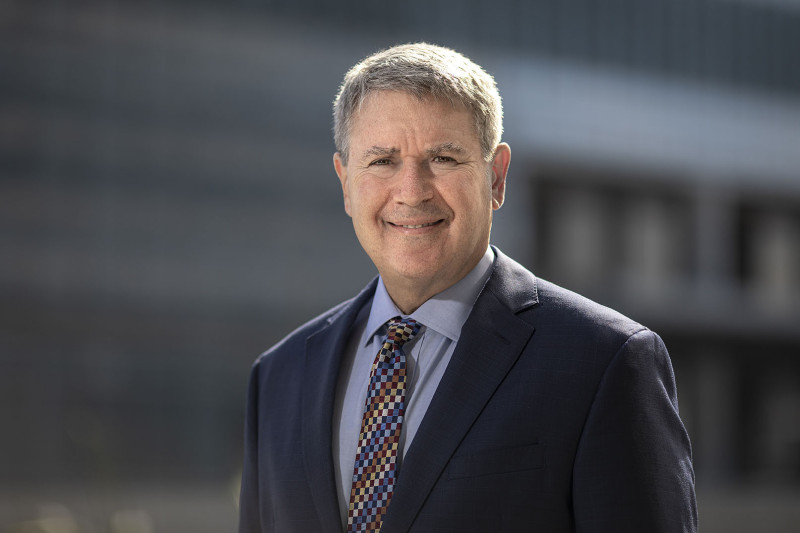
“Regardless of their chosen discipline, students in the Health Sciences University will be immersed in the healthcare environment and our clinical care continuums,” said Jeffrey Golden, MD, executive vice dean of Research and Education, director of the Burns and Allen Research Institute, and the Linda and Jim Lippman Distinguished Chair in Academic Medicine at Cedars-Sinai. “Students will train side by side with experts to advance basic, translational and clinical sciences, then witness how their efforts help shape the care Cedars-Sinai delivers.”
The students’ experience will include hands-on training from prominent experts and access to advanced technologies and innovative clinical trials.
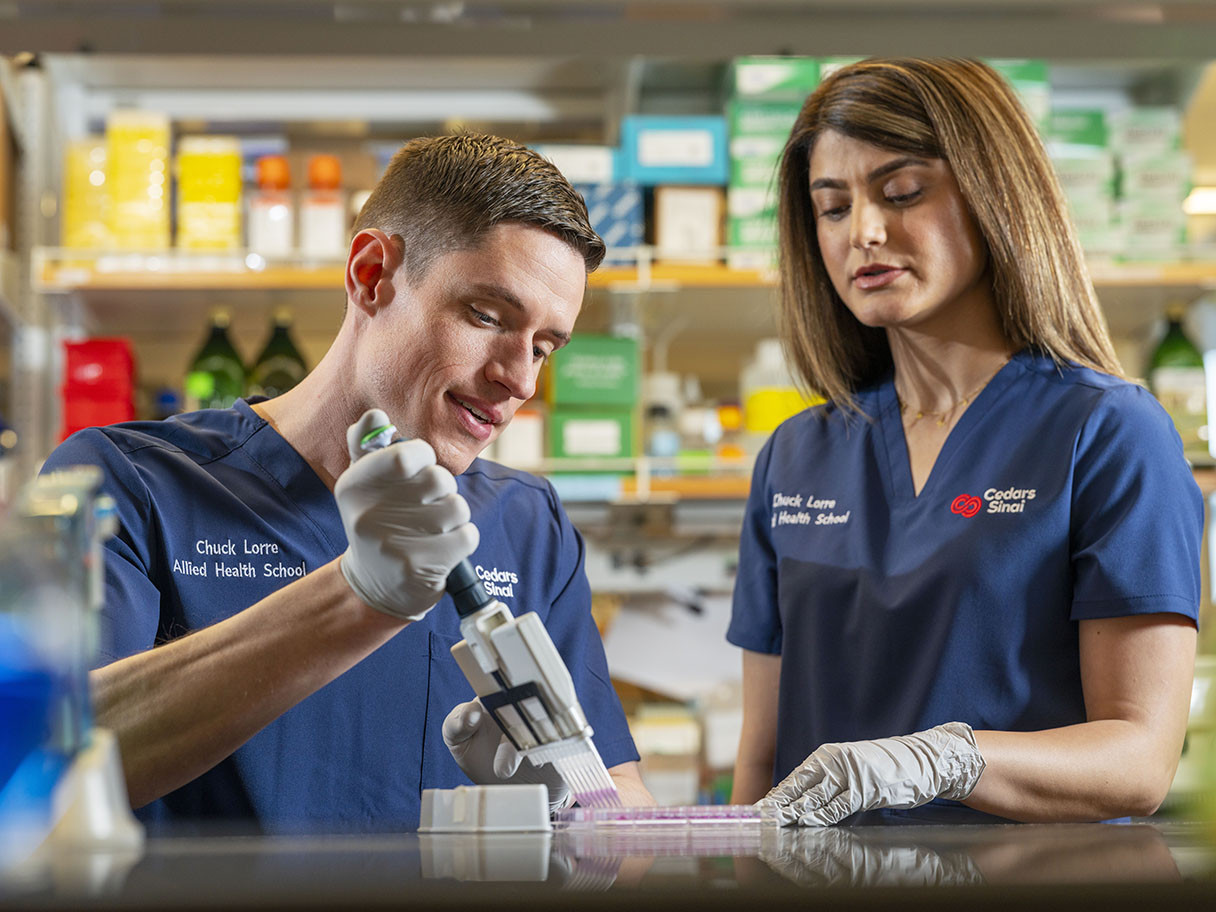
The Cedars-Sinai Chuck Lorre Allied Health School was established in 2022 with a $30 million gift from The Chuck Lorre Family Foundation. The vocational school offers training in allied healthcare roles, starting with clinical laboratory scientists, pharmacy technicians, respiratory therapy and radiation therapy technicians.
“When the opportunity presented itself to provide training and certificates for underserved individuals in our community, which in some instances would double their salaries, I was all in,” Lorre said. “Partnering with Cedars-Sinai to create the school of allied health will allow us to see long-term impacts in our communities.”
Students in the allied health programs will receive hands-on training in a clinical setting through rotations at Cedars-Sinai and its affiliates Huntington Health and Torrance Memorial Health. The programs lead to associate degrees, bachelor’s degrees or certificates. Graduates are eligible to obtain licensure and take certification exams in their chosen fields.
“The transformational gift made by The Chuck Lorre Family Foundation meets a tremendous need for allied health specialists, both at Cedars-Sinai and in the broader Los Angeles community,” Golden said.
Alexia Furbert, a 21-year-old Los Angeles resident, is one of the first students to enroll in the pharmacy technician program in the Cedars-Sinai Chuck Lorre Allied Health School.
“When I learned about the program, I was finishing my last semester at West Los Angeles College to complete my associate degree,” Furbert said. “Feeling uncertain about my career goals, I questioned whether transferring to a four-year university was the right decision for me. This program offered an opportunity to explore potential career paths and contribute to chronically understaffed areas of healthcare.”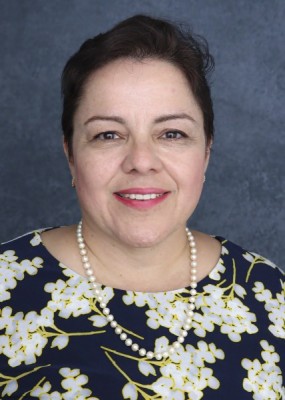
Also new to the Cedars-Sinai Health Sciences University is the PhD in Health Artificial Intelligence (AI), which offers rigorous training in AI algorithms and methods, with a focus on analyzing clinical data to enhance patient care.
“We are elated to welcome our incoming students, who will experience a hands‑on, active approach to teaching that reinforces AI concepts through clinical rotations and scholarly collaboration with physicians and medical staff,” said Graciela Gonzalez-Hernandez, PhD, director of the Graduate Program in Artificial Intelligence. “Graduates will be positioned to directly improve healthcare and patient outcomes through the rigorous development and deployment of AI algorithms and software.”
Another new offering is the Master of Science in Regenerative Medicine, a 20-month program where students focus on stem cell research that can be used to both model and treat human diseases. The curriculum will focus on three professional paths: cell biomanufacturing, academic research into stem cell biology and learning about how stem cells can be used with different clinical specialties.
“We designed the master’s program to teach students about regenerative medicine and how stem cells hold an interesting promise for medicine,” said Wafa Tawackoli, PhD, director of Education and Training at the Board of Governors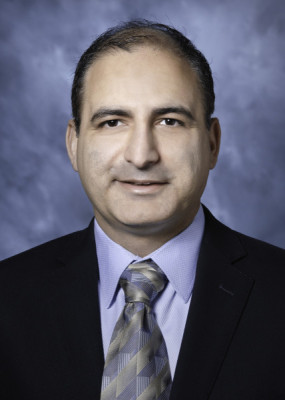 Regenerative Medicine Institute. “We are focused on giving these students an advantage as they move forward in their chosen career paths through a carefully designed curriculum. Everything we do is tailored to the future.”
The university offers other graduate degrees, including a PhD in Biomedical Sciences, that merges scientific and translational medicine curricula with mentoring by researchers and clinicians, a Master of Science in Health Systems and a Master of Science in Magnetic Resonance in Medicine.
The university also is home to several professional training programs, including nondegree educational certifications, formal trainings, internships and other ongoing opportunities to benefit students and professionals at all levels of their careers.
“We are eager to welcome our new and returning students,” Golden said, “and for them to begin their journey of understanding human diseases, how to diagnose them and how to determine the best treatments for individual patients.”
Cedars-Sinai Health Sciences University is advancing groundbreaking research and educating future leaders in medicine, biomedical sciences and allied health sciences. Learn more about the university.