

Cedars-Sinai Chuck Lorre Allied Health School Steps Closer to Welcoming First Students

Vocational School’s Leaders Share Vision for Healthcare Career Training, Enhanced Opportunities
As the Cedars-Sinai Chuck Lorre Allied Health School prepares to enroll its first students, the school’s leaders say their goals go far beyond producing the technicians and therapists that keep hospitals running.
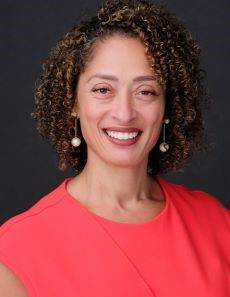 “This innovative allied health school contributes to regional economic development by offering career advancement opportunities that significantly increase earning potential for individuals, particularly those transitioning from lower-wage positions,” said Nicole Anderson, JD, vice president and executive vice dean of Academic Affairs. “These efforts align with Cedars-Sinai’s broader mission to elevate community health through training and providing career paths.”
When Laurence Katznelson, MD, joined Cedars-Sinai as vice dean of Medical Education, he teamed up with Anderson to make the project a reality. The vocational school was established in 2022 with a $30 million donation from The Chuck Lorre Family Foundation and will offer training for healthcare careers, particularly aiming for students from underserved communities throughout Southern California.
The allied health school is part of the newly established Cedars-Sinai Health Sciences University, an integrative training program to prepare the next generations of academic scientists, healthcare leaders and allied health professionals.
Katznelson and Anderson sat down with the Cedars-Sinai Newsroom to share their vision for the Cedars-Sinai Chuck Lorre Allied Health School.
What are the program’s goals? 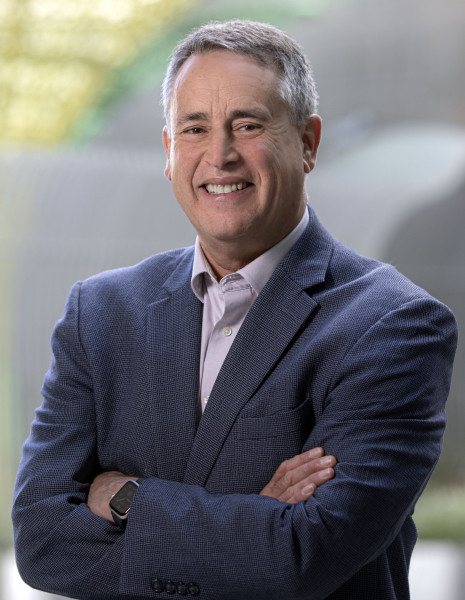
Katznelson: Cedars-Sinai Health Sciences University integrates clinical, basic and translational research with education in an academic medical center environment, offering a breadth of advanced research and vocational programs for future healthcare and science leaders.
One of the university’s pillar programs is the Cedars-Sinai Chuck Lorre Allied Health School—a program intended to create a pipeline of healthcare professionals in areas that are understaffed, while simultaneously creating opportunities through nontraditional pathways for candidates with diverse backgrounds who are interested in careers within the medical field.
How do these goals align with Cedars-Sinai’s mission?
Anderson: As a leading academic healthcare organization, Cedars-Sinai’s mission is to elevate the health status of the communities we serve. The more intuitive ways we achieve our goals are by delivering exceptional healthcare enhanced by research and education, and by prioritizing high-quality care for all with equity and compassion.
Beyond our clinical priorities, we also transform biomedical discoveries and innovations, and educate tomorrow’s physicians, nurses, researchers and healthcare professionals. Training is at the heart of our mission and immeasurably contributes to our excellence—which is why our allied health school is centered on guiding new students and trainees.
Who is the ideal student?
Katznelson: Ideal students and trainees are individuals who are curious and eager to excel and may or may not have considered a career in a medical field. Our program aims to provide career mapping and opportunities for existing Cedars-Sinai employees who are interested in additional training and career paths, as well as intensive training for those without access to traditional college opportunities. In doing so, we can enhance their career prospects in medical fields.
Students may also come through Cedars-Sinai’s Youth Employment and Development (YED) Health Careers Academy, an initiative made possible by The Chuck Lorre Family Foundation. The two-year program allows students from Fairfax High School to earn 10 high school credits as well as a paycheck, with many graduates going on to become Cedars-Sinai employees or students.
Anderson: Part of what sets apart the Cedars-Sinai Chuck Lorre Allied Health School is our learner population. Traditionally, we have taught college-graduate-level learners, whereas this vocational program is intended to foster growth in learners who perhaps have a high school diploma or even a General Educational Development (GED) certificate.
In recruiting, we acknowledge that different learner populations will have distinct needs when compared to traditional graduate-level learners. The allied health school will ensure students can successfully complete their programs and transition into higher-earning allied health careers.
What types of training will students receive?
Katznelson: In the first phase, the allied health program is set to provide industry-leading training for emerging healthcare professionals in four areas of work that are chronically understaffed. Professionals who complete the training programs will advance their technical skills in respiratory therapy, pharmacy technician training, clinical laboratory science, and radiation therapy technician training—areas identified as having the most in-demand staffing needs in hospitals throughout the U.S. In the near future, we plan to grow the allied health program to include additional programs.
Five years from now, what impact do you hope the school has made?
Katznelson: We hope to see success demonstrated by employing graduating classes within the Cedars-Sinai Health System and supporting pipeline needs in the region—all with the goal of enhancing healthcare to our community in Southern California. By doing so, we look to enhance career opportunities in the medical field and wage-earning potential by candidates from diverse backgrounds in the medical field.
Anderson: While we have several short-term goals aimed at enrollment and career succession, our long-term vision includes graduating several classes, hiring graduates within the Cedars-Sinai Health System, and elevating practice disciplines across the region and state. We strongly believe that the allied health school will contribute to regional economic development by offering career advancement opportunities that significantly increase earning potential for individuals, particularly those transitioning from lower-wage positions.
Learn more about the Cedars-Sinai Chuck Lorre Allied Health School.
Cedars-Sinai Health Sciences University is advancing groundbreaking research and educating future leaders in medicine, biomedical sciences and allied health sciences. Learn more about the university.