



HuffPost: 9 Well-Loved Exercises That Are ‘Silent Dangers’ for Your Spine
HuffPost recently interviewed Andrew Bach, DO, a physiatrist with the Cedars-Sinai Spine Center, about popular exercises that can put the spine at risk when performed incorrectly, along with safer alternatives.
While exercise generally benefits physical and mental health, certain movements can strain the spine—particularly in people with a history of back problems or lumbar disc degeneration.
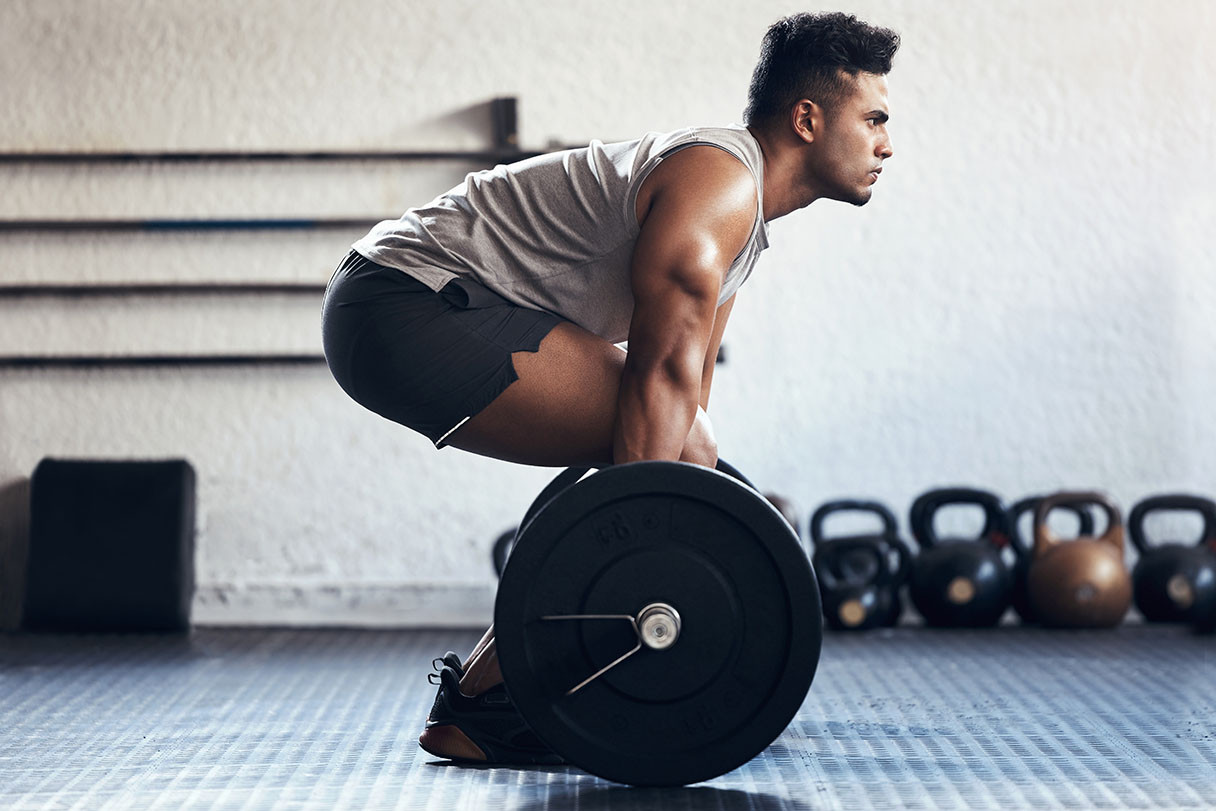
Bach told HuffPost that deadlifts can become problematic when performed incorrectly, particularly when a neutral spine is not maintained, which can place stress on the lower back.
“The risk increases significantly when the lumbar spine becomes the ‘hinge’ of the movement rather than the hips,” Bach said. He also noted that fatigue, poor hip mobility and excessive load can increase risk.
Bach told HuffPost that barbell back squats can pose a risk when performed incorrectly, due to excessive compressive force on the spine. This can occur “when the squat depth is too low, there is excessive forward trunk lean or when the spine is unable to [be] maintained in a neutral position,” he said.
Bach noted that a goblet squat—performed by holding a dumbbell or kettlebell close to the chest while squatting—is a safer alternative because it “tends to promote a more upright posture.”
He also highlighted that the seated toe-touch hamstring stretch carries a “very common but often overlooked” risk.
“While widely taught, this stretch frequently results in lumbar flexion rather than true hamstring elongation,” Bach told HuffPost. “Individuals tend to round through the low back, which increases anterior disc compression and posterior disc pressure.”
The safer alternative, he said, is a supine hamstring stretch performed while lying on the back using a strap or band, which allows hamstring lengthening while maintaining a neutral spine.
“The goal is to isolate hip flexion without forcing the lumbar spine into flexion,” Bach told HuffPost.
Read the complete article from HuffPost.