



HealthCentral: What to Know About Aortic Valve Disease
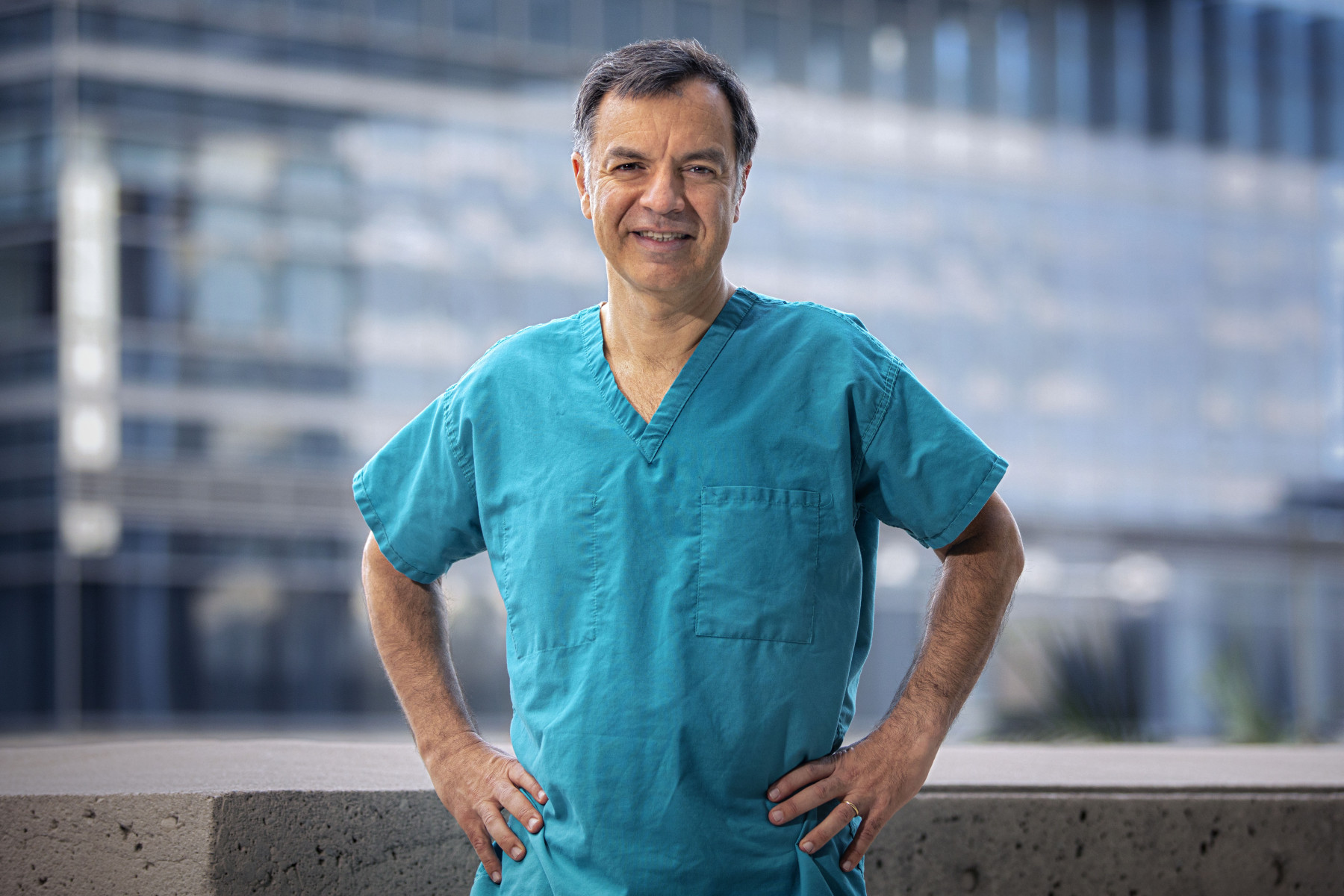
HealthCentral recently interviewed Pedro Catarino, MD, director of Aortic Surgery and professor of Cardiac Surgery in the Smidt Heart Institute at Cedars-Sinai, about aortic valve disease, a common and sometimes deadly heart valve condition.
The aortic valve allows blood to pump from the heart to the body’s major blood vessel, the aorta. Aortic valve disease occurs when this valve does not work properly. The condition can go unnoticed for years until symptoms develop, potentially leading to a heart attack, heart failure or even sudden cardiac death.
Catarino told HealthCentral that the condition, which is most common in people over 65, encompasses aortic valve stenosis and aortic valve regurgitation.
“Aortic stenosis is a ‘wear-and-tear’ disease where the valve fibroses, or scars, and calcium builds up, so it is very much related to getting older,” he said, while aortic regurgitation—in which the aortic valve doesn’t fully close, causing blood to leak back into the heart’s left ventricle—also can come about with older age.
Catarino told HealthCentral that surgery to replace the damaged valve may be necessary if a patient has symptoms, such as dizziness, heart palpitations and chest pain during exertion, or if the heart has gotten weaker or become enlarged.
“Without treatment, there is a progression of symptoms, culminating in heart failure,” he said. “Aortic valve interventions are one of the most successful treatments in medicine, providing significant symptom relief for patients, improved prognosis and quality of life, at minimal risk.”
Click here to read the complete article from HealthCentral.