


Cedars-Sinai Cancer Advances Leadership Roles
Robert Figlin, MD, and Andrew Hendifar, MD, Assume New Positions to Advance Cancer Care, Research
Two Cedars-Sinai Cancer leaders are assuming new roles to help advance cancer care, education and research for patients in Los Angeles and beyond. Robert Figlin, MD, is now associate dean of Cedars-Sinai Cancer Care, and Andrew Hendifar, MD, is interim director of Cedars-Sinai Cancer.
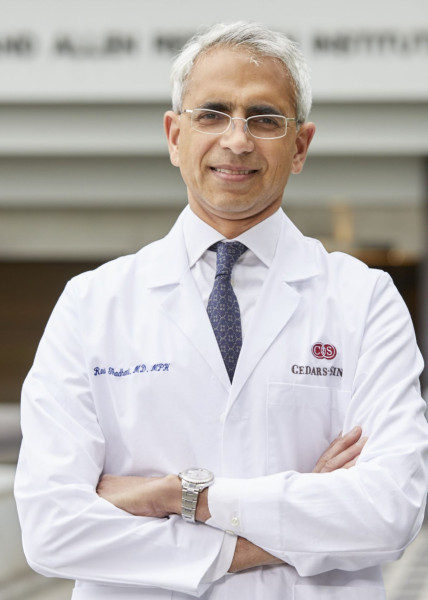 “We look forward to the continued contributions of Dr. Figlin and Dr. Hendifar,” said Ravi Thadhani, MD, MPH, executive vice president, chief physician executive and dean of the Medical Faculty at Cedars-Sinai. “We are confident their talent and leadership will continue to spur the growth and vision of Cedars-Sinai Cancer as one of the nation’s leading destinations for cancer care, research and education.”
As associate dean, Figlin, formerly interim director of Cedars-Sinai Cancer, will serve as a senior adviser and institutional leader. Drawing on his experience, he will guide the advancement of strategic and clinical cancer priorities across Cedars-Sinai Health System and assist with key physician and leadership recruitment efforts and national outreach.
“I look forward to building on the work we have done to promote research excellence that translates into leading-edge therapies for cancer patients,” Figlin said. “To support such work, strategic direction is key.”
Under Figlin’s leadership as interim director, Cedars-Sinai Cancer increased clinical volumes, expanded access to clinical trials and advanced the integration of cancer services across health system hospitals. He was instrumental in establishing the Investigator Initiated Trials Program in Cedars-Sinai Cancer and offering oversight for the Investigator Initiated Trials Incubator.
Through his work in clinical trials, 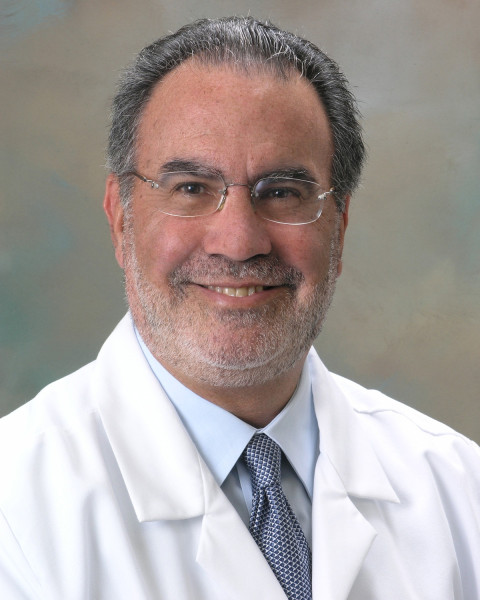 Figlin shifted the treatment landscape for renal cell carcinoma, the most common type of kidney cancer. His pioneering work in immunotherapy testing proved that the immune system could eradicate kidney cancer and achieve long-term survival. He has also been a principal investigator on pivotal trials of targeted therapies that block enzymes responsible for driving cancer cells to multiply, and in trials establishing combination therapies as a preferred first-line treatment.
Figlin is the Steven Spielberg Family Chair in Hematology Oncology and a professor of Medicine and Biomedical Sciences. He formerly served as chair and associate director of the Department of Medical Oncology and Therapeutics Research as well as associate director for Clinical Research at City of Hope Comprehensive Cancer Center. He also held an endowed chair in urologic oncology at the David Geffen School of Medicine at UCLA.
A member of multiple national professional organizations, Figlin has also published more than 430 peer-reviewed articles in major medical journals and authored and edited multiple textbooks on kidney cancer.
He currently serves as the editor of Oncology News Central and the Kidney Cancer Journal.
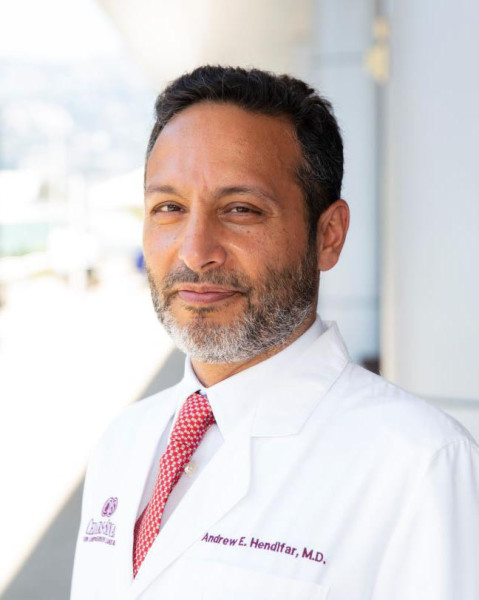 As interim director of Cedars-Sinai Cancer, Hendifar will continue building the academic cancer program based on excellence in clinical care, research and teaching. He will deepen the integration of cancer services at Cedars-Sinai Medical Center, Cedars-Sinai Medical Network and health system affiliates.
“I look forward to supporting the physicians, scientists and clinical care specialists who make up Cedars-Sinai Cancer,” Hendifar said. “By continuing to advance scientific discovery, precision medicine and patient-centered and community-informed approaches, we can redefine cancer care.”
Hendifar brings extensive clinical, research and management experience to this interim leadership role.
He has been a principal investigator on Phase III clinical trials and published in the highest-impact journals, including a Phase III study in The New England Journal of Medicine in May about an experimental treatment that nearly doubled survival time for patients with advanced pancreatic cancer.
Hendifar has led key studies on integrating artificial intelligence into pancreatic cancer care, and he is a principal investigator on multiple trials focusing on novel therapeutic strategies and targeting cancer wasting syndrome.
He currently serves as a professor of Medicine, medical director of the Cancer Clinical Trials Office and medical director of the Gastrointestinal Oncology Disease Research Group at the Cedars-Sinai Samuel Oschin Comprehensive Cancer institute.
Hendifar began his career at Cedars-Sinai in 2012, was a founding director of the Hematology and Oncology Fellowship Program and has served on several Cedars-Sinai committees, including those for the Internal Review Board, Pharmacy and Therapeutics, and Medical Oncology/Cancer Center leadership, as well as the Medical Executive Committee.
In addition to his medical and research accomplishments, Hendifar has executive managerial experience as chief medical officer for the Pancreatic Cancer Action Network and holds a master’s degree in health systems management from Tulane University, where he earned his medical degree. He has served as a member of the National Institutes of Health (NIH) Neuroendocrine Tumor Task Force and on the steering committee for the Precision Promise Consortium.
Cedars-Sinai Health Sciences University is advancing groundbreaking research and educating future leaders in medicine, biomedical sciences and allied health sciences. Learn more about the university.