


Cedars-Sinai and University Health Network Advance AI in Healthcare
International Health AI Experts in Applied AI, Medicine and Surgery Convened for Second Annual Artificial Intelligence in Medicine Symposium
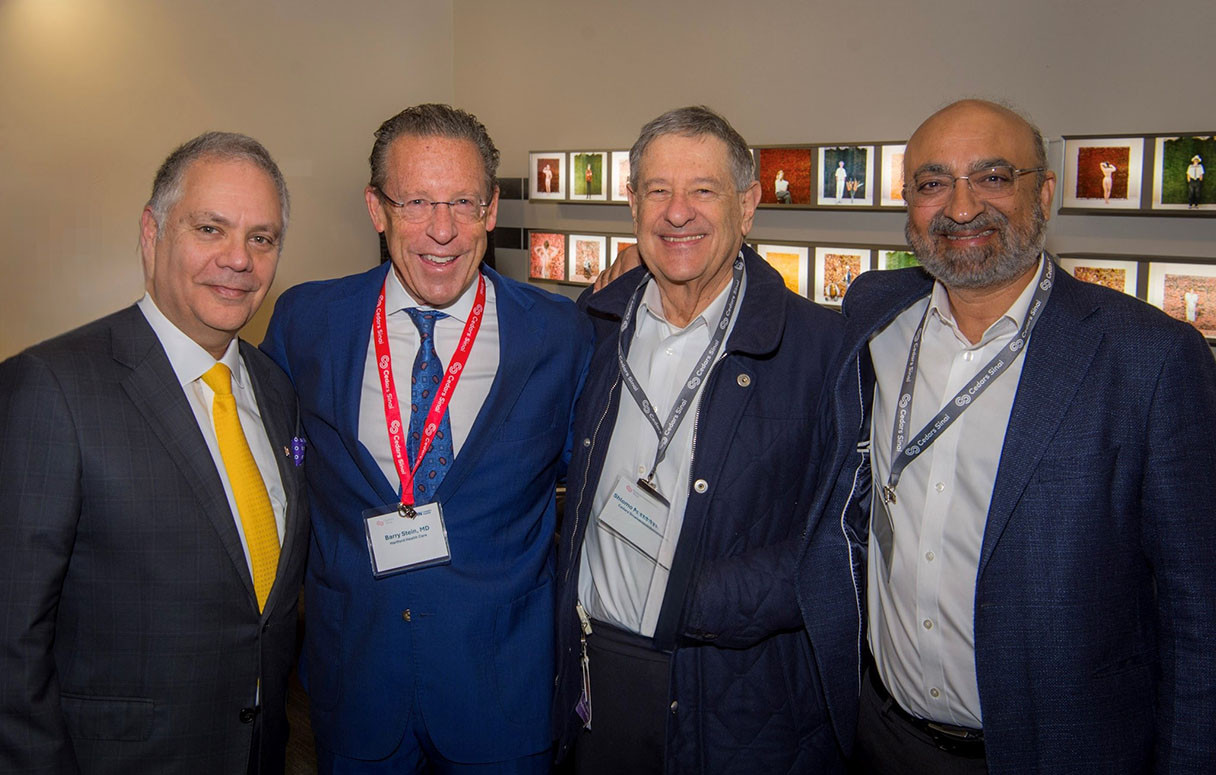
Cedars-Sinai and Canada’s largest research hospital, University Health Network (UHN), brought together more than 200 international leaders in applied artificial intelligence, medicine and surgery for the second annual Artificial Intelligence in Medicine Symposium.
A follow-up to a successful inaugural event in 2024, the symposium sought to advance the practical deployment of artificial intelligence in healthcare. Attendees from more than 40 institutions explored how to implement AI within clinical settings during the Dec. 12-13 event while addressing critical regulatory and ethical considerations.
“The event was designed to offer a road map to help health systems innovate, implement and integrate AI technologies to improve patient outcomes,” said Sumeet Chugh, MD, vice dean and chief artificial intelligence health research officer at Cedars-Sinai and co-chair of the symposium. “By convening experts from around the world, we created opportunities to exchange ideas, tackle challenges and accelerate the safe and effective use of AI in healthcare.”
The partnership between co-hosts Cedars-Sinai and UHN emphasizes the importance of global collaboration in a rapidly changing technological landscape.
“UHN is proud to partner with Cedars-Sinai and co-host this collaborative international symposium dedicated to advancing artificial intelligence in medicine,” said Barry Rubin, PhD, program medical director of UHN’s Peter Munk Cardiac Centre and symposium co-chair. “Our goal at UHN is to integrate AI and digital tools to improve patient outcomes and enhance the precision, speed and personalization of treatment.”
During a fireside chat, Peter L. Slavin, MD, president and CEO of Cedars-Sinai Health System, and Kevin Smith, PhD, president and CEO of UHN, discussed the need to maintain strong organizational culture while leveraging AI to enhance care delivery.
“In a time when forces are pulling countries and people apart, partnerships like these are essential,” Slavin said. “AI should not only improve efficiencies but also ensure equity in care and democratize access to information for patients.”
Smith also emphasized his hope for AI to transform care delivery without jeopardizing culture.
“Culture is our bedrock,” Smith said. “We strive to integrate AI into our workflows to improve lives, outcomes and efficiencies—without changing the culture of our unique medical center.”
The event featured panel discussions and debates on pressing topics that included data privacy, the need to train future clinicians on AI documentation tools, and the challenges of data usage and commercialization.
“Provocative topics and debates were purposeful,” Chugh said. “To answer tough questions, we first have to stimulate the conversations that will address these challenges.”
Cedars-Sinai and UHN have committed to reconvening for the third annual symposium in December 2026, continuing their shared mission to lead the global conversation on responsible AI integration in medicine.
Read More From the Cedars-Sinai Newsroom: Cedars-Sinai Strengthens AI Foundation, Accelerates Momentum