

Cedars-Sinai and California Institute of Technology Host Joint Symposia

The Joint Symposia, Hosted at Each Institution, Sought to Deepen Collaboration and Generate Ideas to Help Steer Developmental and Stem Cell Biology Into the Future
Cedars-Sinai and the California Institute of Technology (Caltech) recently hosted two symposia—one at each institution—to foster greater collaboration in developmental and stem cell biology.
The idea for the joint symposia came from Ophir Klein, MD, PhD, executive vice dean of Children’s Health, executive director of Cedars-Sinai Guerin Children’s, and the David and Meredith Kaplan Distinguished Chair in Children’s Health. Klein developed the plan with Jeffrey A. Golden, MD, executive vice dean of Research and Education and director of the Burns and Allen Research Institute at Cedars-Sinai.
“When you look at the region, Cedars-Sinai and Caltech are two premier institutions that have a tremendous amount of potential synergy and not a lot of areas where we compete with each other,” said Klein, who gave a presentation about renewal in oral epithelia at the April 18 kick-off event on the Caltech campus. “There is a lot we can accomplish together that we likely cannot accomplish separately, whether it’s Caltech having access to translational and clinical expertise or Cedars-Sinai having access to their outstanding engineering and basic science."
During the Cedars-Sinai symposium on May 1, Klein welcomed one of the newest members to the Cedars-Sinai research community, David Traver, PhD. Beginning June 1, Traver will serve as director of a new developmental biology and regenerative pediatrics center at Guerin Children’s and as a professor in the Department of Pediatrics.
During the two events, leaders in their fields delivered scientific presentations. Cedars-Sinai presenters included:
- John Chute, MD, director of the Division of Hematology and Cellular Therapy and the Linda Ostrowski Chair in Hematology/Oncology in honor of Barry Rosenbloom, MD
- Helen Goodridge, PhD, professor of Biomedical Sciences and a research scientist in the Cedars-Sinai Board of Governors Regenerative Medicine Institute
- Eduardo Marbán, MD, PhD, executive director of the Smidt Heart Institute and the Mark Siegel Family Foundation Distinguished Chair
- Margareta Pisarska, MD, director of the Division of Reproductive Endocrinology and Infertility and professor of Obstetrics and Gynecology
- Clive Svendsen, PhD, executive director of the Board of Governors Regenerative Medicine Institute and the Kerry and Simone Vickar Family Foundation Distinguished Chair in Regenerative Medicine
Speakers from Caltech included:
- Marianne Bronner, PhD, director of the Beckman Institute and the Edward B. Lewis Professor of Biology
- Michael Elowitz, PhD, the Roscoe Gilkey Dickinson Professor of Biology and Bioengineering
- Matt Thompson, PhD, assistant professor of Computational Biology
- Magda Zernicka-Goetz, PhD, the Bren Professor of Biology and Biological Engineering
“Our institutions are both interested in how biology can go wrong to produce disease, but we come at it from different directions: Caltech begins with fundamental biology, while Cedars-Sinai begins with 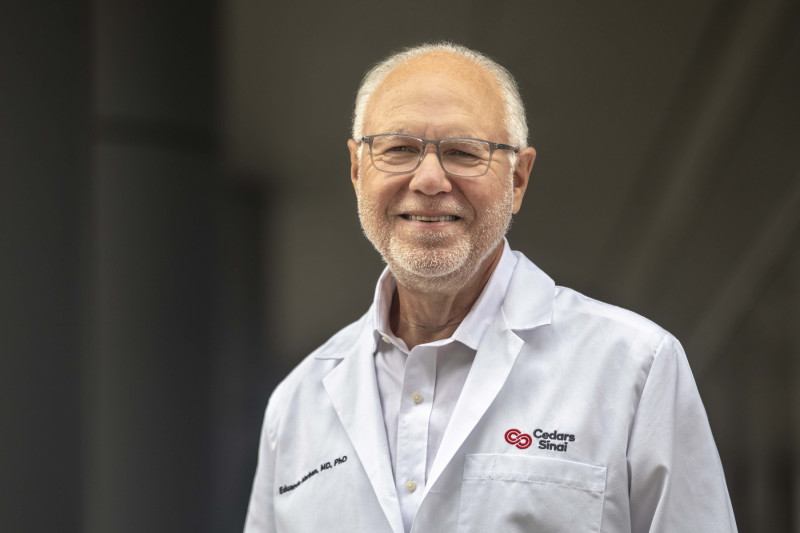 disease,” said Marbán, whose presentation focused on attenuation of DNA damage response by noncoding RNA drugs. “The opportunity to talk to each other will undoubtedly lead to powerful partnerships to improve human health.”
Presentations at the Cedars-Sinai symposium included topics such as the vascular control of hematopoietic stem cell regeneration (Chute), the use of synthetic biology to design circuits in cells to address biomedical problems (Elowitz), placentation and development of trophoblast cell lineages (Pisarska), and combining organ chip and stem cell technology to model human disease (Svendsen).
“These events brought together two institutions that are complementary, with a shared passion for discovery and application,” said Magda Zernicka-Goetz, PhD, who helped spearhead these newly launched events and also presented at the Cedars-Sinai symposium on building embryo models from stem cells. “I think that is why both symposia have been successful, because there is a dual passion for science and for application.”
Attendees also participated in a brainstorming session on how the two institutions can best partner. Ideas for further collaboration included visiting 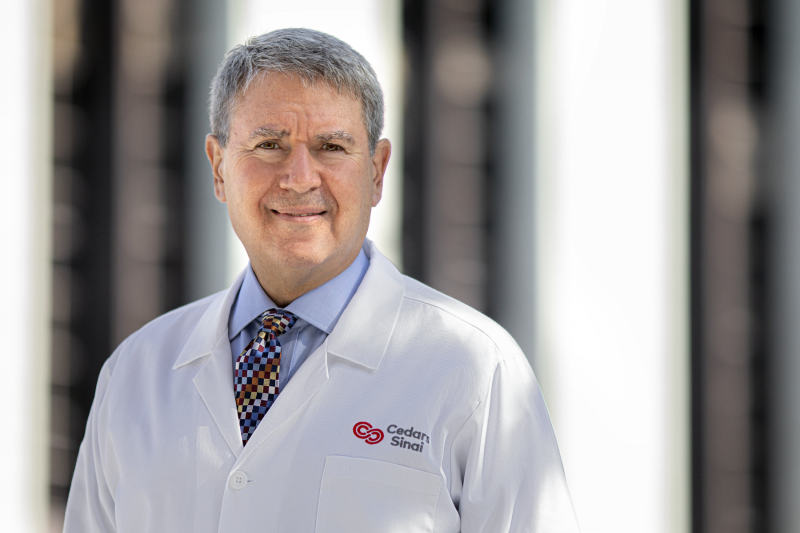 professorships, access to research cores at each institution, joint grant applications, shared postdoctoral and graduate student programs, and more networking-focused events and retreats.
“The speakers really highlighted the strengths of each institution: fundamental science at Caltech and translational science at Cedars-Sinai,” Golden said. “The brainstorming session also identified some wonderful ideas on how to move forward and future directions to solidify and strengthen an enduring partnership between the two institutions.”
Based on these sessions, Cedars-Sinai leaders—together with Bronner and Zernicka-Goetz—are planning upcoming events to bring together broader groups of investigators from each institution.
“I am hopeful that over time, we will have shared faculty, postdoc and student positions that leverage the science at both institutions,” Golden said. “We are putting in place processes to facilitate collaborations and use of each other’s strengths and resources. We are excited to see this collaboration mature.”
Follow Cedars-Sinai Academic Medicine on X for more on the latest basic science and clinical research from Cedars-Sinai.