


Study: Enoxaparin Bridging Can Be Safe, Cost-Effective for Heart Pump Patients

Out-of-Hospital Injectable Anticoagulant Bridging Therapy Is Associated With Longer Survival in Carefully Selected Patients
The anticoagulant drug enoxaparin can be a safe and cost-effective method to prevent blood clotting in patients with heart pumps who require alternative anticoagulation without the need for hospitalization (“bridging” procedures), provided that patients are properly screened for the treatment, according to new research from Cedars-Sinai published in the peer-reviewed journal Artificial Organs.
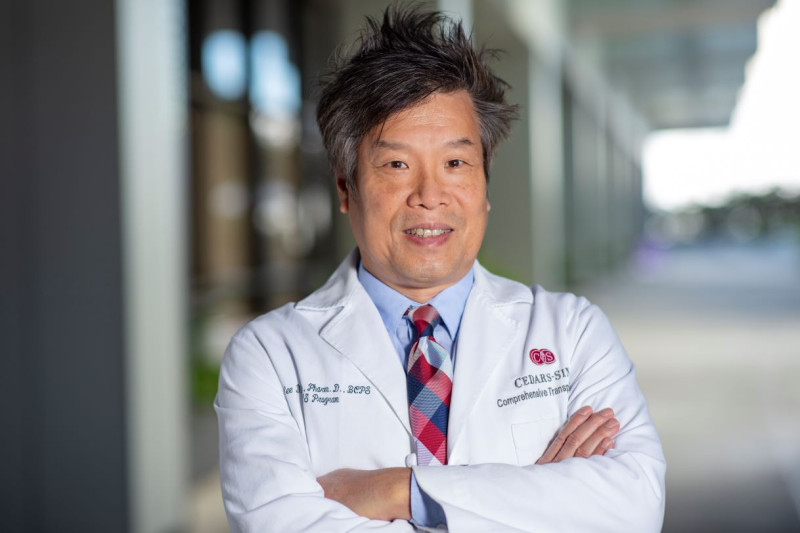 “The key to good outcomes with enoxaparin is careful selection of candidates,” said Lee D. Lam, PharmD, who monitors heart pump patients in the Mechanical Circulatory Support Program at the Cedars-Sinai Comprehensive Transplant Center. “For instance, patients must have a certain level of kidney functioning and lack a history of bleeding, blood clots or allergic reactions to drugs. Due to potential bleeding risks, enoxaparin should not be used within 30 days after the initial surgery to implant the heart pump.”
Lam is the first author of the new study. Oksana Volod, MD, professor of Pathology and Laboratory Medicine at Cedars-Sinai, is the corresponding author.
For the study, investigators analyzed medical records from 85 heart failure patients who had been implanted with left ventricular assist devices (LVADs) to boost the heart’s performance. They found that enoxaparin, which a patient can inject at home, is a treatment strategy that can be achieved at a small fraction of the cost of treatment in a hospital setting while improving quality of life. Use of this drug also was correlated with longer patient survival over a three-year period without major bleeding or blood clot events when compared with in-hospital bridging.
Other Cedars-Sinai authors include Lawrence S. Czer, Carmelita Runyan, Ieeshiah Otarola, Jason Jang, Jason Lau, Mignon Gau, Katrina Hernandez, Tram Ngo, Mario Aguillon, Newman Huie, Julie W. Chen, Robert Cole and Jaime Moriguchi.
Follow Cedars-Sinai Academic Medicine on LinkedIn for more on the latest basic science and clinical research from Cedars-Sinai.