


Research Tip Sheet: Radiation, Stroke Tied to Heart Dangers
The Latest Advances From Cedars-Sinai Investigators
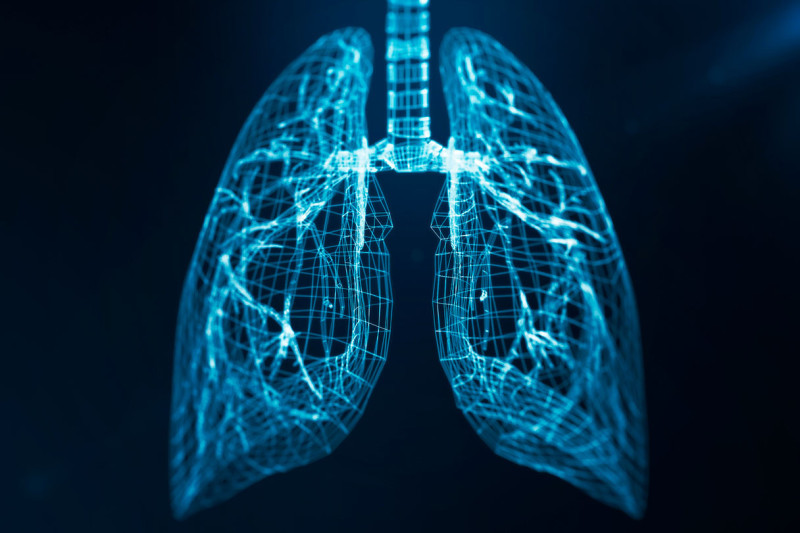 Radiation Therapy Dose Linked to High Blood Pressure in the Lungs
Lung cancer patients undergoing radiation treatment may be at higher risk for developing pulmonary hypertension, a type of high blood pressure that affects the arteries that carry blood from the right side of the heart to the lungs. Over time, that heightened pressure can lead to right-sided heart failure.
The study evaluated how exposure of the heart and lungs to radiation—such as during treatment for lung cancer—contributes to the development of pulmonary hypertension. The research was published in Thorax and led by investigators from Cedars-Sinai Health Sciences University.
“Our findings represent the first clinical evidence linking cardiopulmonary radiation dose to pulmonary hypertension in humans,” said Katelyn Atkins, MD, PhD, interim chair of the Department of Radiation Oncology at Cedars-Sinai and corresponding author of the study. “We found that pulmonary hypertension was associated with radiation dose to the pulmonary artery, but not other areas of the heart or lungs.”
Investigators looked at data on patients from Cedars-Sinai, Brigham and Women’s Hospital and Dana-Farber Cancer Institute receiving radiation therapy to the chest for lung cancer.
The study found that 12% of these patients experienced pulmonary hypertension, which can cause heart strain and shortness of breath.
Atkins said these findings highlight pulmonary hypertension as a potentially under-recognized outcome after cardiopulmonary radiation therapy, and that they support the need for increased awareness, new guidelines for assessing at-risk patients, and further study.
Additional Cedars-Sinai authors include Samuel C Zhang, Katrina D Silos, Olivia Peony, Maria Oorloff, Asneh Singh, Cody Ramin, and Andriana P Nikolova.
Other authors include Christopher E Kehayias, Christian Guthier, Andrew Warrington, Mina Bakhtiar, Cosmin Ciausu, John He, David E Kozono, David C Christiani, Anju Nohria, Aaron B Waxman, and Raymond H Mak.
Funding: This study was supported in part by the National Institutes of Health (NIH) under award number 2U01CA209414-07 (JH, RM, DCC) and the Cedars-Sinai Garber Award for Cancer Research (no award/grant number).
 Cedars-Sinai Analysis Links Prior Stroke to Sudden Cardiac Death
Cedars-Sinai Health Sciences University investigators have identified evidence showing that having a stroke could increase a person’s risk for sudden cardiac death, an electrical malfunction that causes the heart to stop beating. Their study was published in Nature Cardiovascular Research.
“A growing body of data suggests that a stroke may predispose patients to sudden cardiac death, which can occur well after they are hospitalized for the stroke,” said Sumeet Chugh, MD, director of the Center for Cardiac Arrest Prevention in the Smidt Heart Institute at Cedars-Sinai and corresponding author of the study.
Based on their own prior research as well as studies published by others, investigators found evidence linking strokes to development of lethal rhythms in the heart’s pumping chambers, a leading cause of sudden cardiac deaths. The data also associated strokes with abnormal electrocardiograms and disruptions of the autonomic nervous system, which controls functioning of the heart and other organs.
The review also pointed to elevated risk for takotsubo syndrome, which weakens the heart’s left pumping chamber, among stroke survivors.
Investigators said rigorous research is needed to confirm the link between strokes and sudden cardiac deaths and to determine whether interventions might prevent these fatalities.
The first author of this study is Vishnu Kadiyala and Kyndaron Reinier is a co-author.
Funding: This work was funded by an American Heart Association Rapid Impact Research Award to Dr. Reinier. Chugh holds the Pauline and Harold Price Chair in Cardiac Electrophysiology at Cedars-Sinai Health System, Los Angeles.
Cedars-Sinai Health Sciences University is advancing groundbreaking research and educating future leaders in medicine, biomedical sciences and allied health sciences. Learn more about the university.