


Research Tip Sheet: Cancer Biomarkers and Immunotherapy
The Latest Advances From Cedars-Sinai Investigators
 Study Advances Monitoring of Cancer Progression, Treatment Effectiveness Through Blood Tests
Cedars-Sinai investigators discovered that large oncosomes—fluid-filled sacs released into the bloodstream by aggressive cancer cells—contain a consistent set of molecules across cancer types. Their findings, published in Cell Reports Medicine, highlight large oncosomes in the blood as a possible method of diagnosing and monitoring malignancies.
Investigators also show, for the first time, that multiomics including single-cell RNA sequencing technology can be applied to large oncosomes.
“We found a common set of molecules in these large oncosomes that are released by brain, prostate and breast cancer cells and were also found in the blood of patients with metastatic prostate cancer,” said Dolores Di Vizio, MD, PhD, professor of Urology at Cedars-Sinai Cancer and lead corresponding author of the study. “Our next step will be to collaborate with mechanical engineers, biologists, genomicists, and transcriptomics experts to develop a blood test to monitor prostate cancer response to therapy. Eventually we hope to develop blood tests that help pair cancer patients with the most effective therapies, monitor disease more accurately and reduce the need for invasive biopsies.”
Other Cedars-Sinai authors include Taylon F. Silva, Minhyung Kim, Emily Ko, Javier Mariscal, Fatima Bedier, Bo Zhou, Yang Wang, Michael R. Freeman, Sarah Parker, Jennifer Van Eyk, Wei Yang, Edwin Posadas, Jlenia Guarnerio and Sungyong You.
Other authors include Elizabeth Hutchins, Wenyan Zhao, Yari Ciani, Zhuyu Qiu, Agnes Kittel, Megan Hall, Francesca Galasso, Rebecca Reiman, John Nolan, Clotilde Théry, Andries Zijlstra, Shannon Stott, Francesca Demichelis, Paul C. Boutros, and Kendall Van Keuren-Jensen.
Funding: This work was supported by grants from the National Institutes of Health (R01CA218526 to DDV, R01CA234557 to DDV; U2CCA271894 to PCB; U24CA248265 to PCB; R01CA270108 to PCB); by Cancer Research UK and Fondazione AIRC per la ricerca sul cancro ETS: Accelerator Award 20218 (A22792 to FD).
 Immunotherapy Effective for Advanced Liver Cancer Patients
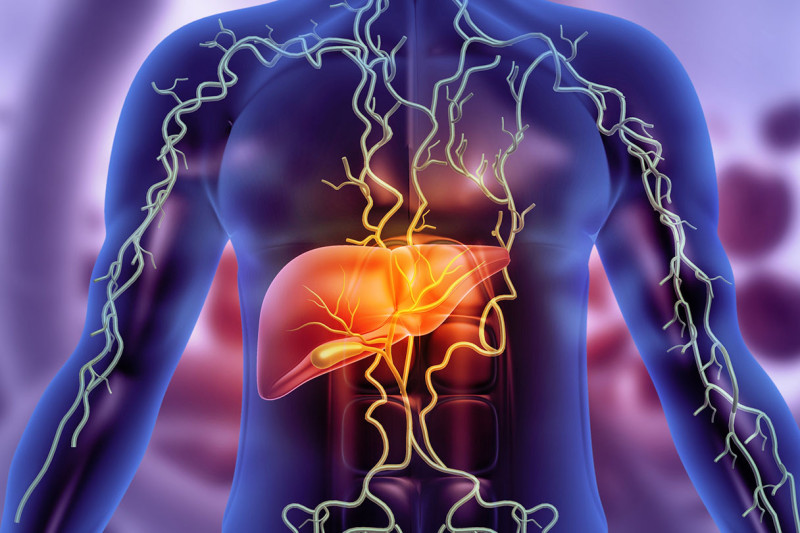
Immunotherapy is a more effective treatment for liver cancer patients than the commonly prescribed medication, according to a new study from Cedars-Sinai Cancer.
The study, published in the peer-reviewed journal Hepatology, shows how immunotherapy, which helps the body’s immune system attack and vanquish cancer cells, has transformed treatment for patients with advanced liver cancer.
“We analyzed data from more than 2,400 liver cancer patients and found that those treated with immunotherapy lived longer on average than those who took lenvatinib, a drug commonly prescribed for liver cancer patients,” said Ju Dong Yang, MD, associate professor of Medicine and director of the Liver Cancer Program at Cedars-Sinai and senior author of the study. “More long-term studies are needed to confirm our findings and help guide personalized treatment, but according to our preliminary findings, immunotherapy seems to be a better first-line treatment for patients with advanced liver cancer.”
While lenvatinib works to prevent cancer cells from multiplying, immunotherapy helps the body’s immune system attack and kill cancer cells. In the study, investigators found that eight months after treatment, fewer deaths occurred among patients treated with immunotherapy than among those treated with lenvatinib. Some groups, such as individuals with certain liver diseases or from specific racial backgrounds, seemed to benefit more, but additional research is required to verify these patterns.
Additional Cedars-Sinai authors include Yee Hui Yeo, Hyun-Seok Kim, Yun Wang, Hirsh Trivedi, Walid S Ayoub and Alexander Kuo.
Other authors include Joseph C Ahn, Wee Han Ng, Nicole Rich, Neehar D Parikh, Ghassan K Abou-Alfa, Kevin Sheng-Kai Ma and Amit G Singal.
Funding: Dr. Singal’s research is supported by NCI R01 MD012565 and R01 CA256977. Dr. Yang’s research is supported by NCI K08CA259534.
 Preclinical Cancer Study: Making Immunotherapy More Effective
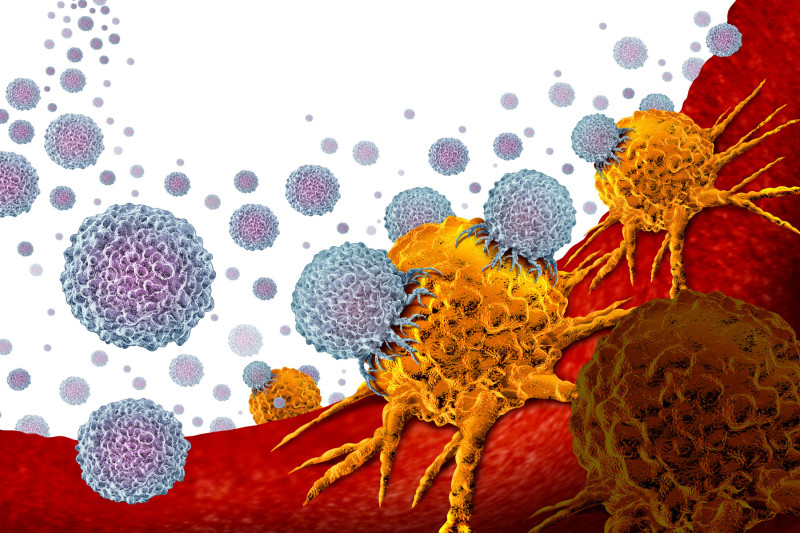
An enzyme that helps form the building blocks of DNA and RNA in cells also plays a role in helping cancer cells evade the body’s immune system, according to a preclinical study from Cedars-Sinai investigators. The findings, published in the peer-reviewed journal Nature Communications, suggest that medications that block this enzyme could boost the effectiveness of some immunomodulatory therapies.
“One of the ways that cancer survives is by hiding from the immune system,” said Bin Zheng, PhD, director of Melanoma Research, professor of Biomedical Sciences, the Debra Black Chair in Melanoma Research at Cedars-Sinai and senior author of the study. “Our findings reveal a novel role of the enzyme dihydroorotate dehydrogenase, or DHODH, in allowing cancer cells to evade immune system attacks. Our findings also suggest that drugs that inhibit this enzyme would help to boost the response of cancer patients to immune checkpoint therapies, such as anti-PD-1.”
Investigators demonstrated that turning off the DHODH enzyme in cancer cells in laboratory mice improved the effectiveness of treatments that boost the immune system. Medications that block DHODH have been developed and tested in blood cancers such as leukemia and lymphoma, and investigators plan to investigate the effectiveness of combining these drugs with immunomodulators.
Additional Cedars-Sinai authors include Da Teng, Ruiheng Wang, Aojia Zhuang.
Other authors include Kenneth D. Swanson, Haofeng Wu, Zhixin Niu, Li Cai, Faith R. Avritt, Lei Gu, John M. Asara and Yaqing Zhang.
Funding: This work was supported by US National Institutes of Health (NIH) R21CA227588, R01CA219814, R01CA266875, R01CA276448, Department of Defense (DOD) ME220187, and the Melanoma Research Alliance (to B.Z.), NIH R50CA232985 (to Y.Z.); and NIH R01CA290780 (to Y.Z. and B.Z.).
Cedars-Sinai Health Sciences University is advancing groundbreaking research and educating future leaders in medicine, biomedical sciences and allied health sciences. Learn more about the university.