


Replenishing a Patient’s Blood Cells After Chemotherapy, Radiation
Cedars-Sinai Preclinical Study Identifies Protein That Repairs Bone Marrow so Blood-Replacing Cells Can Grow After Cancer Treatments
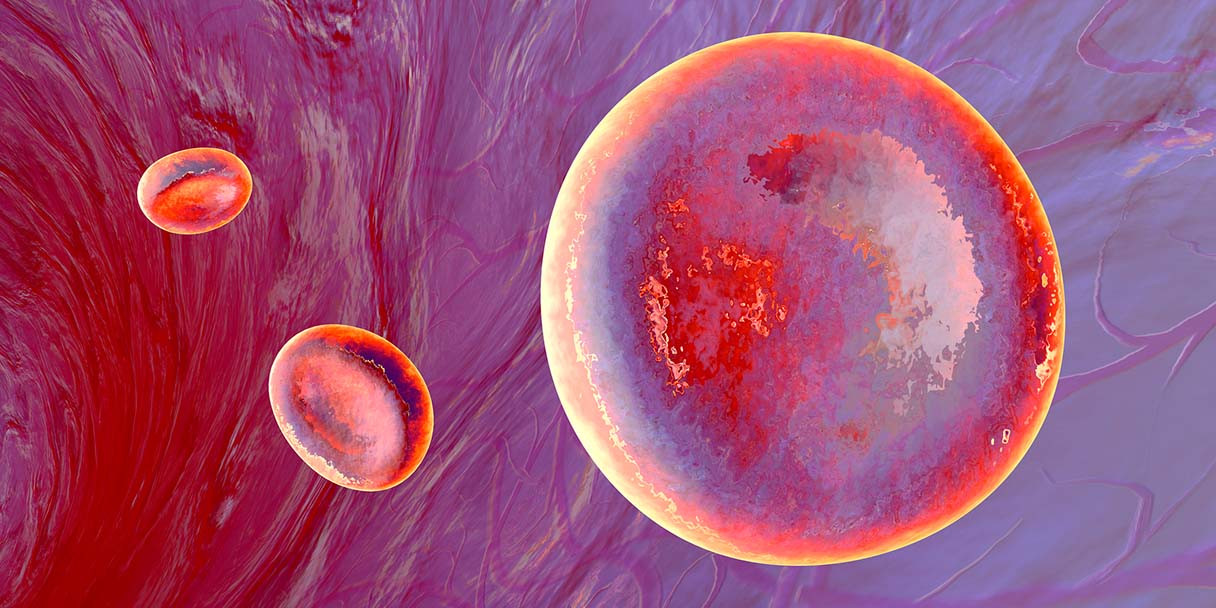
Cedars-Sinai Health Sciences University investigators have identified a protein that helps repair damage to the bone marrow after chemotherapy and radiation.
The protein restores the blood stem cell niche—the specialized environment that supports blood-forming stem cells—allowing the bone marrow to resume producing the blood cells the body needs.
 Their preclinical study, published in Blood, could yield future treatments that help cancer patients recover faster after chemotherapy and radiation.
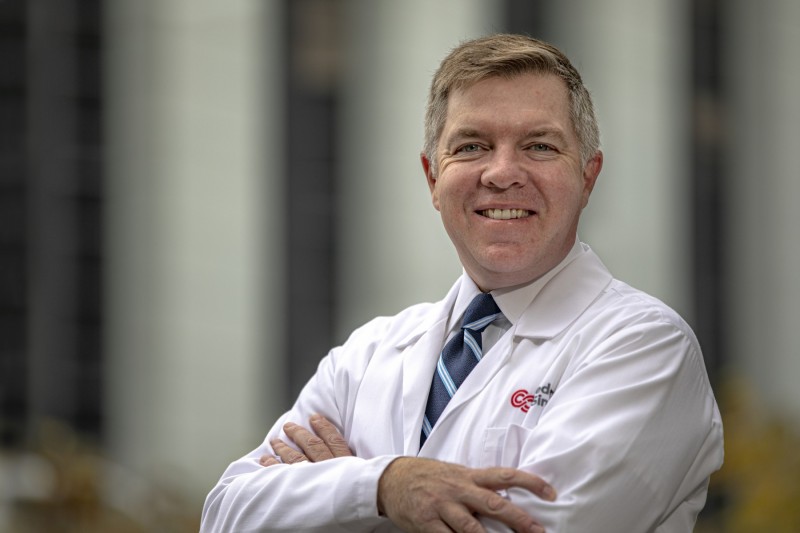
“The mechanisms that govern how the blood stem cell niche recovers after injury are not well understood,” said John Chute, MD, director of the Division of Hematology and Cellular Therapy at Cedars-Sinai and senior author of the study. “We identified a mechanism that stimulates niche recovery, which opens an exciting avenue to help patients replenish their entire blood system after chemotherapy or radiation.”
Chute compared the niche to the soil in a garden in which blood stem cells—which generate all of the body’s blood cells—blossom or grow. The niche is made up of several types of cells that tend to the blood stem cells, spurring them to divide and multiply so that they can replace blood cells that are damaged or lost.
“Chemotherapy and radiation therapy cause severe DNA damage to the niche cells,” Chute said. “The blood stem cells can’t regenerate because of this damage to their ‘soil,’ and this depletes the patient’s blood count for weeks.”
For patients, this means debilitating fatigue and increased risk of infection, bleeding and prolonged hospitalization.
Investigators found that a protein called R-spondin 2, which amplifies the signaling in cells that line blood vessels in the bone marrow, speeds up the recovery of the niche.
 When investigators treated laboratory mice that had been exposed to total body irradiation with R-spondin 2, the blood stem cell niche—specifically the cells lining the blood vessels in the niche—recovered more quickly than in untreated mice.
A key and surprising finding was that R-spondin 2 acted on the vascular niche cells, rather than the blood stem cells themselves.
Chute said that these findings may open the door to future research focused on the discovery and augmentation of mechanisms for niche repair. Targeting such mechanisms could accelerate the recovery of patients receiving chemotherapy or undergoing stem cell transplantation.
“Our outcomes for patients undergoing blood and marrow transplant are exceptional,” said Robert Figlin, MD, interim director of Cedars-Sinai Cancer. “This type of translational research can yield further improvements for those patients and all patients undergoing chemotherapy or radiotherapy.”
Additional Cedars-Sinai authors include Vanessa N. Montinelli, Samantha Grohe, Xue Ying Song, Jacqueline Turnlund, Hannah Hackbart, Joshua Sasine, Morgan Brady, Masahiro Muraoka, Rucha Kadam, Flavia D. Cavicchioli, Sage Kang, Ashley Dawson, Mimoli Uehara, Courtny Dizon, Theresa Krack, Peibin Yue, and Yuwei He.
The paper’s other author is Kurt D. Hankenson, University of Michigan.
Funding: This work was funded, in part, by NIAID awards U01 AI159622 (PI: John Chute), R21 AI193964 and NHLBI award R01 HL086998 (PI: John Chute).
Cedars-Sinai Health Sciences University is advancing groundbreaking research and educating future leaders in medicine, biomedical sciences and allied health sciences. Learn more about the university.