

Q&A: The Future of Space Medicine Research
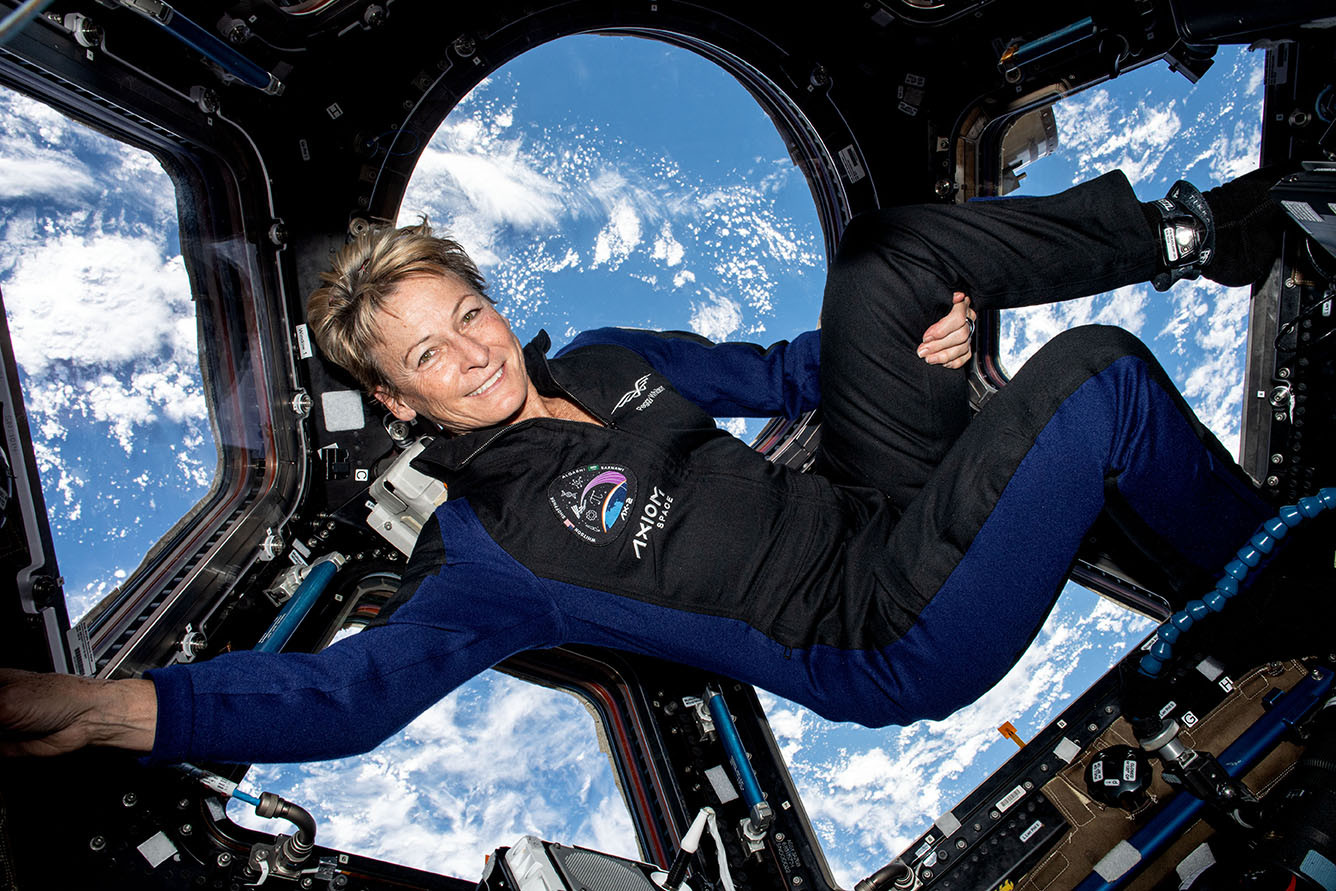
Peggy Whitson, America’s Most Experienced Astronaut, Discusses the Next Generation of Off-Planet Science With Cedars-Sinai Space Medicine Research Expert
Astronaut Peggy Whitson, PhD, has spent more time in space than any astronaut in America. She recently visited Cedars-Sinai as part of its Regenerative Medicine Seminar Series.
Whitson, a biochemist with more than 38 years of space and science experience at NASA, is currently vice president of Human Spaceflight for Axiom Space, the only company with human spaceflight experience on board the International Space Station. She has flown on two Axiom Space commercial astronaut missions in addition to her three NASA long-duration spaceflights.
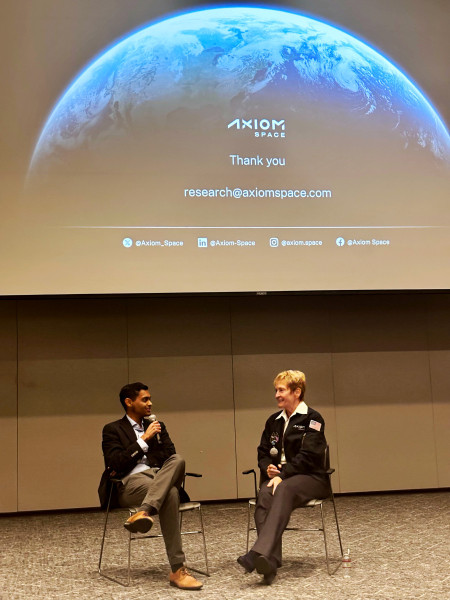
Whitson sat down for a “fireside chat” with Arun Sharma, PhD, director of the Cedars-Sinai Center for Space Medicine Research.
Here is an excerpt from their conversation:
 Arun Sharma: What are you most excited about, sciencewise, for the next generation of Axiom Space missions?
Peggy Whitson: Part of the reason I was excited to join Axiom Space was the fact that one of their goals is manufacturing in space, and I really wanted to see some of that exciting research take that next step. I think we are going to be able to unlock microgravity, use it as a tool for expanding our capabilities and then bring that capability back to Earth.
What capabilities do you think are critical for the next generation of life science in space?
I think the most important thing is having the capability to analyze and assess on board what's happening, get the data to the ground quickly and have it already processed using orbital data centers. Orbital data centers and data architecture will allow us to do iterative science and process and analyze information in real time on board. I think that will be game changing because it will allow us to quickly take advantage of new ideas that come out of the data.
When it comes to designing experiments for research in space, what should investigators consider?
The biggest thing from a safety perspective is containment. We must be able to protect the crew. And in some cases, we're protecting what we're working on from the crew. Sometimes creating this containment can take away from the ease with which we can do investigations. So I think the right balance needs to be assessed for each investigation.
Another thing to consider is that in the past we thought we had to make everything special for space. But we found a lot of things just off the shelf will work. So take the simplest route first, and try and use as much as possible off the shelf. It costs a lot less than it does to start from scratch and develop all new hardware.
Space is going to become more accessible. So we will have a chance to learn not just how selected astronauts respond to space, but how an everyday person responds to this unique situation. Talk to us about the concept of space for everybody, and what you and Axiom Space are doing to support that vision.
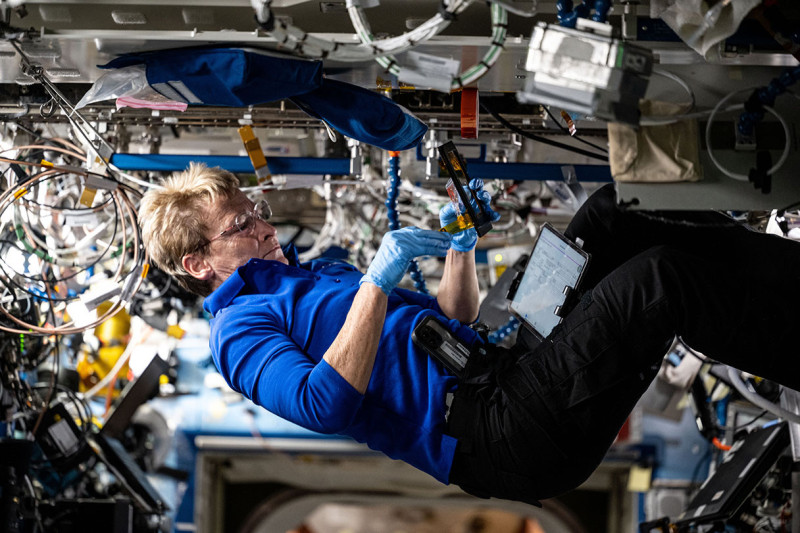 One of the investigations we did on our Axiom Mission 4 (Ax-4) was called Suite Ride, and it looked at insulin response in microgravity. We studied off-the-shelf techniques for monitoring glucose, and tested stability for the insulin on board and injection techniques— demonstrating that diabetes tools operate accurately in space. That's one specific example of how we are looking at opening up access to space.
What do you see as the role of a major academic medical center like Cedars-Sinai in the space ecosystem?
Space offers some unique opportunities, and organizations like Cedars-Sinai have the capability of taking that to the next level by enabling in-space biomanufacturing of advanced materials that we cannot make on Earth to benefit patients everywhere. This research in microgravity will provide the science community the opportunity to develop disease models, helping us better understand diseases to make new drugs and drug therapies for patients. This is an important role that Cedars-Sinai plays in opening up space to other organizations and researchers by just showing them what's possible from a medical perspective.
Do you have advice for students and other trainees who might ultimately pursue careers in space medicine?
Adaptability is important. And I think collaboration is incredibly important when you're working in space. You have to be able to trust people that you're working with. You have to be able to communicate effectively.
I applied to be an astronaut for over 10 years and was rejected until the 10th year. But those 10 years were some of the most valuable because of the experience I gained. It doesn't have to be a straight line to get where you want to go if you are pursuing your goals. Take advantage of the experiences that you have and learn from them. Don't be afraid of failing. You learn from that, and then you make the next run better.
Cedars-Sinai Health Sciences University is advancing groundbreaking research and educating future leaders in medicine, biomedical sciences and allied health sciences. Learn more about the university.