

NPR: Scientists Are Looking Into the Benefits of Growing Human Tissue in Space
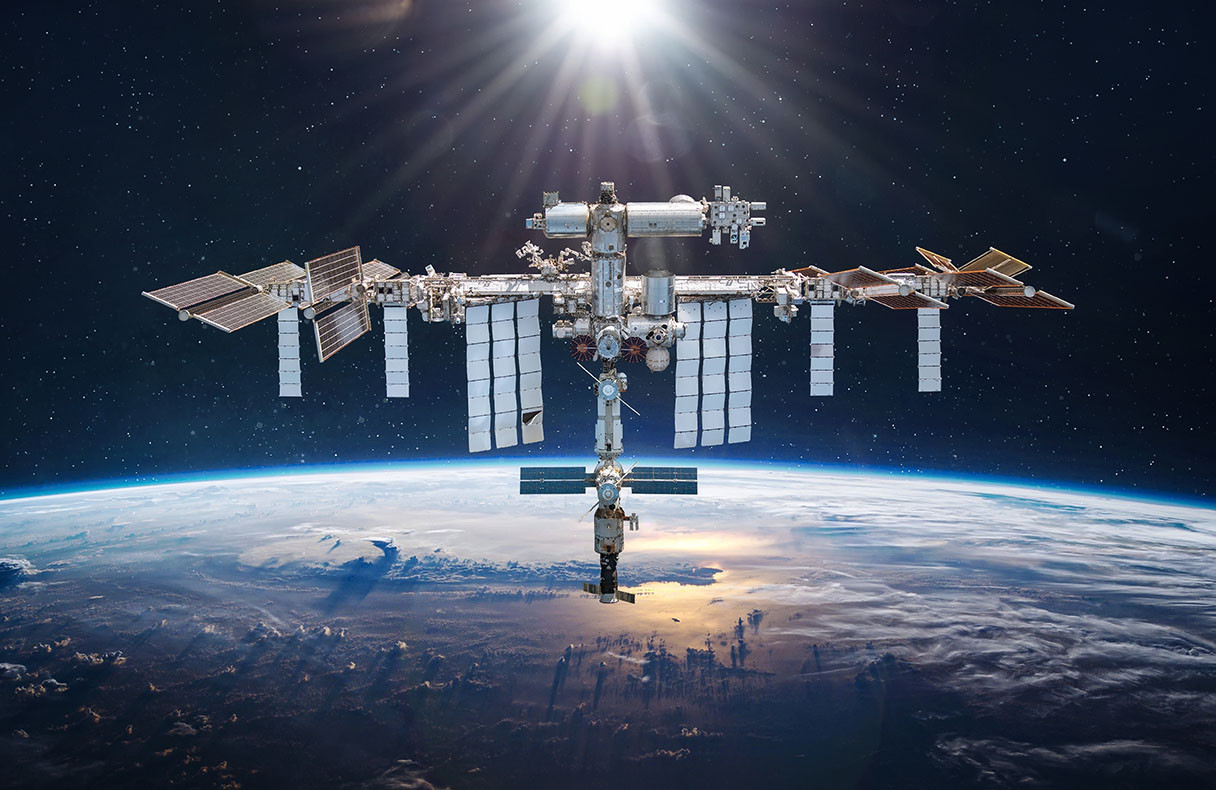
NPR program Morning Edition recently interviewed Arun Sharma, PhD, research scientist in the Board of Governors Regenerative Medicine Institute and the Smidt Heart Institute at Cedars-Sinai, about stem cell research at the International Space Station that could lead to easier production of liver organoids—cell clusters that mimic liver functions—in space.
Organoids are used to model diseases and test potential treatments. They can be made in a scientific laboratory on Earth, but research suggests the microgravity environment (weightlessness) of space improves organoid function.
Sharma, director of the Cedars-Sinai Shared Resources Laboratory for Advanced Stem Cell Modeling, told reporter Will Stone that his laboratory is focused on the heart and also is working with NASA on stem cell research in space.
“The thing that everybody’s looking for is something that can only be done up there, and you cannot do it down here,” Sharma said. “We and others have shown that certain stem cell populations can proliferate or divide faster in space.”
Sharma told Stone scientists hope to one day be able to develop actual organs in space and use them for transplants.
“I don’t think we’re close yet to fully, perfectly approximating a human heart on Earth from stem cell-derived cells,” he said.
But in the meantime, he added, investigators can gain valuable insights into how cells function without gravity.
“By having better model systems—systems that have, say, blood vessels incorporated into them—we can better approximate how certain drugs would affect the heart,” he told Stone.
Click here to listen to the entire segment from NPR.