


Melanoma: Age-Related Biological Changes Cause Tumors to Spread
Cedars-Sinai Investigators Discover Possible Path to New Therapies for Skin Cancer Metastasis by Identifying Age-Related Changes to Immune Cells
In a preclinical study, Cedars-Sinai investigators have demonstrated how age-related changes to cells surrounding a tumor make melanoma, a deadly skin cancer, more likely to spread in patients age 70 and older. Their research, published in the peer-reviewed journal Cancer Research, could lead to new therapies to help prevent melanoma metastasis.
“We set out to determine what drives melanoma metastasis in aging, and whether we can introduce changes that stop the cancer from spreading,” said Ze’ev Ronai, PhD, director of the Translational Research Institute and interim scientific director of Cedars-Sinai Cancer, and senior author of the study. “We identified a possible target for age-dependent therapies in melanoma and in other tumor types that could help us address difficult-to-treat cancers.”
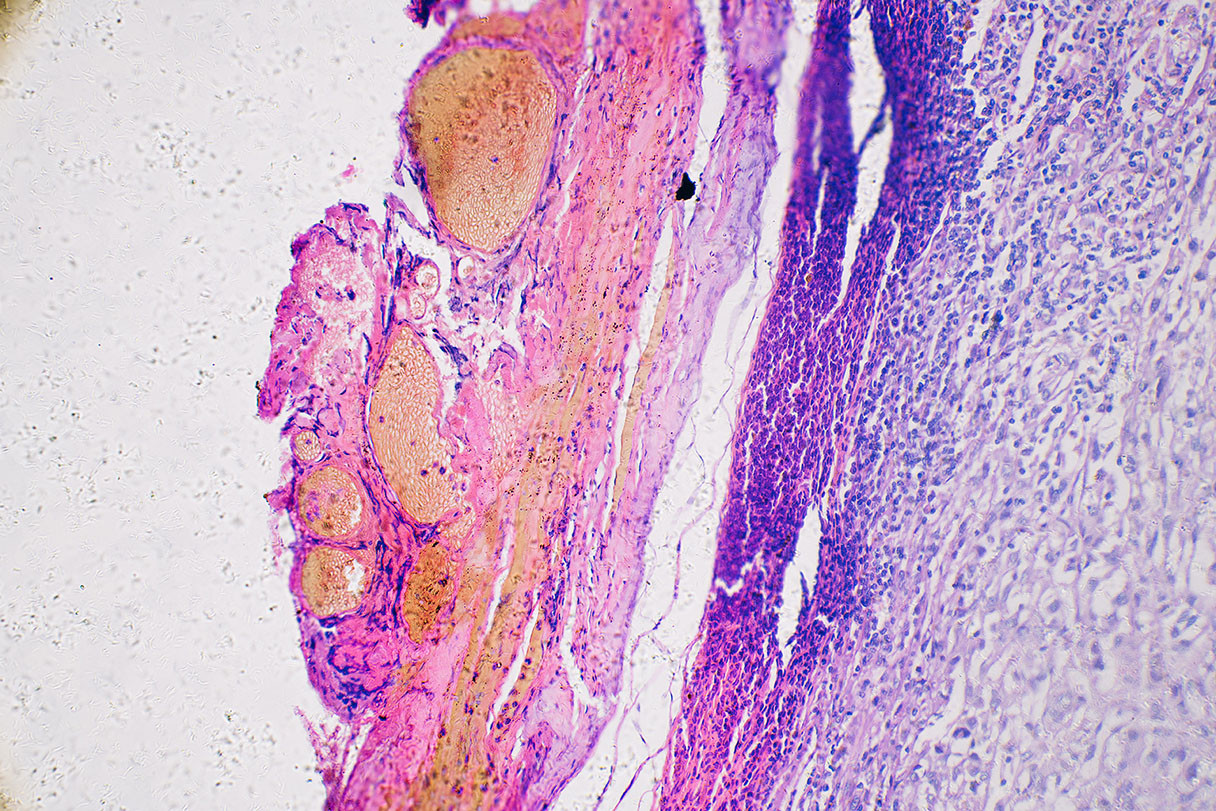
Working with aged laboratory mice, investigators discovered that aging alters the activity of immune cells called macrophages in the immediate vicinity of the tumor. This supports tumor cell spreading, resulting in metastases. Their experiments found that inhibiting expression of a protein called TREM2 on the surface of macrophages prevented melanoma from spreading to the lungs of aging mice. They confirmed these results by looking at the cell composition of tumor samples from human melanoma patients age 70 and older.
Additional authors include Marzia Scortegagna, Rabi Murad, Parinaz Bina, Yongmei Feng, Rebecca Porritt, Alexey Terskikh, Xiao Tian, Peter D. Adams and Kristiina Vuori of Sanford Burnham Prebys Medical Discovery Institute (SBP), where the work was initially performed.
Funding: This work was supported by shared resources at the SBP Cancer Center supported by NCI grant P30CA030199, NCI grant R35CA197465 (to ZR) and NIA support grants P01 AG073084 (PA), and R00AG068303 (XT).
Follow Cedars-Sinai Academic Medicine on LinkedIn for more on the latest basic science and clinical research from Cedars-Sinai.