

Exercise Focus Group Leaps Into Virtual Reality
Cedars-Sinai Researchers Listen, Learn as Latino Community Members Evaluate Virtual Reality Dance Exercise
In a community center conference room tucked into the heart of Los Angeles, the scene might look a little strange at first: People moving side to side and back and forth, waving their arms. But there’s no music playing and no dance instructor in sight.
That’s because the rhythm and instruction are happening in virtual reality.
The dancers are participating in a focus group organized by Cedars-Sinai researchers who are launching Movement Over Virtual Reality (MoVR), a physical activity program aimed at helping Latinos reduce their risk for obesity and Type 2 diabetes through Latin dance-inspired VR exercise.
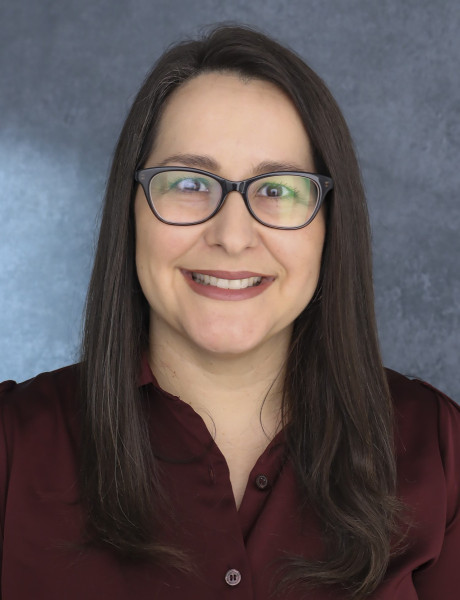 “We think this community is being left out of this amazing technology that can be fun and engaging,” said Yelba Castellon-Lopez, MD, research scientist in the Castellon-Lopez Lab at the Cancer Research Center for Health Equity at Cedars-Sinai and the study’s principal investigator. “Our goal is to bring that to the community.”
MoVR builds on the proven success of the Centers for Disease Control and Prevention’s Diabetes Prevention Program, a yearlong lifestyle intervention that recommends 150 minutes of moderate physical activity each week.
But for many Latinos, regular gym or outdoor exercise isn’t always realistic.
“Some participants have said they work all day, come home late, and don’t feel safe walking in their neighborhood parks,” Castellon-Lopez said. “They see this as a way to overcome that barrier—exercising in a fully immersive way, but in the safety of their own home.”
So far, more than 100 Angelenos have participated in MoVR focus groups, which are conducted in both English and Spanish and divided by age. Participants, ranging from ages 18-70, wear virtual reality headsets and follow energetic dance routines set in vibrant virtual environments—no travel or gym membership required.
“I really like it,” said participant Julia Hernandez. “Maybe my kids will want to try, too. If they see me exercising, they might say, ‘Oh, Mama, I want to do that!’ I think it could be good for my whole family.”
Another participant, Evelyn Pacas, said the experience went beyond physical benefits.
“Besides getting some exercise and breaking a sweat, I laughed a lot—and laughter helps lift your spirits,” she said. “It was just 10 minutes, but imagine how much better I’d feel doing this more regularly at home.”
After Castellon-Lopez and team review the focus groups’ results, they plan to begin a new study in which participants would get their own VR goggles to work out with in their own homes.
“The goal isn’t to replace going outside for a walk,” Castellon-Lopez said. “It’s to offer an additional tool—something culturally relevant, safe and motivating—to help people live healthier lives.”
Read more in Discoveries Magazine: Preserving Memory in the Latin Community