

Cedars-Sinai Enhances Clinical Decision-Making With OpenEvidence

New Clinical Reference Tool Links Individual Patient’s Electronic Health Records With the Latest Medical Evidence to Enhance Diagnoses and Treatments
Cedars-Sinai clinicians now have enterprise access to an AI-enabled clinical reference tool designed to support diagnosis and treatment decisions by combining medical evidence with relevant information from a patient’s electronic health record.
The deployment of OpenEvidence reflects Cedars-Sinai’s broader strategy to use AI tools and technologies to safely improve care precision and produce better patient outcomes.
 Through this partnership, Cedars-Sinai physicians, nurses, pharmacists and therapists can ask clinical questions and retrieve medical literature that is relevant to an individual patient’s health profile. The AI tool can help answer clinical questions by linking the latest scientific findings with a patient’s prior procedures, comorbidities, medications, allergies and other health data recorded over time.
Cedars-Sinai also plans to incorporate its own care pathways, protocols and best practices into the OpenEvidence enterprise platform. This will enable Cedars-Sinai clinicians to view current medical literature alongside Cedars-Sinai-specific guidance for delivering safe, high-quality care.
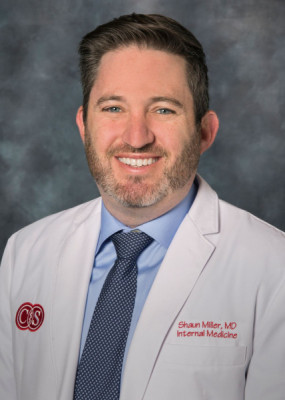
“Integrating OpenEvidence into our electronic health records allows clinicians to look at the latest medical evidence in the context of a patient’s medical history and individual health data, giving physicians and other healthcare professionals a more complete and actionable understanding at the moment of care,” said Shaun Miller, MD, MBA, chief health informatics officer at Cedars-Sinai.
Patient information from the electronic health record will be used only to support care decisions for individual patients and will not be stored by OpenEvidence or used for any other purpose.
“Medicine is not practiced in the abstract. It is practiced on individual patients with unique histories and complexities,” said Daniel Nadler, CEO and founder of OpenEvidence. “This partnership with Cedars-Sinai establishes a new standard: clinical AI that doesn’t just retrieve information but interprets the world’s medical knowledge in the context of the specific patient. We are building a tool that aligns cutting-edge evidence with real-world care to drive better outcomes.”
OpenEvidence is one example of Cedars-Sinai’s broader AI strategy, which aims to streamline and improve patient care, reduce administrative burden on clinicians and educate the workforce about the evolving uses of these technologies.
 For example, Cedars-Sinai is using AI to help nurses and other care team members document patient care in real time, analyze and produce reports from echocardiograms, and predict which of two available chemotherapy options for pancreatic cancer would be more effective for an individual patient.
Miller said it is critical to deploy fair, appropriate, effective and safe tools that provide tangible benefits to the roughly 1 million patients treated at Cedars-Sinai each year.
“We want to create a coherent, secure AI ecosystem rather than isolated pilots, and we approach all AI integration carefully,” Miller said.
Before any AI system goes live at Cedars-Sinai, it goes through a specially designated committee that reviews tools prior to deployment and audits their impact. The committee includes data scientists, clinical experts, administrative leaders and other specialists specific to the particular area under review.
This oversight process is designed to ensure new tools meet Cedars-Sinai’s guidelines for human oversight and verification of AI-generated output, data privacy, and protection of patient health information and intellectual property.
“We see artificial intelligence as an opportunity to rethink how we deliver care and run our operations,” said Mouneer Odeh, MA, chief data and artificial intelligence officer at Cedars-Sinai. “As technologies like OpenEvidence become part of how we work, our strategy centers on improving workflows while supporting the people who do the work.”
AI, Odeh said, is advancing at an incredible pace.
“We are constantly evaluating new technologies with cautious optimism, so we can safely deliver better experiences for our patients and care teams while providing exceptional care to the communities we serve,” he said.
Cedars-Sinai Health Sciences University is advancing groundbreaking research and educating future leaders in medicine, biomedical sciences and allied health sciences. Learn more about the university.