

Cedars-Sinai Biobank Earns Rare Global Accreditation
Biobank and Research Pathology Resource Is 1 of Only 6 California Biobanks Accredited by College of American Pathologists
For the third consecutive year, Cedars-Sinai’s Biobank and Research Pathology Resource has earned international accreditation from the College of American Pathologists. The biobank is one of only six to receive this accreditation in California.
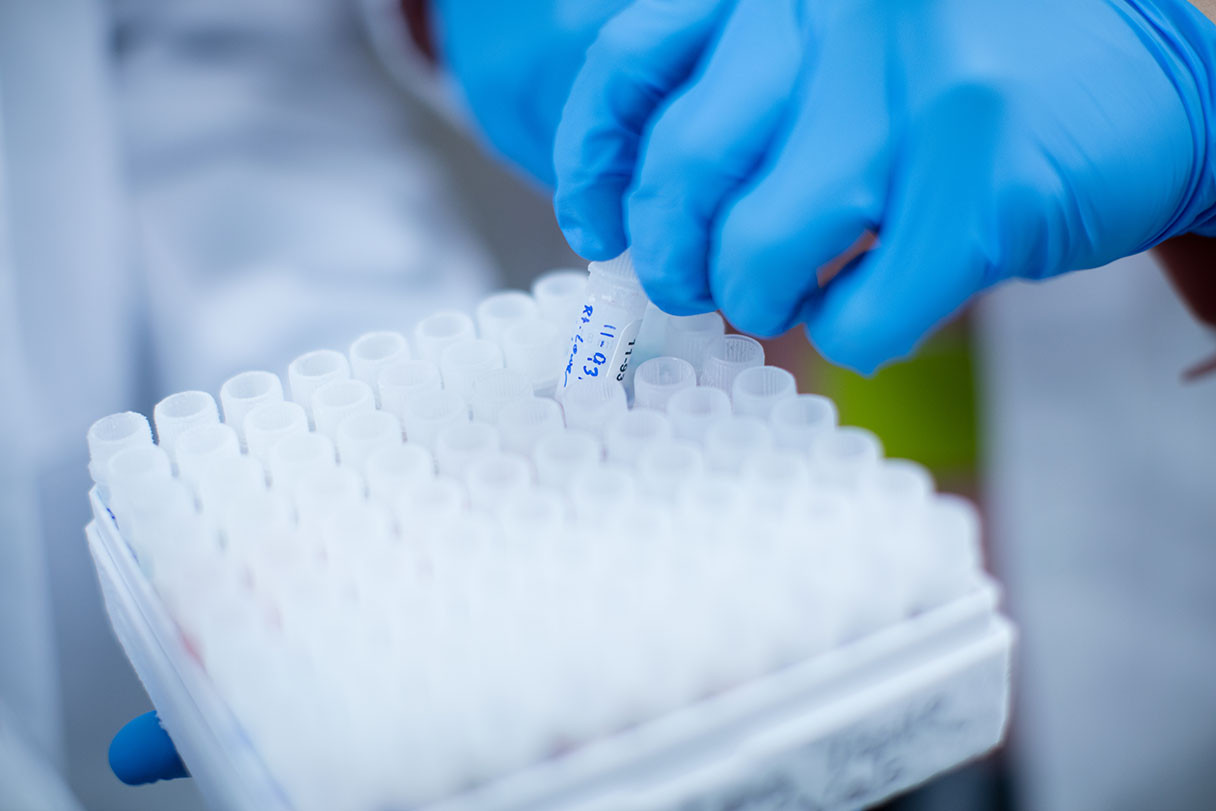
A biobank—short for biospecimen bank—is a repository of human blood, fluid, tissue and cell samples used by scientists to advance medical breakthroughs.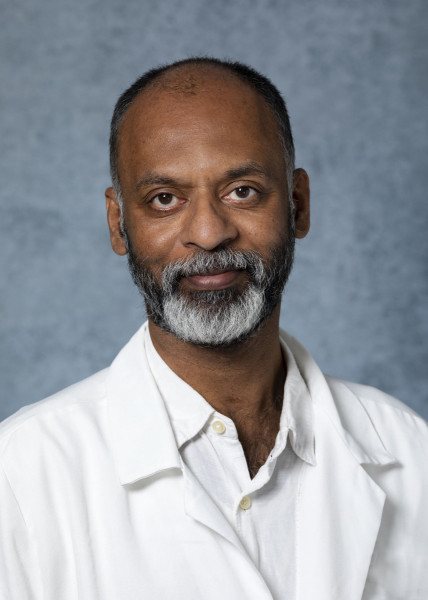
“This reaccreditation reflects our broad capabilities and Cedars-Sinai’s sustained investment in compliance and quality,” said V Krishnan Ramanujan, PhD, MSHS, director of the Biobank and Research Pathology Resource. “It also signals to scientists that our specimens meet the highest standards—essential for validating their research and for the development of potentially lifesaving diagnostics and treatments.”
The Biobank and Research Pathology Resource has the rare distinction of earning accreditation across all four of its specialized areas:
- Biobanking
- Histology, preparing the tissues for studying organism structure and form under a microscope
- Research pathology, the study of disease causes, mechanisms and effects
- Microscopy and image analytics, the analysis of digital microscope images
Biobanks typically earn accreditation in only one or two areas.
“The Cedars-Sinai Biobank and Research Pathology Resource demonstrates leadership, innovation and a passionate commitment to standards of excellence while providing the highest-quality services, ultimately for patients,” said Earle S. Collum, MD, chair of the College of American Pathologists Council on Accreditation.
More Than a Decade of Impact
Cedars-Sinai established its biobank more than 10 years ago with partial funding from the National Institutes of Health (NIH). It contains more than 1.5 million specimens donated by patients and other volunteers who want to accelerate progress by participating in medical research.
“This reaccreditation affirms Cedars-Sinai’s leadership in biospecimen research,” said neuropathologist Jeffrey A. Golden, MD, executive vice dean of Research and Education, director of the Burns and Allen Research Institute, and the Linda and Jim Lippman Distinguished Chair in Academic Medicine. “It boosts our credibility among scientists applying for grant funding, enhances global collaboration, and accelerates discoveries in drug development, diagnostics and precision medicine. For researchers who rely heavily on biobank specimens, accreditation means we can trust the tissue and the data to reflect the true biology of a disease.”
While many biobanks focus only on specimen storage, Cedars-Sinai’s biobank combines tissue collection, histopathological analysis, digital imaging, and microscopy and image analytics.
“This allows us to store samples, ensure quality and provide comprehensive services to researchers,” said Ramanujan, associate professor of Pathology and Laboratory Medicine. “This puts us ahead of traditional biobank models when it comes to meeting investigators’ needs.”
Ramanujan leads a team of 10 that oversees the biobank and samples. The repository is monitored around the clock and access is tightly controlled.
Living Biobank and Future Goals
In 2024, the Biobank and Research Pathology Resource team added a “living biobank” with 3D organoids—tiny clusters of human cells that mimic the structure and function of whole organs. Organoids help researchers test how a patient’s cells respond to treatments, allowing clinicians to select personalized treatment based on the patient’s unique biological analysis.
The addition of a living biobank was timely: In 2025, new NIH guidelines were issued urging scientists to use organoids and other human cell approaches in their research.
The living biobank innovation also furthers Ramanujan’s vision that the Biobank and Research Pathology Resource keeps up with evolving research needs.
“That’s essential,” he said, “because human health discoveries depend on our work.”
Ramanujan aims to fully automate the biobank within the next five years, which would help it grow and provide more options to the research community. He emphasized the resource would not be possible without the generous participation of people eager to make a difference.
“Their voluntary contributions fuel research that helps future patients,” he said. “That cycle—from patient generosity to improved outcomes—is what drives me every day.”
Cedars-Sinai Health Sciences University is advancing groundbreaking research and educating future leaders in medicine, biomedical sciences and allied health sciences. Learn more about the university.