

Cedars-Sinai Appoints Top AI Scientist Focused on Translational Cancer Outcomes
Eytan Ruppin, MD, PhD, Joins as Deputy Director of Translational Research Institute, Focusing on Precision Oncology
Eytan Ruppin, MD, PhD, who pioneers artificial intelligence-based methods for predicting individual patients’ response to cancer therapies, has joined Cedars-Sinai Cancer as deputy director of the Translational Research Institute. He will also serve as director of Integrative Data Sciences in the Division of Surgical Research.
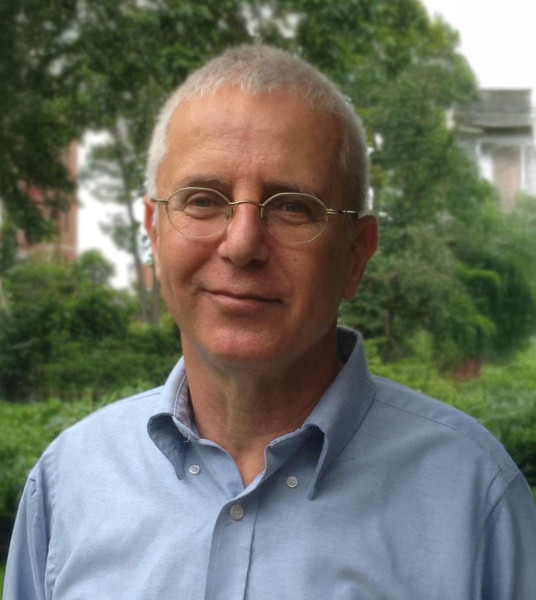 Ruppin comes to Cedars-Sinai from the National Cancer Institute, where he was founding chief of the Cancer Data Science Lab.
“We are delighted to welcome Dr. Ruppin to Cedars-Sinai as a prestigious senior scientist enriching our cancer discovery programs,” said Shlomo Melmed, MB, ChB, executive vice president of Medicine and Health Sciences and dean of the Medical Faculty. “We continue to recruit the highest-quality faculty dedicated to translational research and advancing leading-edge cancer diagnosis and care.”
The Translational Research Institute will support Ruppin’s endeavors and offer what Ruppin calls a “golden opportunity” to work with the diverse patient populations served by Cedars-Sinai Cancer. His goal is to test, in clinical trials, the methods he has been developing.
“The Translational Research Institute is committed to establishing Cedars-Sinai as a global leader in translating scientific discoveries into life-changing patient care, and Dr. Ruppin’s work dovetails perfectly with this mission,” said Ze’ev Ronai, PhD, professor of Surgery and Biomedical Sciences and director of the institute.
Ruppin is developing artificial intelligence-based approaches to match patients to the best treatments in a personalized manner, which may complement existing approaches that identify molecular alterations in tumor cells. Currently, many cancer patients do not have their tumors sequenced in-depth because the process is expensive, available only at major academic medical centers and takes several weeks—which can cause treatment delays.
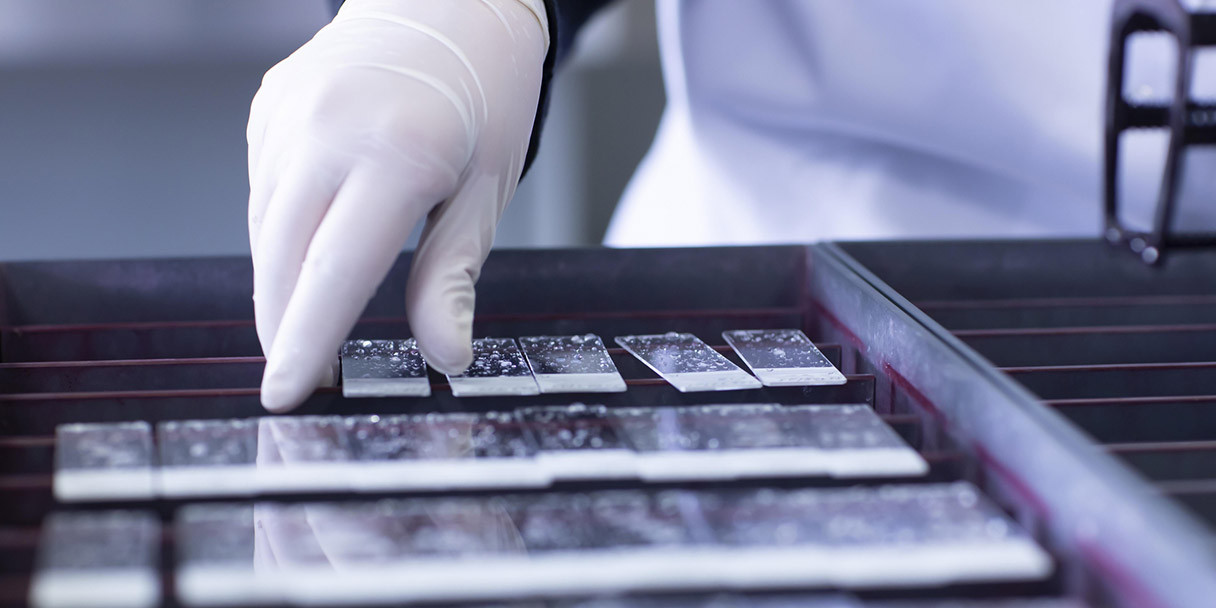
Ruppin’s approach, which will complement traditional laboratory techniques, uses digital images of tumor histopathology slides, thin slices of tumor tissue routinely obtained from patient samples so they can be examined beneath a microscope.
“We have discovered that by applying AI prediction tools to these slides, which have been the backbone of cancer diagnosis for 100 years, we can infer key parts of the molecular information that could be yielded by traditional sequencing—but without the associated time or expense,” Ruppin said.
Ruppin’s lab has successfully validated this approach in breast cancer, comparing molecular data from patients whose tumors have been sequenced in the traditional way with the tumor data inferred by his computational tools, and is now studying its application in other cancer types.
“Collaboration and translational science are central to improving patient outcomes,” said Cristina R. Ferrone, MD, chair of the Jim and Eleanor Randall Department of Surgery. “We must attack cancer in a multidimensional way and Dr. Ruppin’s expertise in deep-learning approaches adds another dimension to our arsenal.”
Ruppin earned his medical degree and a PhD in computer science from Tel Aviv University, where he served as a professor of Computer Science and Medicine. He has also served as a professor of Computer Science and director of the Center for Bioinformatics and Computational Biology at the University of Maryland, before moving to the National Institutes of Health.
A fellow of the International Society for Computational Biology, he received an NCI Director’s Award for his work on precision oncology in 2022, the DeLano Award for Computational Biosciences from the American Society for Biochemistry and Molecular Biology in 2023, and an NIH Director’s Award for developing new computational paradigms for precision oncology in 2024.
“Cedars-Sinai Cancer has a longstanding commitment to bringing precision oncology to as many patients as possible—here and around the world,” said Robert Figlin, MD, interim chair of Cedars-Sinai Cancer. “We’re proud to have Dr. Ruppin join us and to support his work.”
Cedars-Sinai Health Sciences University is advancing groundbreaking research and educating future leaders in medicine, biomedical sciences and allied health sciences. Learn more about the university.