


Cedars-Sinai Will Use New Award to Develop AI-Driven Drug Safety Platform

KronosRx Project Will Apply Artificial Intelligence Tools to ‘Patient Avatars’ to Predict Drug Toxicity, Reduce Clinical Trial Failures
Cedars-Sinai has been awarded funding to develop an artificial intelligence-based platform that predicts drug toxicity before clinical trials begin, making trials safer for patients.
 More than 30% of clinical trials fail due to adverse drug reactions, and the up to $5,054,235.00 contract award by the Advanced Research Projects Agency for Health (ARPA-H) Computational ADME-Tox and Physiology Analysis for Safer Therapeutics (CATALYST) program, will address this longstanding challenge in drug development.
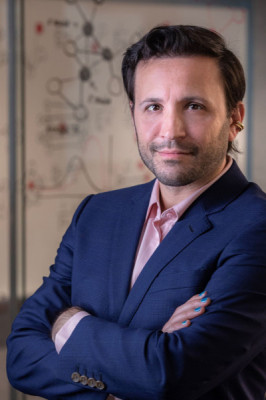
“Each year, many promising drugs fail in trials because animal tests and short-term lab studies cannot predict how medicines behave in real people over time,” said Nicholas Tatonetti, PhD, vice chair of Computational Biomedicine at Cedars-Sinai and the project's lead investigator. “These failures delay lifesaving treatments and drive up drug development costs.”
The new platform, called KronosRx, aims to reduce these failures by applying AI tools to “patient avatars”—sophisticated organoids and organ-on-chip systems derived from human stem cells—to help investigators predict drug toxicity that might otherwise harm clinical trial participants.
The avatars use tiny numbers of cells to mimic the function of whole organs and their immediate response to experimental medications. The AI models in the platform are trained using millions of anonymous patient data points from Cedars-Sinai’s extensive electronic health record network. The resulting platform can forecast an organ’s response to a medication over time—and across the diverse population of patients reflected in the Cedars-Sinai data.
“These AI systems don’t just predict whether a drug is safe or toxic; they model how risk evolves dynamically, accounting for age, a patient’s health, and other medications they might be taking,” Tatonetti said.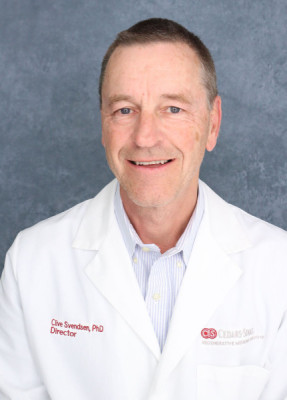
Investigators hope this approach will allow better predictive modeling that can evolve over time, reducing reliance on animal studies and improving safety for all patients.
“By creating a more reliable and human-relevant method for safety assessment, the KronosRx project aims to improve clinical trials and to shorten development timelines,” said Clive Svendsen, PhD, executive director of the Cedars-Sinai Board of Governors Regenerative Medicine Institute and an investigator on the KronosRx project.
The Cedars-Sinai KronosRx team includes leaders in computational biomedical innovation, stem cell biology and health informatics.
Tatonetti is leading project integration using biomedical data science and AI-driven drug discovery methods. Svendsen is applying induced pluripotent stem cells and organ chip technologies to better understand how common drugs may cause rare neurological side effects.
Arun Sharma, PhD, director of the Cedars-Sinai Center for Space Medicine Research in the Board of Governors Regenerative Medicine Institute, is using patient-specific cardiac organoid and organ chip systems to assess drug-induced cardiotoxicity. Graciela Gonzalez-Hernandez, PhD, professor and vice chair for Research and Education in the Department of Computational Biomedicine, is advancing the project’s AI and unstructured text data integration to connect molecular and clinical phenotypes.
The ultimate goal, Svendsen said, is to make critical treatments available to patients sooner.
“This approach allows AI to continually refine its forecasts as new evidence emerges, bridging the gap between computational prediction and real-world patient outcomes,” Svendsen said.
Cedars-Sinai Health Sciences University is advancing groundbreaking research and educating future leaders in medicine, biomedical sciences and allied health sciences. Learn more about the university.