



Cedars-Sinai Slashes Anesthesia Emissions, Reducing Carbon Footprint
A New Environmental Frontier: Advancing Sustainable Healthcare Practices
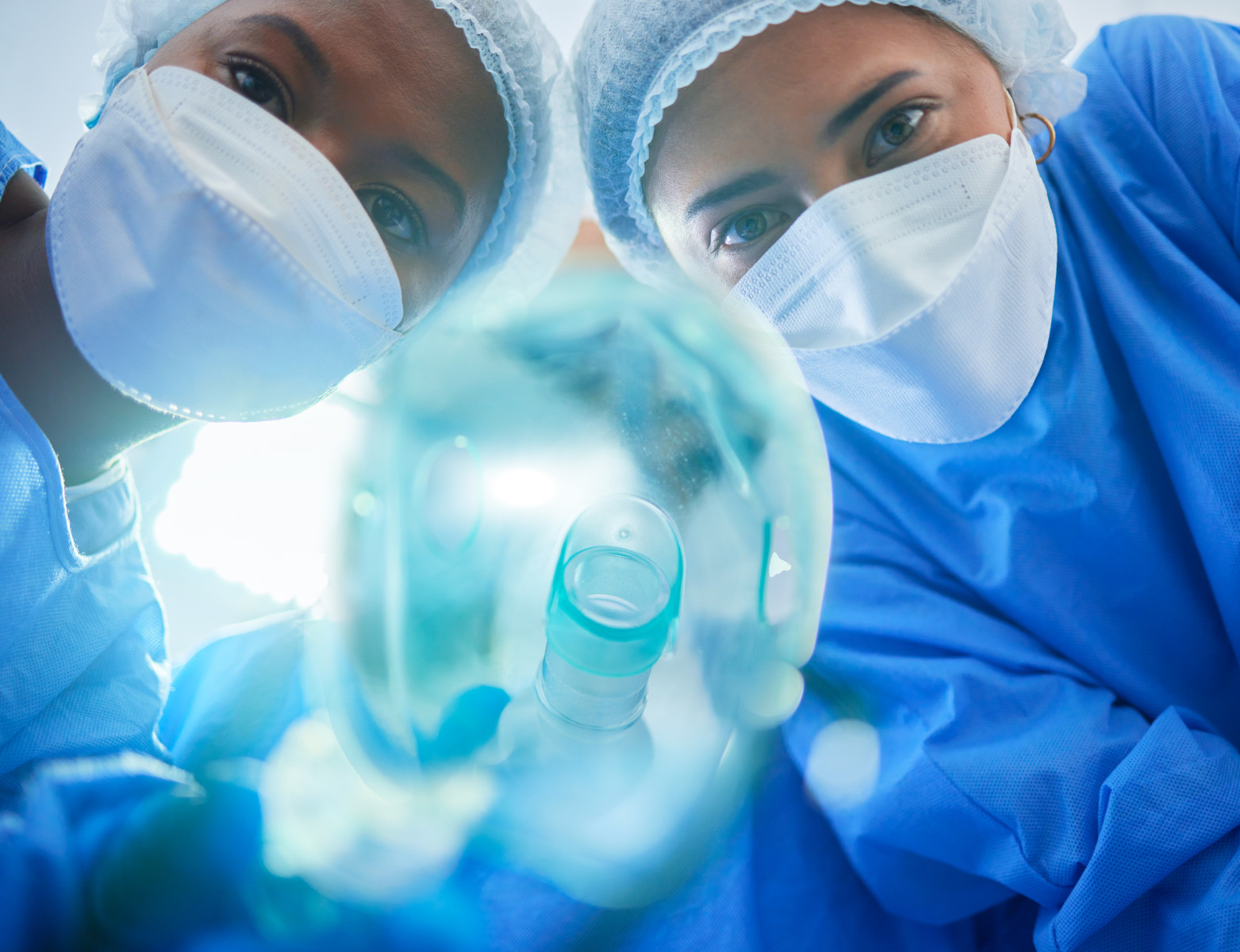
As someone who dedicates her life to helping others heal, Cedars-Sinai anesthesiologist Jacklyn Ma, MD, felt torn knowing the gases she used to make surgery painless for patients were actually hurting the environment.
“It was disturbing to me and hard to reconcile that here I am as a healthcare provider preserving human health, and yet I create a ton of pollution,” Ma said.
Climate change and air pollution are the biggest threats to human health, according to the World Health Organization, and cause—or worsen—a range of health threats, including infectious diseases spread by mosquitoes, ticks or fleas; respiratory illnesses; and heat exhaustion.
According to a study published in Health Affairs, the healthcare industry may be responsible for up to 8% of greenhouse gas emissions, and anesthetic gases account for more than half of the emissions generated during surgery. These gases are especially harmful because they are released directly into the atmosphere. Using the anesthetic gas desflurane for one hour, for example, produces the same carbon emissions as driving a gasoline-powered car for 190 miles.
Ma launched a Cedars-Sinai Medical Center initiative in 2021 to address anesthesiology’s role in the problem. After four years, she and her colleagues have significantly reduced the output of desflurane as well as nitrous oxide, while still maintaining the highest quality of care and safety for patients.
Caring for Patients, Cleaning the Air
In 2021, Ma and anesthesiologist Michael Kissen, MD, started  spreading the word with their colleagues about anesthesiology’s role in climate change, and the environmental benefits of switching to alternative gases.
“Anesthesia is sometimes more of an art than a science,” Kissen said. “Every anesthesiologist has their routine and their medications that they lean on, but we wanted to make our colleagues aware of all the risk profiles of these gases beyond what we learned in an anesthesia textbook.”
Anesthesiologists used to rely on desflurane to provide general anesthesia for patients before surgery, but it has 20 times the carbon impact of its alternative, sevoflurane.
Under Ma’s guidance, Cedars-Sinai Medical Center and other Cedars-Sinai patient care centers moved away from desflurane, and in 2023, the hospital officially removed the gas from its approved list of drugs.
With these changes, Cedars-Sinai went from using 1,200 bottles of desflurane in 2021 to fewer than 12 in 2024—achieving a 99% reduction. Ma said the shift is equivalent to taking 250 cars off the road.
The initiative also targeted nitrous oxide—commonly known as laughing gas—which is frequently used by pediatric and obstetric anesthesiologists and for dental procedures. Experts have found that much of the gas is lost before reaching the patient, posing a hazard to the healthcare workers present during surgery and the environment. Nitrous oxide also lingers in the atmosphere for 100 years.
By gradually phasing out nitrous oxide, Cedars-Sinai reduced emissions from 1,111 metric tons of carbon dioxide in 2021 to 234 in 2024.
Eliminating both gases collectively removed about 2,200 metric tons of carbon dioxide emissions over the past four years—roughly equivalent to the annual emissions of 400 homes. The project has gained a champion in Michael Nurok, MB, ChB, PhD, co-chair of the Department of Anesthesiology.
“This initiative is emblematic of Cedar Sinai's commitment to being at the forefront of medical care and science,” Nurok said. “Beyond delivering excellent patient care and outcomes, our team is thinking about the impact of these gases on the environment, employees, and future generations.”
Expanding Eco-friendly Lens
Nurok has taken up the cause, looking for other ways to minimize pollution. He is working with Robert Kaplan, Marvin Bower Professor of Leadership Development Emeritus at the Harvard Business School, on creating a framework for measuring the impact of healthcare devices on the environment—such as implants, devices and medical equipment—as they are processed and transported through supply chains.
With a better understanding of the environmental costs of different approaches to a procedure, physicians will be able to make informed choices about which materials and processes they choose. Much like a nutrition label helps consumers to make wise decisions about what they eat.
For Anesthesiology’s next project, Nurok and Kissen are collaborating with the Department of Orthopaedics and others to measure and reduce the carbon impact of hip replacement procedures.
Bryan Croft, the medical center’s executive vice president and chief operating officer, said this work encourages Cedars-Sinai staff members to be good stewards of its resources and the environment.
“We are thrilled to be able to support anesthesiologists’ mission to reduce greenhouse gases, bettering the world we live in, and we look forward to continuing to support eco-friendly projects,” Croft said.
Read more on the Cedars-Sinai Blog: Cedars-Sinai Appoints Department of Anesthesiology Co-Chairs