


Cedars-Sinai Guerin Children's Launches Multinational Genomics Study for NICU Babies
Investigators at Guerin Children’s Will Partner With Researchers From England and Singapore for 8-Year Study Funded by the Wellcome Trust in the UK
Investigators at Cedars-Sinai Guerin Children's and two other leading international research institutions collectively have been awarded $5.3 million in grants from the Wellcome Trust—a global charitable foundation—to undertake an eight-year study of whole genome sequencing data to enhance the understanding and prediction of health and education outcomes for high-risk babies.
The new study, called BLOOMS (Babies’ Longitudinal Outcomes, Omics and Milestones Study), launched last year with the goal of recruiting approximately 1,000 infants admitted to neonatal intensive care units (NICUs) at Cedars-Sinai and another 1,000 infants admitted to NICUs across three National Health System (NHS) hospitals in the United Kingdom. In addition to Guerin Children’s, BLOOMS brings together an international research team led by investigators at the University of Cambridge in the U.K. and collaborators in Singapore from the Agency for Science, Technology and Research (A*STAR).
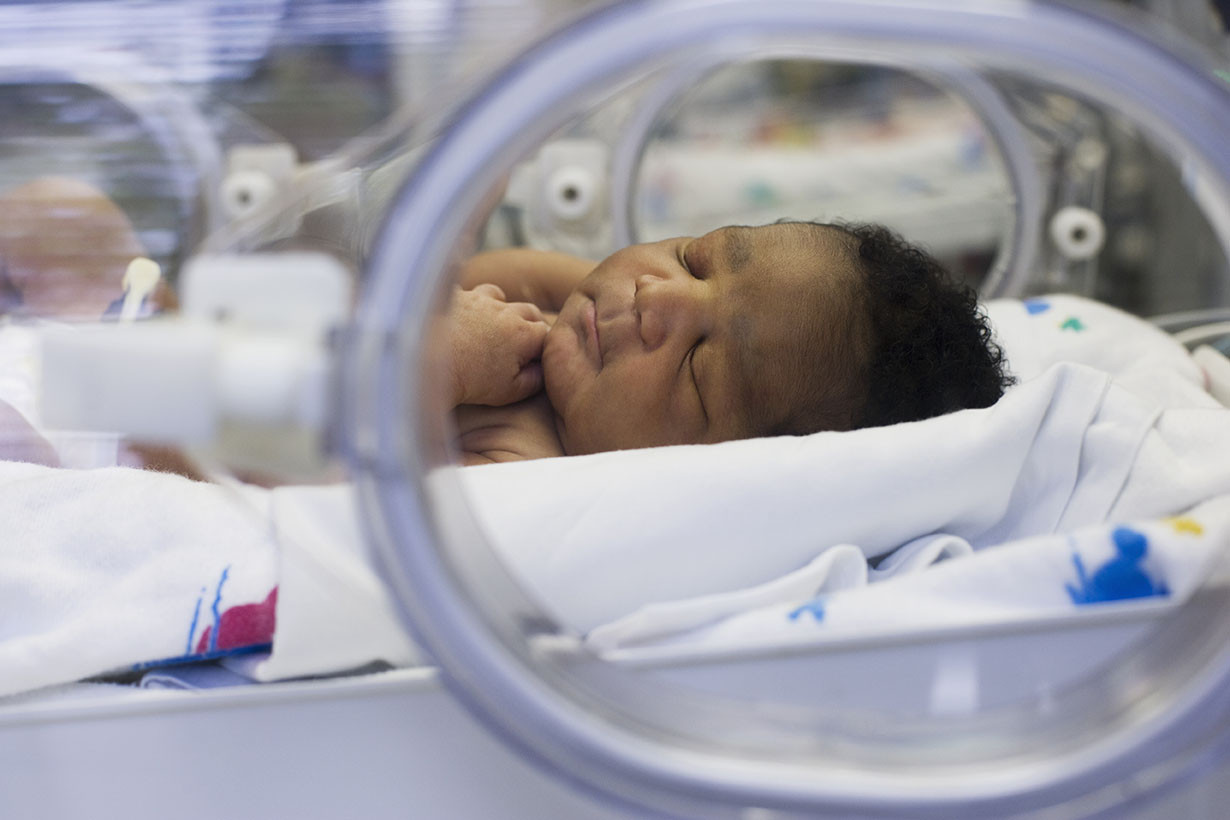
Using genomics to address urgent health needs of the sickest, most vulnerable babies in the NICUs, the research aims to predict future health complications that might affect children’s school readiness by age 5.
“The study is part of the ambition at Guerin Children’s to integrate genomics into care across the lifespan,” said David H. Rowitch, MD, PhD, the principal investigator of BLOOMS and deputy director of Research at Guerin Children’s. “With the support of the Wellcome Trust funding and global collaboration across three countries, we are opening new pathways to better understand the challenges associated with NICU admission so that we can effectively support every child’s full potential.”
While most institutions in the consortium can perform whole genome sequencing to identify genetic risks, Cedars-Sinai’s unique expertise in proteomics—advanced tools to study the structure and function of proteins in real time—provides further valuable insights. Cedars-Sinai investigators aim to use proteomics to identify early disease biomarkers that might predict health and neurodevelopmental conditions that affect school readiness.
Having early access to often overlooked yet vital information about at-risk NICU babies could significantly aid in mitigating future health and developmental challenges by understanding disease origins and in driving targeted treatments.
The study will incorporate the outcome of school readiness, a common assessment tool in the U.K. typically used to measure a child’s physical, cognitive, social and emotional development for integrating into the formal schooling system. This important predictor of early life-course trajectory may be positively influenced by early medical and educational interventions.
“By early identification of school readiness issues such as a learning disability—especially in NICU babies—we can enable medical teams to potentially implement timely interventions, including precision medicine approaches based on genetic makeup to improve the life trajectory for these children,” said Catherine Aiken, MD, chief lead investigator of the study and an academic clinical lecturer in the Department of Obstetrics and Gynaecology at the University of Cambridge.
The study will follow the recruited children until they reach the age of 5, with results expected to be reported by 2033.
“International collaboration is key to advancing research and solving global health challenges,” said Neerja Karnani, PhD, deputy director at A*STAR Bioinformatics Institute and senior principal investigator at the A*STAR Institute for Human Development and Potential (A*STAR IHDP).
Singapore’s participation in BLOOMS, supported by A*STAR BII’s expertise in secure data analytics, will create opportunities to integrate and align early childhood development initiatives and strategies with the U.K.
By pooling diverse genetic data from the participating institutions, the investigators hope to initiate a paradigm shift in diagnosing and treating early childhood diseases, moving toward a more proactive approach to addressing pediatric health complications on multiple continents as early as possible.
“The BLOOMS study is a testament to Cedars-Sinai's unwavering commitment to advancing pediatric care through leading-edge research,” said Shlomo Melmed, MB, ChB, executive vice president of Medicine and Health Sciences and dean of the Medical Faculty at Cedars-Sinai. “By participating in this global collaborative effort, we are enhancing our understanding of genomics and improving long-term health outcomes for newborns and their families.”
Read more from Cedars-Sinai Stories and Insights: A Map of Disease Beginnings