

Bride Says, ‘I Do,’ After Lifesaving Surgery to Remove 40-Pound Tumor
Cedars-Sinai Surgeons Removed the Massive Growth During a Complex 14-Hour Operation
When Ariana Pulido was on her way to Las Vegas to celebrate her boyfriend’s birthday in April 2023, she felt a deep stomach cramp. She brushed it off. But two days later, on her way back home to Oxnard, California, the pain became unbearable.
A CT scan at Pulido’s community hospital revealed a large tumor on Pulido’s right ovary—roughly the size of a small basketball. Surgeons removed the cancerous mass, only to discover a smaller tumor on the left ovary, which was removed three months later. Believing the worst was behind her, Pulido returned to work.
But her sense of normalcy was short-lived. Within a month, sharp pains returned.
“I was getting the worst shoulder pain I could get on my left side,” Pulido said. “I went back to the emergency room, and they did another CT scan. Then they saw another tumor. It was much bigger than the first one.”
The doctors diagnosed Pulido—just 22 years old— with a rare condition known as growing teratoma syndrome. The condition occurs when tumor tissue continues to grow rapidly and uncontrollably, pressing on vital organs like the heart and lungs.
The third and largest tumor, about 14 centimeters, was located near Pulido’s liver. Doctors recommended chemotherapy to shrink the tumor, but it failed, and the mass kept growing at an alarming rate. The tumor had progressed so much in size that it was pressing up against her right lung, shifting her heart to the far-left side, essentially under Pulido’s armpit.
By May 2024, the tumor had reached 27 centimeters, weighed more than 40 pounds, and left her wheelchair-bound and dependent on oxygen.
Opting for High-Stakes Surgery Despite the Risks
When chemotherapy failed, surgically removing the tumor was the inevitable choice. After multiple surgery delays and six failed attempts to put Pulido under anesthesia, her original care team halted the procedure altogether.
“The doctors came out of the surgery and told my mom they couldn’t move forward with the surgery because I couldn’t go under anesthesia without flatlining,” Pulido said. “They said the next best step for me would be hospice care.”
Still, Pulido and her family refused to give up.
In their last push for hope, her family sought several opinions from various institutions, but ultimately chose to seek care from Cristina Ferrone, MD, chair of the Jim and Eleanor Randall Department of Surgery at Cedars-Sinai.
Ferrone quickly assembled a team of experienced anesthesiologists and 13 surgeons from various specialties, including cardiothoracic and liver transplant teams, to perform the complex surgery.
“The tumor was so large and heavy, and it involved such essential blood vessels that if you injure them, it would be very, very difficult to repair them. And an injury like that could quickly lead to death on the operating room table,” Ferrone said.
Yet, Pulido was willing to take her chances.
“The only one that could decide if I do go or stay on that surgery table would be God,” Pulido said. “And I just had really high hopes and faith that I was going to make it through.”
Awake on the Operating Table
The surgical team included Tyler Gunn, MD, an assistant professor of Cardiac Surgery at Smidt Heart Institute at Cedars-Sinai. During the first half of the surgery, Gunn performed a critical procedure called preoperative extracorporeal membrane oxygenation, or ECMO, using only local anesthesia while Pulido was still awake in order to keep her respiration and heartbeat stable and to stop her from flatlining.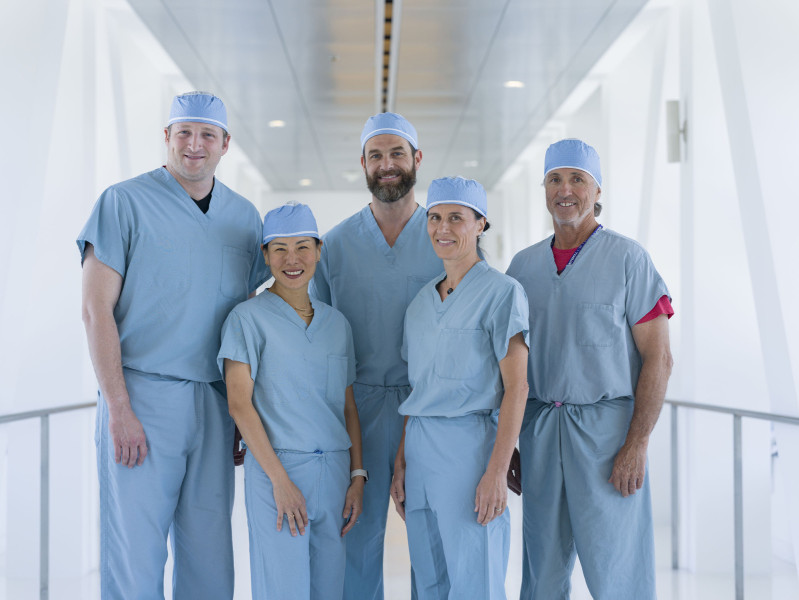
“When someone goes to sleep for surgery, their muscle tone decreases and the blood flow to the heart can decrease as well. And they can have trouble with their blood pressure, breathing and heart rate,” Gunn said.
Furthermore, as Pulido’s heart was unstable, lying flat on the operating table was not an option. To work around this, the team placed Pulido on an incline for the first half of the surgery.
“In my mind, I just kept saying, ‘You got this, just keep fighting, keep pushing,’” Pulido said.
The long, arduous surgery was a success.
“In the end, we spent over 14 hours operating with all of the different teams working together,” Ferrone said. “It’s a testament to the working environment of Cedars-Sinai. It is an incredibly collaborative institution and patient care comes first, no matter what.”
Within a week after the tumor removal, Pulido’s lungs were able to fully expand, and her heart was back in its rightful place. She was able to breathe on her own for the first time in six months.
From Wheelchair to Walking Down the Aisle
Amid her harrowing healthcare journey, Pulido found a few uplifting moments, including an important life milestone. Last year, during the halftime show on Super Bowl Sunday, her longtime boyfriend, Jeffrey Chavez, who had stood by her through every challenge, surprised her with a proposal.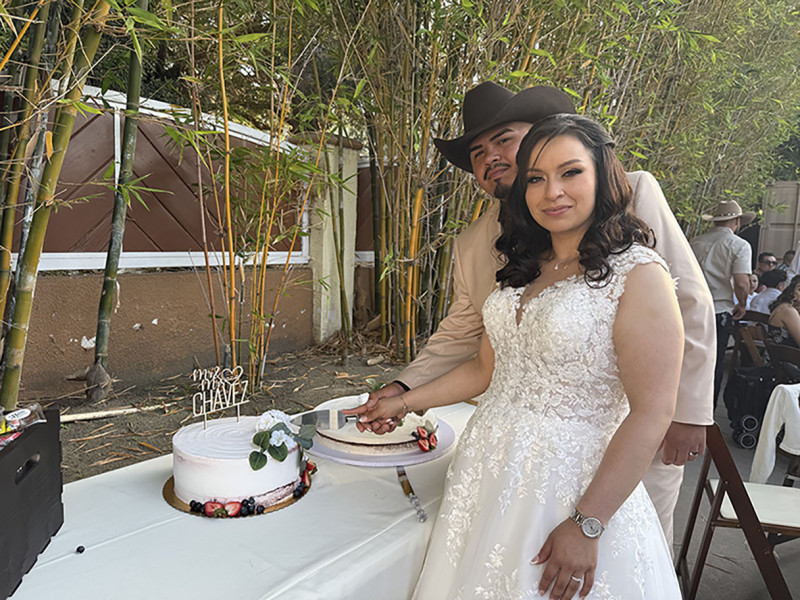
“He was always there every day with me, whether it was before work, after work, he was there and visiting me all the time at my mom's house,” Pulido said.
For Ferrone, watching Pulido through her demanding recovery process has been incredibly gratifying.
“When she returned to the clinic a month later, the entire staff and I were amazed. Just six weeks earlier, she had been wheeled in, in a wheelchair. Now she walked through the doors,” Ferrone said. “She's an incredibly strong young woman and has a wonderfully supportive family.”
On June 21, a little over a year after her life-changing surgery, Pulido walked down the aisle and tied the knot with Chavez in front of her close family and friends. While Pulido will need to continue to monitor her health closely, the newlywed is hopeful and looks forward to the next phase of life.
“I feel really good. I feel like a new person. I see the world differently,” Pulido said. “Every day is a positive day.”
Read more on the Cedars-Sinai Blog: Women in Surgery at Cedars-Sinai.