

Bernice Coleman, PhD, Inducted as New York Academy of Medicine Fellow
Nurse Scientist Recognized for Advancing Nursing Science, Improving Healthcare and Mentoring the Next Generation of Nurse Scientists
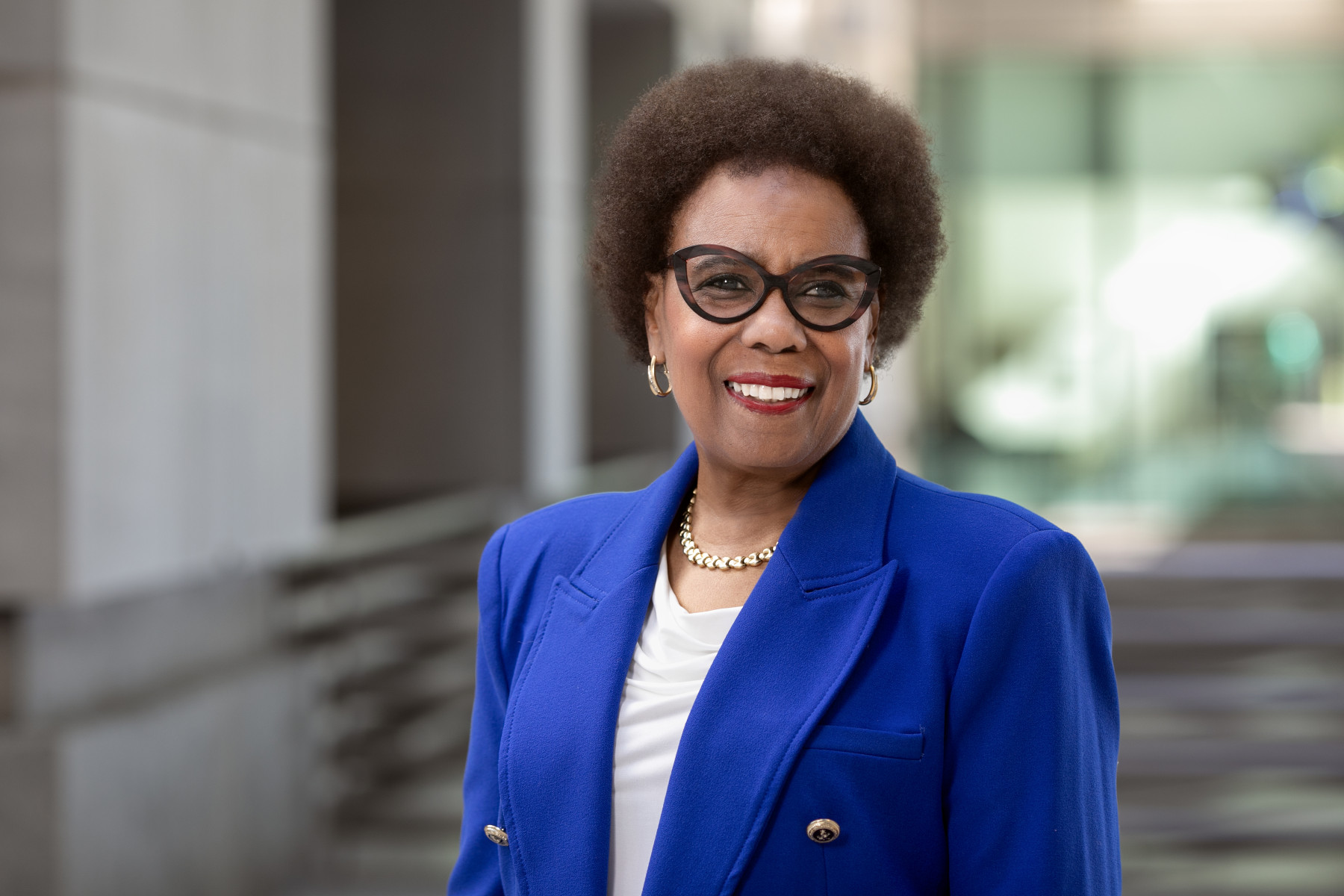
Bernice Coleman, PhD, ACNP, director of Nursing Research and Quality Improvement and assistant professor of Biomedical Sciences at Cedars-Sinai, has been inducted as a fellow of the New York Academy of Medicine.
Coleman joined Cedars-Sinai in 1987 as a clinical nurse specialist in cardiac surgery. Her research spans bench to bedside to community—with work on genomic transplant disparities, family caregivers and church-based preventive blood pressure education. She earned a master’s degree from the Yale University School of Nursing and a doctorate from the UCLA School of Nursing.
“Dr. Coleman’s induction as a fellow of the New York Academy of Medicine is a well-deserved recognition of her impact on nursing, patient care and the advancement of health,” said David Marshall, JD, DNP, RN. “Her leadership, clinical expertise, research and commitment to mentoring others exemplify the kind of influence that strengthens both our profession and the communities we serve. We are proud to celebrate this important achievement and the example she continues to set for colleagues and future generations.”
Founded in 1847, the New York Academy of Medicine is committed to helping all people live healthier, longer lives through innovative research and collaboration. With more than 1,700 distinguished fellows and members, the academy brings together leading experts to translate ideas into policy and real-world impact.
The Cedars-Sinai Newsroom spoke with Coleman about the significance of the fellowship, her commitment to advancing nursing science and the leadership lessons she hopes to pass on to others.
What does becoming a fellow of the New York Academy of Medicine mean to you personally and professionally?
It is a tremendous honor. Personally, I am deeply grateful to be welcomed into a community with such a long history of advancing health through science, evidence, innovation and service.
Professionally, it is especially meaningful because the academy brings together leaders from many disciplines who share a commitment to improving health and addressing some of the most complex healthcare challenges affecting people in the United States. I see the fellowship not simply as recognition, but as an opportunity to contribute.
How did you react when you learned you had been selected?
I was surprised, humbled and very grateful. As your career progresses, you don’t necessarily stop to think about individual recognition because you are usually focused on the next patient, the next research question, the next grant or helping someone else move their work forward. So this caused me to reflect for a moment on the journey and all the people who have been part of it. It was very special.
What aspects of your experience or work contributed to this recognition?
My career has really been driven by curiosity and built at the intersection of clinical practice, research and leadership.
Much of my scholarship has grown directly from questions I encountered caring for patients after cardiac surgery or heart transplantation and patients experiencing mechanical circulatory support. That has led to work in transplant outcomes and genomics, caregiver support, health disparities and, more recently, the responsible use of artificial intelligence in healthcare.
Another important part of my work has been strengthening nursing science itself—mentoring nurses, developing research infrastructure, advancing the role of clinically based nurse scientists, and helping nurses translate important clinical questions into evidence that can improve care.
What inspired you to enter your field?
I began as a licensed practical nurse and advanced to an acute care nurse practitioner. Clinical practice has always been the foundation of my work.
My involvement in heart transplantation and mechanical circulatory support exposed me to extraordinarily complex patients and families and to questions that we simply could not answer with the evidence available at the time.
That curiosity led me toward research. I wanted to understand the biological bases for why some patients experienced different outcomes, how biology and genetics might contribute, how we could better support families, and how nurses could generate the evidence needed to improve care.
Over time, my career evolved from asking those questions at the bedside to building research programs and helping other nurses ask and answer their own important clinical questions.
Which accomplishments or experiences have been most meaningful to you?
The most meaningful accomplishments are those where I can see that the work has opened a door for someone else or has the potential to change care.
My research in heart transplantation and genomics has been important to me because it grew directly from a brother-in-law who died after his heart transplant, and clinical questions about differences in patient outcomes.
My work supporting caregivers of patients living with mechanical circulatory support is equally meaningful because these families assume enormous responsibilities that healthcare systems do not always adequately recognize.
I am also very proud of the work we have done to advance clinically based nurse scientists and to create opportunities for nurses to conduct, present and publish their work. Helping create national Nurse Scientist Day, which launched in June 2026, was especially meaningful because it celebrates an entire profession of scientists across the United States whose contributions deserve greater visibility.
How does your current role connect with the mission of the New York Academy of Medicine?
There is a very natural connection. The academy emphasizes using evidence, interdisciplinary collaboration and innovation to improve population health and help people live healthier, longer lives.
In my current role, I am trying to do those same things within a healthcare system—identify important clinical problems, generate evidence, translate that evidence into practice, develop the next generation of nurse scientists through supporting PhD nurses at Cedars-Sinai in a research fellowship, and bring disciplines together around problems that cannot be solved by one profession alone.
Whether the issue is health disparities, transplantation, genomics, caregiver wellbeing or artificial intelligence, the ultimate question is always: How can this work improve health and healthcare?
What impact do you hope your work will have?
Ultimately, I hope my work demonstrates that research can be both scientifically rigorous and immediately relevant to the people we care for.
For patients and families, I hope it leads to more individualized, equitable and supportive care. For Cedars-Sinai, I hope it strengthens a culture in which clinical questions become opportunities for inquiry and improvement.
And for nursing, I want nurses and nurse scientists to recognize that their perspective is essential and valuable in solving some of healthcare’s most difficult problems and that they should have a seat at every table where those solutions are being developed.
Cedars-Sinai Health Sciences University is advancing groundbreaking research and educating future leaders in medicine, biomedical sciences and allied health sciences. Learn more about the university.