STATS: The Right to Be Child-Free
Date
October 27, 2021
Credits
Date
October 27, 2021
Credits
Medical providers featured in this article
In Brief
{{cta-block}}
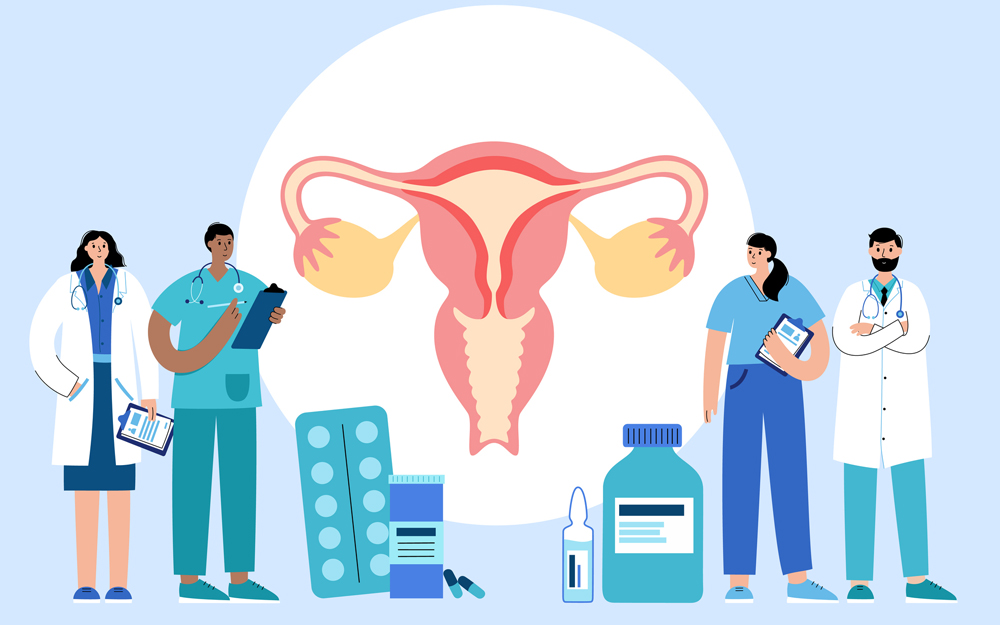
Female sterilization—a permanent procedure on the fallopian tubes to prevent pregnancy—is the most common form of contraception worldwide. Despite its popularity, women can find themselves dissuaded from the procedure by physicians who caution that their patient might change her mind or disappoint a future partner. “It’s pure paternalism,” says Natasha Schimmoeller, MD, a gynecologist in Cedars-Sinai’s Family Planning Program. “The notion of female sterilization and regret are inappropriately paired.” Schimmoeller is committed to providing “child-free friendly” gynecology to women at every age and stage of life, empowering her patients to freely make reproductive choices whether they involve bearing children or not.
{{column-start}}
18.1%
of reproductive-age American women use female sterilization for contraception.
{{column-end}}
{{column-start}}
12,768
average number of birth control pills a woman must take to cover her reproductive years.
{{column-end}}
{{column-start}}
1%
of sterilized women obtain a reversal of the procedure.
{{column-end}}
{{column-start}}
46 million
American women ages 15–49 in 2018 were sexually active and not seeking to become pregnant.
{{column-end}}