


Research Tip Sheet: Heart Attack, Muscular Dystrophy, Neuroprosthetics
The Latest Advances From Cedars-Sinai Investigators
 Preclinical Study: Modified Protein Can Aid Heart Attack Recovery
A preclinical study led by the Smidt Heart Institute at Cedars-Sinai challenges the assumption that blocking the NCX1 protein, which regulates calcium levels in cells, is more effective than maintaining its activity during a heart attack to limit damage. The findings, published in Proceedings of the National Academy of Sciences (PNAS), suggest that preserving the function of the protein could even be more beneficial.
Investigators used gene editing to create a mutant version of NCX1 in laboratory mice. This mutation allowed the protein to function despite changes in acidity that are produced during heart attacks. The modified mice maintained better calcium balance and heart function and showed significantly less cardiac injury after heart attacks than did mice with the unaltered protein.
“Our findings suggest that maintenance of NCX1 activity should be considered as a strategy for clinicians to reduce cardiac injury in patients,” said Joshua I. Goldhaber, MD, the Dorothy and E. Phillip Lyon Chair in Laser Research, professor of Cardiology and Biomedical Sciences and vice dean of Graduate Education at Cedars-Sinai. “They also form the basis for future studies of calcium regulation in the body. We showed that acid regulation of NCX1 is important for maintaining calcium balance in heart cells.”
Other Cedars-Sinai authors include Rui Zhang, MD, Xiaokang Wu, PhD, Seho Kim, MS, Brian Kim, MS, Catherine Xie, BS, Devina Gonzalez, BS, Raven Norris, BS, Nicholas Chin, BS, and Liang Li, MS.
Other authors include Scott John, PhD, Kenneth D. Philipson, PhD, and Michela Ottolia, PhD.
Funding: NIH R01HL147569 (JIG, MO) and the Dorothy and E. Phillip Lyon Chair in Laser Research, Cedars-Sinai Medical Center (JIG).
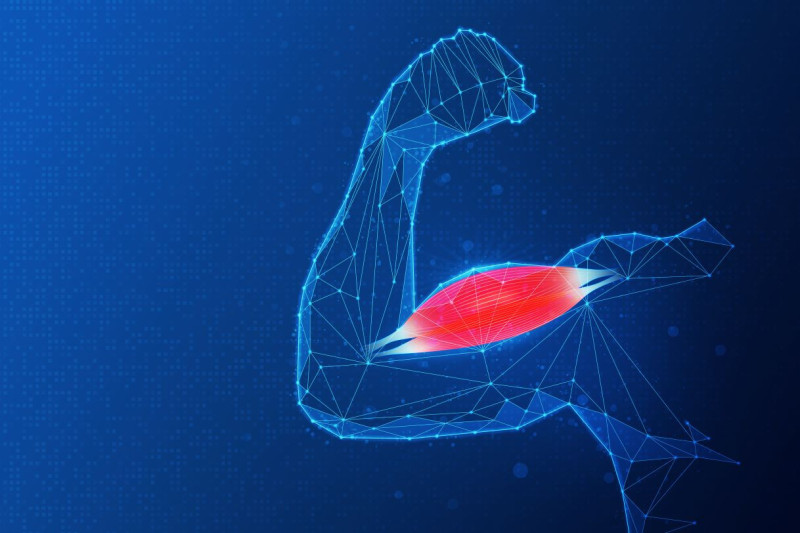 Preclinical Study: Cell Therapy Prevents Damage From Duchenne Muscular Dystrophy
A cell therapy preserves muscle structure and function in laboratory mice with a type of disease similar to Duchenne muscular dystrophy, according to new research from the Smidt Heart Institute at Cedars-Sinai.
Duchenne muscular dystrophy is a rare, inherited disorder that mostly affects boys and causes their muscles to weaken so much they eventually lose the ability to walk. Their heart and lung muscles also weaken over time, causing early death.
The therapy, described in Stem Cell Reports, uses cardiosphere-derived cells (CDCs), which are heart cells with the potential to repair tissue. Eduardo Marbán, MD, PhD, executive director of the Smidt Heart Institute and a co-author of the study, discovered how to isolate and grow CDCs in a laboratory and infuse them back into a patient.
A clinical study demonstrated CDCs can protect weakened muscles from becoming weaker in adults with Duchenne muscular dystrophy. Clinical trials have also shown that CDCs can repair Duchenne-associated heart damage. A cell therapy called deramiocel, based on CDCs, is now in advanced clinical testing with repeated doses to verify improvements of heart failure and skeletal myopathy in patients with Duchenne.
“Our new research demonstrates that if we expose young mice with this disorder to CDCs, we can prevent muscle weakness from developing in the first place,” said Russell G. Rogers, PhD, assistant professor in the Smidt Heart Institute and corresponding author of the study.
Investigators administered the cell therapy monthly to laboratory mice with Duchenne muscular dystrophy over the course of one year. At the end of one year, mice that received the cell therapy retained exercise endurance and muscle strength, which was similar to when the mice were young. Mice that did not receive the cell therapy, however, lost the ability to exercise and their muscles became weaker, as happens during the natural progression of Duchenne muscular dystrophy.
Other Cedars-Sinai authors include Jack Antich, Mario Fournier, Ariel Omidfar, Lizbeth Sanchez, Juliet Alfaro, Jonah Zarrow, Nancy Manriquez, Alessandra Ciullo and Jackelyn Valle.
Funding: Financial support for this research project was provided by the National Institutes of Health (R01HL155346 to E.M.) and the Muscular Dystrophy Association (DG578294 to R.G.R.). General laboratory support was provided by the National Institutes of Health (R01 HL167921 to R.G.R.). E.M. holds the Mark S. Siegel Family Foundation Distinguished Chair of the Cedars-Sinai Medical Center.
Declaration of Interests: E.M. owns founder’s equity in Capricor Therapeutics.
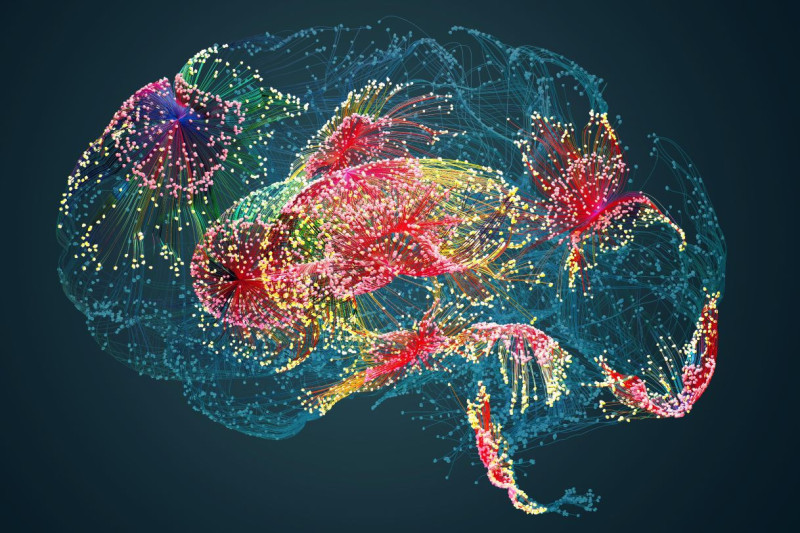 Preclinical Study: Brain Signals From Cerebellum Can Control Prosthetic Devices
Cedars-Sinai investigators found a new way to control prosthetic devices using brain signals. Their preclinical findings, if confirmed in clinical studies, could help stroke survivors control external prosthetic devices to help with their motor impairments. The study was published in the peer-reviewed journal Cell Reports.
“We showed that laboratory rats with stroke-related damage to the part of the brain that controls voluntary movement, known as the motor cortex, could use signals from another part of the brain, the cerebellum, to operate a device that helped them obtain drinking water,” said Tanuj Gulati, PhD, assistant professor of Biomedical Sciences and Neurology and a research scientist in the Center for Neural Science and Medicine at Cedars-Sinai and corresponding author of the study. “This is an important discovery because strokes often injure the motor cortex, which is typically used for brain-machine interfaces, and our findings provide an alternative.”
Investigators also found that motor cortex interaction with the cerebellum changed after stroke, according to study first author Rohit Rangwani, a visiting graduate student in the Gulati Lab. Understanding these interactions may also enhance cerebellar brain-machine interfaces in the future.
Additional Cedars-Sinai authors include Aamir Abbasi.
Funding: This work was supported by American Heart Association predoctoral fellowship 1018175 (R.R.), American Heart Association postdoctoral fellowship 897265 (A.A.), American Heart Association career development award 847486 (T.G.), National Institutes of Health grant R00NS097620 (T.G.), National Institutes of Health grant R01NS128469 (T.G.), National Science Foundation grant 2048231 (T.G.), and Cedars-Sinai Medical Center’s Center for Neural Science and Medicine postdoctoral fellowship (A.A.).
Cedars-Sinai Health Sciences University is advancing groundbreaking research and educating future leaders in medicine, biomedical sciences and allied health sciences. Learn more about the university.