Kim Glass' Playbook for Parenting a Young Athlete
Date
November 3, 2026
Date
November 3, 2026
Credits
Medical providers featured in this article
In Brief
Your kids are playing sports—what’s the best way for you to support them?
Athletics can be a wonderful way for kids to stay fit and healthy, gain self-confidence, and learn teamwork and tenacity. But sports also can present physical and mental challenges for many.
What’s a parent’s best role when it comes to their child’s participation in sports? Should you push them to excel or back off and just let them play? Should they play many sports or specialize in one?
Olympic medalist Kimberly Glass offers her perspective on the best ways for parents to support their children as they navigate youth sports.
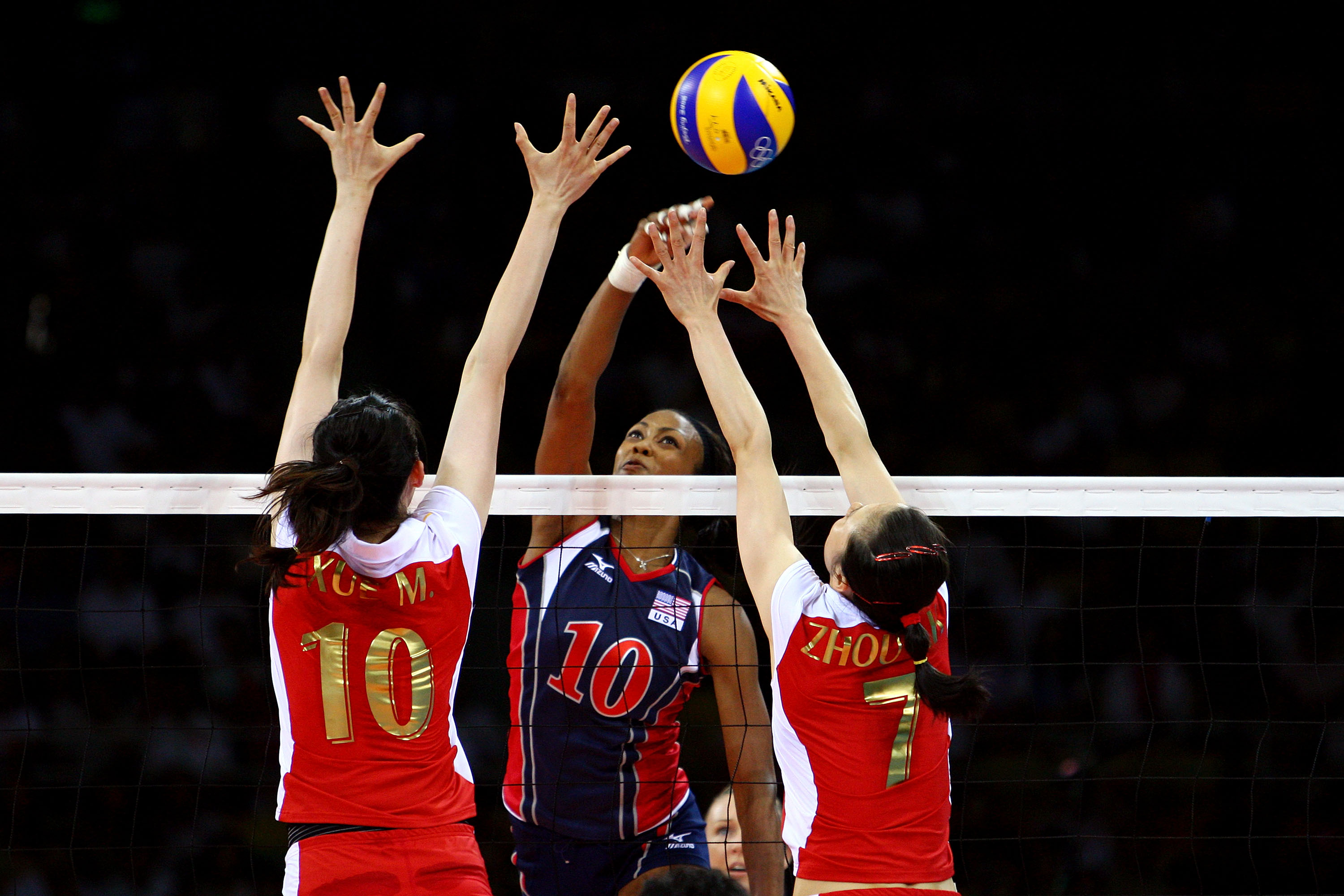
At 6’3”, Glass stands out in a crowd. The former professional volleyball player was also a stand-out at the University of Arizona, where she was a three-time American Volleyball Coaches Association All-American and four-time All-Pac-10 pick. She is still Arizona's career leader in kills. In 2008, she helped the U.S. women’s indoor volleyball team secure a silver medal in Beijing.
Glass is now the mother of 2-year-old twins, and while they ran around a playground, Glass shared her thoughts on youth sports and the role of parents with sporty, or even not-so-sporty, kids.
Cedars-Sinai is the Official Medical Provider for the LA28 Olympic and Paralympic Games.
{{cta-block}}
How early did you get into sports? Were you an athletic child right from the get-go?
I started playing basketball a little bit in elementary and then in middle school. In ninth grade, I got introduced to volleyball by a friend on the basketball team.
I think I was naturally athletic and naturally tall, but sometimes it takes a little while to grow into your body. I just kept at it, and I had great coaches that really cared about the sport and about the kids playing it. That just led me in beautiful directions.
Did you feel any pressure from your parents to play sports?
I didn't really feel pressure to play, but obviously society sees how tall you are and it can put that pressure on you. People want to tell you that you should be doing something. My dad loves basketball. So, he had some really big dreams for me there. And that's what a lot of parents think, right? That their kid is going to be the one that plays at the highest level.
I felt more like Bambi on ice—but I kept getting better.
How did volleyball win out over basketball?
I played both as much as possible in high school, because I thought they complemented one another, and I liked playing both. But my volleyball coach was a lot more accepting of me playing basketball, which I appreciated. And then I just felt like this was a new adventure into learning something that was completely off my radar. And I wasn’t that good—I felt more like Bambi on ice—but I kept getting better. So, it felt like a good challenge.
Do you take away any lessons from the way your parents handled your time in youth sports?
My mom was never one of those parents asking, “Oh, why isn't my daughter playing?” She supported me, but she held me accountable.
A lot of parents dream of their kids having that big break or becoming the star athlete. My dad always wanted me to be the basketball player. But they never pressured me. And I appreciated that.
I wish more parents would let their kids just enjoy sport.
You know, statistically most kids won't become professional athletes or Olympians. That's totally OK. And knowing that is the reality, I wish more parents would let their kids just enjoy sport. You know, it's meant to provide fun and friendships and confidence and resilience—and loving to move and be active, which we need more of.
Now, once people started telling my parents, “Oh, your kid's good at this,” then they got excited. Then they're like, “Wait, my kid has a chance to actually get an education in college?” which they didn’t have the means to pay for.
But—I see in youth sports now—it's being taken seriously so early on. And there’s more pressure at such an early age. Kids start peaking early, and then you see burnout a lot earlier, too.
How do you think parents can find the right balance between the discipline and hard work that's necessary to be successful, while also keeping it fun?
I think many sports really complement one another. And by exposing kids to various sports, you let them discover what's fun for them.
But at the same time, I think there's a lot of value in teaching commitment. Making a commitment to your team or your season, I think can be very powerful because seasons do get difficult, right? So, that's how kids start learning perseverance and accountability. And those are lessons that will extend way past sports into their adult life.
But listening to your child—really listening, and not just following your own ambitions—that’s so important.
Yes, a lot of parents get really involved in their kids' athletic life, and they have trouble separating what they want from what the child wants.
Heck yeah. That's so real. And that's what I'm saying: We should be nurturing kids' passions, not projecting our own ambitions onto them, you know?
And I'll tell you this, when I started playing volleyball, I had never seen such ugly parents. I'm talking about the things they would say, loudly, about other kids that were getting more playing time than their kids—like making 16-year-olds cry. Parents sometimes forget that these are children, even if they’re over 18.
I train volleyball privately now, and I always meet with the kids first to make sure they really want to be there. If I feel like it’s really the parent forcing their kid to play, I don’t get involved.
Stop and ask yourself: As a parent, is this their dream or is this my dream?
How do you think parents can avoid that trap and not make it about themselves and their own ambitions?
I think it all comes down to slowing down and really spending the time with your kid to ask them what they like and what they want.
I get it. We all want our kids to do well and be special and exceptional. Also, kids’ sports are really expensive, and parents want to feel like they’re not wasting that money. And maybe they’re hoping for a sports scholarship to college. But slow down and have that communication. And stop and ask yourself: As a parent, is this their dream or is this my dream? And where is the fine line between challenging your children and pushing them toward something they don’t want for themselves?
Talk a little bit more about sideline behavior.
Always be ready to go to bat for your child. You can cheer, you can root, but some things don't have to be said. If you're a 45-year-old adult making someone else’s 15-year-old feel horrible, what does that say about you?
I don't mind when people are passionate and supportive from the sidelines—just don’t get out of control. And don’t be the parent yelling a bunch of instructions. If your child keeps looking back at you for direction every step of the way, they’ll never learn how to be independent and think for themselves and compete on their own. You're not going to be there all the time.
But being enthusiastic and supportive and, “Yeah, go, go!” That’s all good.
What about the importance of winning and how to contextualize that for your child?
That's gnarly.
When it comes down to it, everyone wants to win. That is just human nature. But when we lose, how do we navigate that loss? I'm not going to be telling my kid that winning isn't important, but I will let my kid know there's just as much strength and growth and learning from a loss. If you’ve played a little bit below your potential, what can you do to be better? Focusing not on pointing the finger at the problems but finding solutions.
Those conversations also have to be age-appropriate. For young kids, just make it about the fun.
Sports tryouts can provoke a lot of anxiety for some kids. What can parents do to help them prepare mentally, emotionally?
Well, one thing parents can do is get them good training.
But the real job is to let them know you’re there for them whatever happens—your support and love won’t change whether they make a team or not—and to be a safe space for them to express what they feel. If they've done well, or they feel like they haven't done well, maybe ask questions that let them reflect on finding a solution. But mostly be that support system and don’t negate their feelings.
Remind them that everyone gets the jitters. It’s natural. But try to have fun and not worry too much about it. Most of us play our best when we’re just enjoying the game.
I started playing volleyball in 9th grade, and I really didn’t know the sport, and I wasn’t that good. But I kept progressing and I went to these tryouts, and I got invited to a high-performance training camp in Colorado Springs, and then I got invited to train with the youth national team. And I called my mom to tell her, but she could tell something was bothering me. And she said, “What’s wrong?”
And I told her, “All the other players are talking about me, saying I suck, and I don't deserve to be here.”
And she goes, “Well, why would they say that?”
And I was like, “Mom, because I suck!”
And she said, “Well, maybe the coaches see something in you that you don't see in yourself. What you can do is keep listening to the coaches, keep learning and working hard and being an open book, and you just let it happen.”
Your child may not understand that type of encouragement right away, but I have always appreciated her saying that to me when I started having moments of self-doubt. And I always knew my mom was there for me, regardless.
There are a lot of inexperienced coaches working with children, particularly in community rec leagues. How can parents judge if their child is participating in a safe and positive environment?
That’s tricky. Parents can’t be there all the time. Mine never came to practices, but if you’re able to go to one or two, that could be good, just to see how the coach operates. Going to games will give you a good sense of what the coach is like, too. And having good communication with your kids about their experience is key.
Try to separate your biases and assess will this coach help my kid achieve her goals. Does the coach have the kids’ best interests at heart.
What should parents be looking for in a coach?
You want a coach who likes to win and understands the game well, but who also cares first and foremost about the kids and about developing them as players—helping them grow as athletes and people.
For example, you don’t want a coach letting your 9-year-old pitch 65 pitches in a game. It can be tricky. I don’t like parents trying to coach or tell a coach what to do, but there are situations when a parent has to stand up for their child and protect them.
If you feel like your kid isn't getting the best training, you can always seek out other opportunities for them to get training somewhere else.
I’m really an advocate of kids playing as many sports as they want for a long time.
You mentioned that young athletes are specializing earlier these days in order to be successful in a particular sport. What do you think is the right time to specialize?
Yeah, my friends and I talk about this all the time. Like I said, I’m really an advocate of kids playing as many sports as they want for a long time. But the game has shifted since I started playing, and they are specializing a lot earlier. And now with NIL (Name, Image and Likeness) deals in high school and college, it's becoming business earlier on.
I just would be mindful of the kids' minds and bodies, because playing only one sport all year at an early age can lead to injuries and burnout. Before committing to a more demanding level of competition, consider whether your child is ready, interested and still enjoying the sport.
I don't think kids should be specializing in elementary school and maybe part of middle school. Let them try different sports—like me, I didn’t find volleyball until high school. But kids are all different, and I think the decision to specialize has to be made by the kid and the parent together. It all goes back to communicating with your kids.
Any final thoughts?
There are so many life lessons in sports that you just can’t get from a book. Learning how to work with other players and compete as a team really teaches you how to manage relationships in life and how to learn and grow from your mistakes. It teaches you perseverance and commitment and accountability. And those are intangibles that you need for life, regardless if you're going to be an athlete or if you're going to work in a corporate job.
Being an athlete teaches you to enjoy movement and how good that feels afterward, and how to be comfortable and confident in your body. And it expands your idea of what your body is capable of. And that is so powerful. And if you don't challenge that or get it moving, how will you ever know?
Sport brings parents together, too, because you're like, “It's 5 a.m. and we're doing this, huh?” Am I right?
So, yeah, I think there's so many benefits to it. And I'm grateful that I've been a part of the athletic community and that I get to work with children who enjoy it, too. It's awesome!
Frequently Asked Questions
How can parents tell if a child is experiencing sports burnout?
Persistent loss of interest, irritability or anxiety before practices, declining motivation or repeated physical complaints may be signs that your child is burning out on a sport. Speak to your child and solicit their thoughts. Follow up with the coach and maybe a healthcare professional if it feels appropriate.
Should parents coach their child from the sidelines?
Conflicting instructions or too many voices yelling ideas from the sidelines can distract and frustrate young athletes. Parents should cheer and support the team but leave the technical coaching to the coaches.
What should parents do when they disagree with a youth sports coach?
Discuss any concerns you have privately with the coach—avoid public confrontations during games or practices. Focus on your child’s safety and athletic development.
How can parents support a child who wants to quit a sport?
Encourage your child to share the reasons they want to quit. Does the problem sound like a temporary setback or something more serious and sustained? Discuss with your child whether they should finish their commitment to a team or season, or step away.
How much rest do young athletes need between sports seasons?
Recovery needs vary by age, sport and training intensity. The American Medical Society for Sports Medicine and the American Academy of Pediatrics recommend young athletes have at least one day off from sports during a given week, and at least two to three months off per year from training for any particular sport. Consult with a pediatric sports medicine doctor if your child is experiencing persistent pain, fatigue or declining performance.