ER Data Reveals Surprising Health Effects After L.A. Fires
Date
July 30, 2026
Date
July 30, 2026
Medical providers featured in this article

In Brief
- Cedars-Sinai researchers investigated diagnosis codes for ER visits after the wildfires of January 2025.
- They discovered significant increases in respiratory illnesses, heart attacks and blood chemistry lab abnormalities.
- Heart disease is the leading cause of on-duty fatalities for firefighters. Cedars-Sinai is now researching the connection between smoke exposure and heart disease for this population.
In January 2025, fires not only laid waste to the Pacific Palisades and Altadena neighborhoods of Los Angeles but also sickened residents across the region in surprising ways.
Cedars-Sinai investigator Susan Cheng, MD, the newly appointed chair of Cardiology and the Stephen R. Corday, MD, Distinguished Chair in Cardiology at Cedars-Sinai, led a recently released study identifying the health effects of the L.A. fires.
Cheng and colleagues found an anticipated increase in respiratory illness and an almost 50% increase in myocardial infarction rates. Most surprising, they uncovered inexplicably increased instances of abnormal blood chemistry.
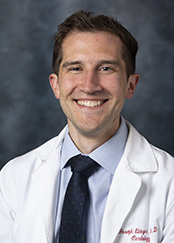
“These laboratory abnormality diagnoses weren’t linked to specific symptoms, and they weren’t explained by any concurrent diagnoses of overt organ dysfunction,” said investigator Joseph Ebinger, MD, director of Clinical Analytics in the Smidt Heart Institute at Cedars-Sinai and director of Cedars-Sinai’s Coronary Intensive Care Unit.
“For example, we saw electrolytes or acid-base status coded as abnormal, but we didn’t see kidney failure. Or we saw abnormal liver function, but no diagnosis of liver disease,” he explained.
{{providers}}
The report represents work done in conjunction with the L.A. Fire Health Study, a network of scientists at leading medical research institutions from across the country who are conducting research on the fires.
“These fires were among the largest wildland-urban interface fires in U.S. history,” said Cheng, who is also director of the Institute for Research on Healthy Aging in the Smidt Heart Institute. “We knew there were likely health outcomes. The challenge was how to understand what they were and how they manifested.”
{{cta-block}}
Digging Into the Details: The Study and the Findings
To identify fire-related health outcomes, investigators analyzed visits to Cedars-Sinai’s emergency room (ER) by patients whose residences were in or adjacent to ZIP codes directly affected by the fires. They identified the top 50 ER discharge diagnoses coded in January of the previous seven years and compared the frequency of those diagnoses with ER discharge diagnoses coded within 90 days of the onset of the fires.
Whatever was released into our environment persisted and continued to affect people’s health.
They found respiratory illness increased by 24% and heart attacks increased by 46% compared to the averages of previous years.
“That matches or exceeds all prior Januarys going back seven years, including the worst COVID-19 years—even though COVID-19 increases the risk for respiratory illness and heart attack,” said Cheng.
The rate of abnormal blood chemistry results rose 118%.
“In patients with heart attack and respiratory illness, signals improved within a month,” said Cheng. “But the laboratory abnormalities stayed elevated well beyond the 90 days of our study, which tells us that whatever was released into our environment persisted and continued to affect people’s health.”
Investigators plan to follow the ER patients to determine if these exposures are associated with changes in long-term health or healthcare utilization.
Where There’s Smoke, There’s Inflammation
Researchers suspect the increases in heart attacks and abnormal blood chemistry labs are attributable to systemic inflammation caused by toxic chemicals released by the fires.
“We know the root cause of many heart attacks is the rupture of unstable plaque causing a vessel blockage,” said Cheng. “Inflammation is typically both a cause of the initial buildup of the atherosclerotic plaque as well as a driver of the acute event.”
“The signs and symptoms we uncovered indicate that some of the toxins people were exposed to didn’t just affect their lungs but were absorbed into the blood, causing systemic issues,” Ebinger said.
Firefighters and Heart Disease
Though firefighters must pass rigorous physical fitness exams for employment, the National Institute for Occupational Safety and Health has for many years found that cardiovascular disease is the single greatest cause of deaths in the line of duty.
This rate of cardiovascular disease in firefighters is a corollary to the heart attack signal we saw among civilian residents after these L.A. fires.
“This rate of cardiovascular disease in firefighters is a corollary to the heart attack signal we saw among civilian residents after these L.A. fires,” Cheng said. “While continuing the work to understand what happened to ER patients affected by the fires, we are also devoting a lot of resources and attention to understanding firefighter health and what is putting these individuals at increased risk.”
Researchers have begun health screenings for L.A. firefighters.
“We plan to follow a cohort of firefighters longitudinally, checking blood and biophysical findings to understand how their health trajectory may be affected by workplace exposures,” said Ebinger.