Eat Like a Pro: How Food Fuels Sports Performance
Date
October 27, 2026

Date
October 27, 2026
Credits
Medical providers featured in this article
In Brief
Your body is an extraordinary machine. If you want it to perform at its best, you’ve got to put the right fuel in it.
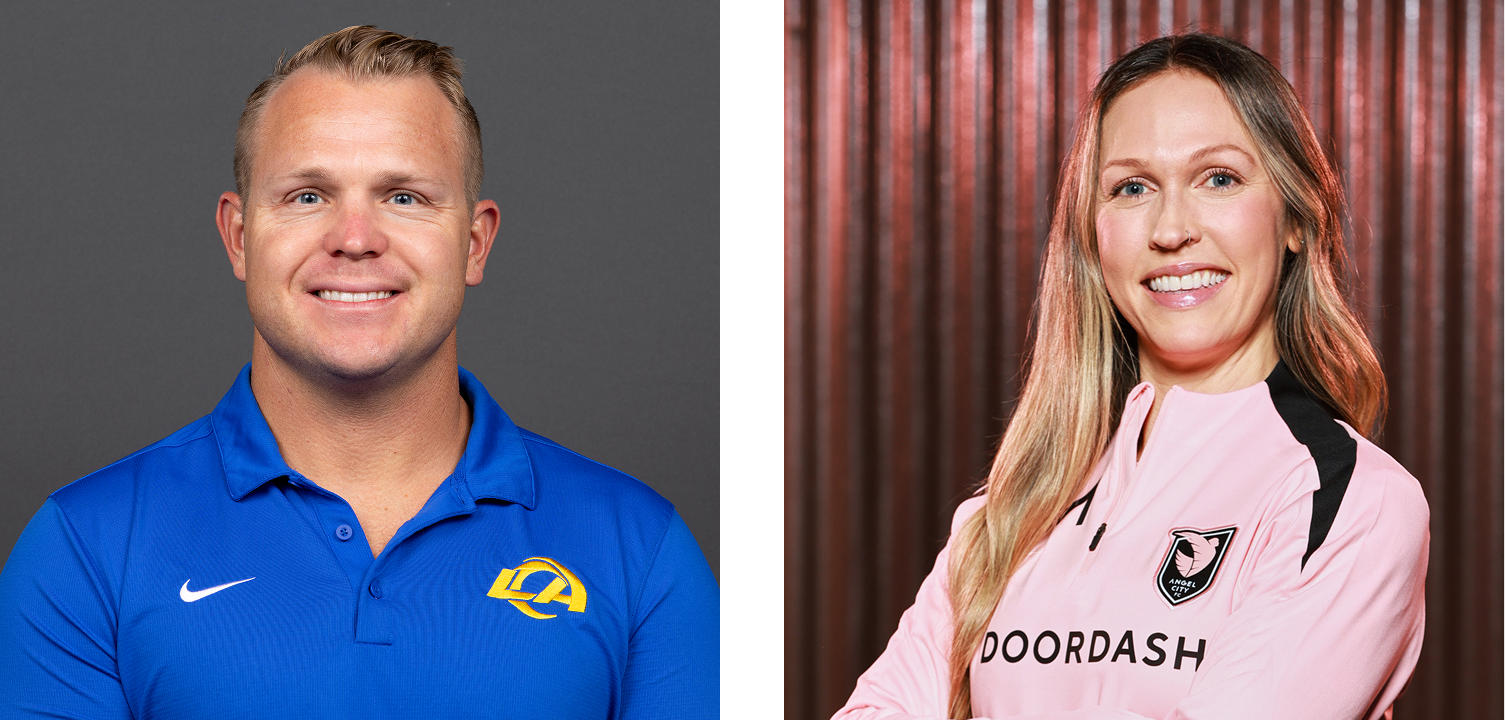
Two people who know a lot about eating to fuel sports performance are Sebastian Zorn, head team performance dietitian for the Los Angeles Rams pro football team, and Krysten McCaughey, team sports dietitian for women’s pro soccer team Angel City FC (ACFC).
Professional sports teams hire full-time sports nutritionists because research shows diet relates directly to endurance, strength, cognitive reaction time and speed of recovery during and after physical activity. That’s particularly vital for pro athletes, but it’s equally true for anyone looking to work out, stay fit or play a sport at any level.
Cedars-Sinai is an Official Medical Provider of Team USA, and our experts are the trusted doctors of both the Rams and ACFC. We spoke to Zorn and McCaughey about how to feed the body the right way to stay healthy and enhance performance.
{{cta-block}}
What are the basic considerations that go into a professional athlete’s diet—or maybe anyone’s diet?
Zorn: First of all, it’s about finding the right balance of the energy sources the athlete needs—the macronutrients, or carbohydrates, proteins and fats—based on the kinds of activity and intensity the athlete is engaged in. You also want to make sure they’re getting their micronutrients—the vitamins and minerals—and that they’re hydrating appropriately. And you might provide some kinds of supplements to help boost performance and recovery.
Sleep is also incredibly important. It falls under nutrition at a lot of NFL teams—it does for us at the Rams. The more activity and the more muscle damage that occurs, the more important sleep is for recovery. So, we make it a huge priority.
Is there a difference between what a pro athlete should eat and the dietary needs of the rest of us?
Zorn: The biggest difference is just volume. We have guys on the Rams that, based on their output and size, need to eat about 6,500 calories a day in order to just maintain their muscle mass. The average individual needs maybe a third of that amount, depending on their activity level. We also need to be aggressive with electrolytes and fueling during training. Most of the time, the weekend warrior won’t need to fuel during training at all.
Before a game or a more extensive training session, the big focus is simple carbohydrates.
What do athletes need to eat before a game or an intense workout?
McCaughey: Before a game or a more extensive training session, the big focus is simple carbohydrates, such as pasta, white rice, potatoes, bagels and white bread. They’re going to provide the energy stores for your muscles during the activity. So, about three to four hours before training, you want to make sure you’re getting a carb-based meal with a little protein and staying very light on fat and fiber. Then, closer to the game or the training session, you can top it off with a carb-based snack, like applesauce, dried mango or chews—things that will just give you a little extra in the tank so you’re not dipping into your energy stores quite as quickly.
Zorn: In general, we recommend a lot of complex carbohydrates, such as whole grains, and we provide a lot of fruit and fiber. But pregame, you need to go with the simple carbs, which are digested and absorbed quickly without disturbing the stomach.
If it’s an early-morning game or workout, it’s OK to load your carbs in a meal the night before then top up in the morning. It’s also OK to spread the carbs out in smaller snacks instead of one big meal. Do what works for your body. But don’t start a new nutrition habit on game day. You might be nervous, and you want your guts to be comfortable. The last thing you want is to be throwing up or having gastrointestinal issues. So, stick with what your body is used to.
Stay away from any high-fat foods in the hours leading up to competition. They’ll slow down digestion and just sit in your stomach and maybe upset it.
There’s about a 30-minute window after a game or hard workout when your muscles have more receptors to shuttle in nutrients.
What about recovery nutrition? What should athletes eat after a game or workout?
McCaughey: People often underestimate what they need after a hard workout. The most important thing is to start replenishing your glycogen stores—the muscles’ energy supplies—because there’s about a 30-minute window after a game or hard workout when your muscles have more receptors to shuttle in nutrients. So, you want to make sure you give them some carbs right after the workout, and if you can add some protein in there, even better. That way, you make sure your energy stores are as full as possible, and the protein you're ingesting can go toward better muscle repair. Shakes are a great way to do that after a game, but it can be as simple as a banana and a protein drink. Then you can top up your stores with a bigger meal later, depending on the time of day.
Are the nutritional requirements different for certain sports, or if it’s a strength-training day versus a game day?
McCaughey: Absolutely. Distance runners have different nutritional needs than sprinters or weightlifters. If you’re going to be doing a really cardio-heavy workout—running, biking, swimming for longer distances or maybe playing full games of soccer or basketball with a lot of running—then supporting your activity with enough carbohydrates will be the priority. So, you’ll need that big pregame meal and snack we talked about as well as replenishing your carbs after the game.
You might need carbs during the activity, too. The rule of thumb is for any intense activity that lasts an hour or more, it’s a good idea to ingest some carbs to replenish what you’ve been burning, like at halftime or during your long run. That can be gels or chews or a sports drink. Doing that will improve performance, and it’ll start the recovery process before you’re even done with the activity.
Zorn: You have to match the carbohydrate intake to your activity level. On a big training or game day, you need the high carbs. If it’s just a weight-training day, you can bring the carbs down but keep your protein consistent. On a rest day, when you’re not working out, you can significantly reduce the carbs and overall calories.
The mistake I see people make is under-fueling on hard training days because they’re trying to be strict, but then they’re famished and go crazy on their rest day. That’s when we see fat mass accumulate, when intake is much higher than expenditure. They need to match.
Hydration is one of the easiest and most impactful ways to maintain performance.
What about hydration before, during and after workouts?
Zorn: Hydration is one of the easiest and most impactful ways to maintain performance. And getting dehydrated is an easy way to lose performance.
First, you want to show up to your activity fully hydrated. That means drinking sufficient fluid during the day, which is roughly half your body weight in ounces of water outside of training. During training, we recommend about 16 to 24 ounces of water per hour, but there are a lot of factors involved, including temperature, humidity, the intensity of the activity and whether you tend to sweat heavily or not.
We do sweat testing on the Rams athletes to determine their exact sweat rate in both water volume and salt. But a low-tech approach is to measure your weight before and after the activity. Aim to drink about 20 to 24 ounces of fluid for every pound lost over the next few hours, ideally with some sodium to help your body hold on to it.
What about replenishing electrolytes during or after your athletic activity?
Zorn: Most people probably don’t need to worry about replenishing electrolytes or carbohydrates during activity. Unless they’re working out intensely for more than an hour, plain water is fine. Sodium chloride—table salt—is an electrolyte. But before recommending an amount, I’d need to know the person’s blood pressure status and what their overall diet looks like. For people who are working out intensely for more than an hour, and if you’re sweating heavily on a hot and humid day, most sports drinks will provide a good balance of electrolytes and carbs to replenish what you lose in sweat.
Protein is a big topic these days. How much protein should people be consuming?
Zorn: Most people are looking to either lose fat or gain or maintain muscle. If you fall into one of those categories, I recommend trading a little of the fat and carbohydrates in your diet for protein. The recommended dietary allowance for healthy adults set by the National Academies has long been 0.8 grams of protein for every kilo of body weight. That’s been increased in the most recent dietary guidelines to 1.2 to 1.6 grams per kilo.
But if you’re active—and particularly for older people, who naturally start to lose muscle mass—I suggest anything from 1.8 to 2.2 grams of protein per kilo of body weight. That’s a lot of numbers, but to make it a little simpler, a person weighing 150 pounds would need roughly 120 to 150 grams of protein a day. If all of that came from meat, it would take about a pound and a quarter of chicken breast or lean beef, or about one and a half pounds of fish.
McCaughey: I would add that in addition to meats, there are a lot of other ways to get your protein, such as yogurt, lentils, tofu and combining beans and rice. Putting protein powder in a shake is another easy way to go. Overall, we try to stay with a more anti-inflammatory diet. That means cooking with plant-based oils, decreasing trans fats and saturated fats and added sugars, avoiding foods such as burgers and processed meats, and including more fruits, vegetables and healthy fats such as fatty fish and plant-based fats, like avocado, nuts and seeds.
Are there any supplements you recommend for your athletes?
Zorn: Yes, but it’s important for people to understand that supplements aren’t going to give you a huge boost. I encourage people to focus on the big rocks: hydration, sleep, carbohydrates and protein. If you’ve got those four things nailed down, you’re 85% of the way to giving your body everything it needs to perform well.
When it comes to supplements, creatine and caffeine are the two best-researched ergogenic, or performance-enhancing, aids that exist. Caffeine blocks adenosine, one of the brain's fatigue signals, so hard efforts feel easier. Creatine gives you a little more explosive power and can help a bit with recovery. There’s also some research showing it may boost cognitive performance. I recommend both of those to our guys, unless they don’t respond well to caffeine.
We also sometimes recommend nitrates. They are a vasodilator, meaning they can increase blood flow a little bit. Beetroot is a good source. And beta alanine is a supplement that can delay muscle fatigue. So, we’ll use beet shots, some beta alanine and caffeine before a workout. And then we put creatine in their post-workout shakes.
McCaughey: Creatine has been shown to be a little more beneficial for women, just because we don’t have as much stored in our body as men. So, the supplement can actually be more supportive for females or for anyone that’s following a more vegetarian-based diet, since dietary creatine only comes from animal products.
We also use nitrates to increase blood flow and oxygen to the muscles, and we use tart cherry juice after the workout to help with recovery.
Finally, there are your basic supplements, like multivitamins and omega-3s from fish oil. Also, iron can be an important supplement for female athletes, especially runners.
Zorn: I just want to finish by reminding people that nutrition is incredibly important for recovering, for fueling, for all those things, but there has to be a stimulus. The importance of resistance training, of exercise and activity in general, cannot be overstated. These things have to work in harmony. For nutrition to be effective, we need the stimulus. For the stimulus to be effective, we need nutrition. So don’t forget about the full picture.
Frequently Asked Questions
Should athletes try a new food or supplement on game day?
No. It’s best to first test unfamiliar foods, drinks and supplements on training days to understand how your body responds.
How can athletes fuel for an early-morning workout?
It’s best to eat a full meal at least three to four hours before your game or training session. If your activity is scheduled too early for that, have your meal the night before and top up with a simple carbohydrate snack in the morning, such as a banana, dates or applesauce.
Are protein shakes necessary for muscle recovery?
Protein shakes can be convenient, but you can also meet your protein and carbohydrates needs with food.
How should nutrition change on rest days?
The number of calories in your diet should match your activity level. That means you should cut back on macronutrients on days when your physical activity level is low.
When should an athlete work with a sports dietitian?
If you have a demanding training schedule, recurring gastrointestinal problems, dietary restrictions, performance concerns or difficulty meeting your energy needs, a sports dietitian may be able to help.