Sound Advice: Do Sound Therapy and Binaural Beats Work?
Date
April 30, 2026
Date
April 30, 2026
Credits
Medical providers featured in this article
In Brief
We live in a noisy world.
Sound therapy is an umbrella term for practices that use sound, tones, frequencies or rhythmic vibrations to support relaxation, focus, sleep or symptom relief. In everyday use, the term most often refers to wellness practices such as sound baths, meditation music and binaural beats that some find useful for relaxation, focus or sleep.
Constant alerts from our electronic devices, blaring horns, roaring traffic, clacking keys, the drone of the TV and the audio spill of viral videos are among the cacophony competing with all the internal noise in our minds.
Could adding more sounds to life’s unruly symphony be an answer?
Sound therapy is rooted more in personal experience than in strong scientific evidence—studies are few, small in scale and have mixed results—but many find these practices a soothing part of their overall wellness routines.
“We get pushed and pulled so much, we often don’t get that moment to find calm, absorb fresh ideas or assess challenging situations we’re facing,” said Rodney Foster, an interfaith chaplain at Cedars-Sinai who offers sound baths as part of Spiritual Care. “I think of it as being similar to meditation. The real benefit is spiritual peace, emotional peace and mental peace—and then what you do with it.”
Common Types of Sound Therapy
Several sound-based practices have attracted interest and attention, especially from those seeking help relaxing, reducing stress, improving sleep or dealing with pain.
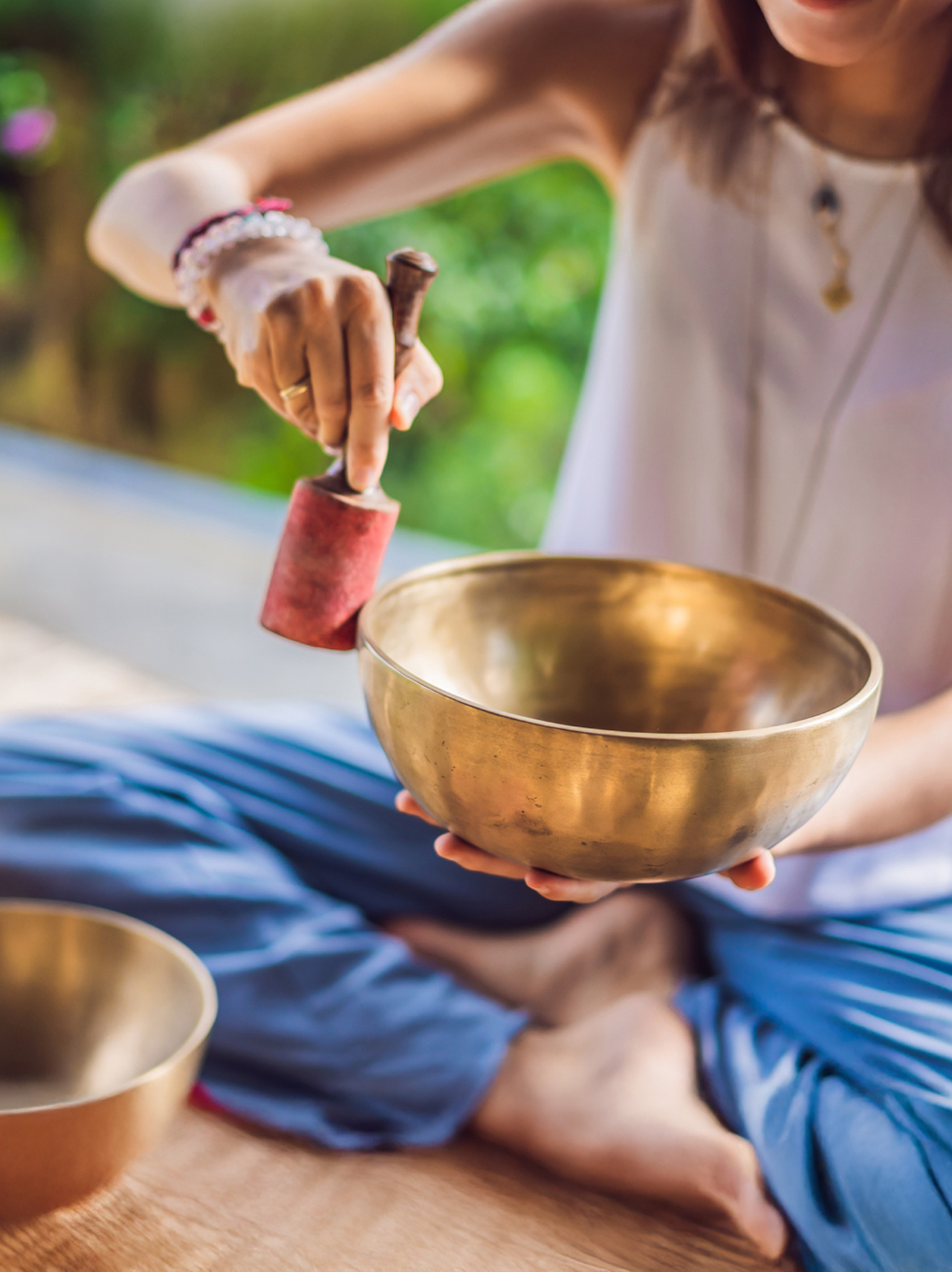
- Sound baths are immersive, meditative experiences that use instruments such as crystal or brass singing bowls, chimes, gongs or other instruments intended to induce a deeply relaxed state believed to lower stress, improve sleep and invoke a sense of calm.
- Binaural beats are an auditory illusion that occurs in the brain when two tones of slightly different frequencies are played separately into each ear simultaneously using headphones. The brain then perceives a third pulsating sound some believe can promote focus, sleep, cognition and relaxation.
- Healing frequencies are single tones of a specific frequency intended to promote energy balancing or holistic healing—though there is little scientific evidence to support these claims.
While these practices are widely regarded as safe, they’re not a replacement for medical treatments and are best considered supplementary practices for promoting wellness. Chronic pain, anxiety, depression, sleep disorders and other persistent symptoms should be discussed with your doctor so treatment can be tailored to your needs.
Sound Baths: Finding Calm in the Noise
Foster performs sound baths weekly at Cedars-Sinai for patients, families and staff members looking for calm, deep rest or an emotional reset.
“We could use more research on the exact benefits,” Foster said. “Sound baths create a deliberate space to really be calm and reassess. We take a moment together, and focus on our bodies, our minds, our energy, our emotions and our spirit.”
In a typical sound bath experience, participants choose a comfortable position, sitting or lying down, while the practitioner uses instruments to create an immersive sound environment. Sessions often begin with breathing exercises and setting intentions, with the aim of helping participants enter a deeply relaxed, meditative state.
Foster combines sound baths with his training in Reiki, an energy-healing technique that focuses on unblocking and balancing the body’s energy centers, or chakras.
Sound baths are part of the diverse array of Spiritual Care services provided to support the healing journeys of patients and families, Foster said.
“Healing is medical and biological, but it’s also psychosocial and spiritual,” Foster said. “As chaplains, we’re here to offer spiritual support and hope.”
What the science says: A 2025 review article in Integrative Medicine Research analyzed 19 clinical studies on the therapeutic effects of singing bowls. The review found singing bowl therapy may help reduce anxiety and depression and improve sleep and cognitive function in some groups. However, the authors also noted many of the studies were small, highly variable and at high risk of bias—meaning stronger research is still needed before sound conclusions can be drawn.
Do Binaural Beats Heal?
Binaural beats and so-called healing frequencies have gained popularity online, especially among those seeking help with sleep, focus and stress relief.
Audio tracks for these practices are widely available and free—making the practice accessible and tempting.
Binaural beats audio tracks are often used as part of meditation, sleep routines or focus playlists. The idea is the brain may begin to synchronize with the perceived beat frequency—often referred to as “brainwave entrainment.”
Healing frequencies are single tones played at specific frequencies marketed as promoting balance, calm or holistic healing.
So far, scientific support for these claims is limited.
What the science says: Research conclusions on binaural beats are mixed. A 2023 systematic review in PLoS One found contradictory evidence for the idea that binaural beats reliably entrain brain waves, with some studies showing effects and others finding none. Of 14 studies reviewed, five supported the theory, eight contradicted it and one showed mixed results, leading the authors to conclude that stronger, more standardized research is needed.
There is no strong scientific evidence to support online claims that simply listening to “scientific” tones can balance energy, clear chakras or produce broad healing effects.
A separate and emerging body of research is examining how low-frequency sound vibration may affect physical and neurological pathways, including circulation, nerve signaling and muscle relaxation. A 2023 narrative review of research on low-frequency sound vibration and vibroacoustic therapy suggests sound-based vibration may influence the body, including effects on circulation, nerve stimulation and muscle relaxation. However, the authors note the field is complex and still emerging.
Frequently Asked Questions
What is sound therapy?
Sound therapy is an umbrella term for practices that use sound, tones, frequencies or rhythmic vibrations to support relaxation, focus, sleep or symptom relief. Common examples include sound baths, meditation music, white noise and binaural beats.
What is a sound bath?
A sound bath is a meditative wellness practice in which participants sit or lie down while a practitioner uses instruments such as singing bowls, chimes or gongs to create an immersive sound environment. Many people use sound baths to relax, reduce stress and support better sleep.
What are binaural beats?
Binaural beats are an auditory illusion created when two tones of slightly different frequencies are played separately into each ear through headphones. The brain perceives a third rhythmic pulse equal to the difference between the two tones.
Do binaural beats work?
Research conclusions on binaural beats are mixed. A 2023 systematic review found contradictory evidence that binaural beats reliably influence brainwave activity.
Does sound therapy work?
Sound therapy may help some people feel calmer, sleep better or create moments of intentional rest, particularly when used as part of a broader wellness routine. However, scientific evidence varies widely depending on the specific practice, and the results are often mixed.
Are healing frequencies real?
There is no strong scientific evidence to support many of the sweeping wellness claims often attached online to specific “healing frequencies.” However, researchers are studying how low-frequency sound vibration may affect the body through physical and neurologic pathways.
Are binaural beats safe?
There is little evidence that listening to these sounds is harmful, as long as the output is not too loud and stays within safe listening levels, according to the American Academy of Audiology.