Cross-Disciplinary Science, Real-World Impact
Date
July 9, 2026
Date
July 9, 2026
Medical providers featured in this article
In Brief
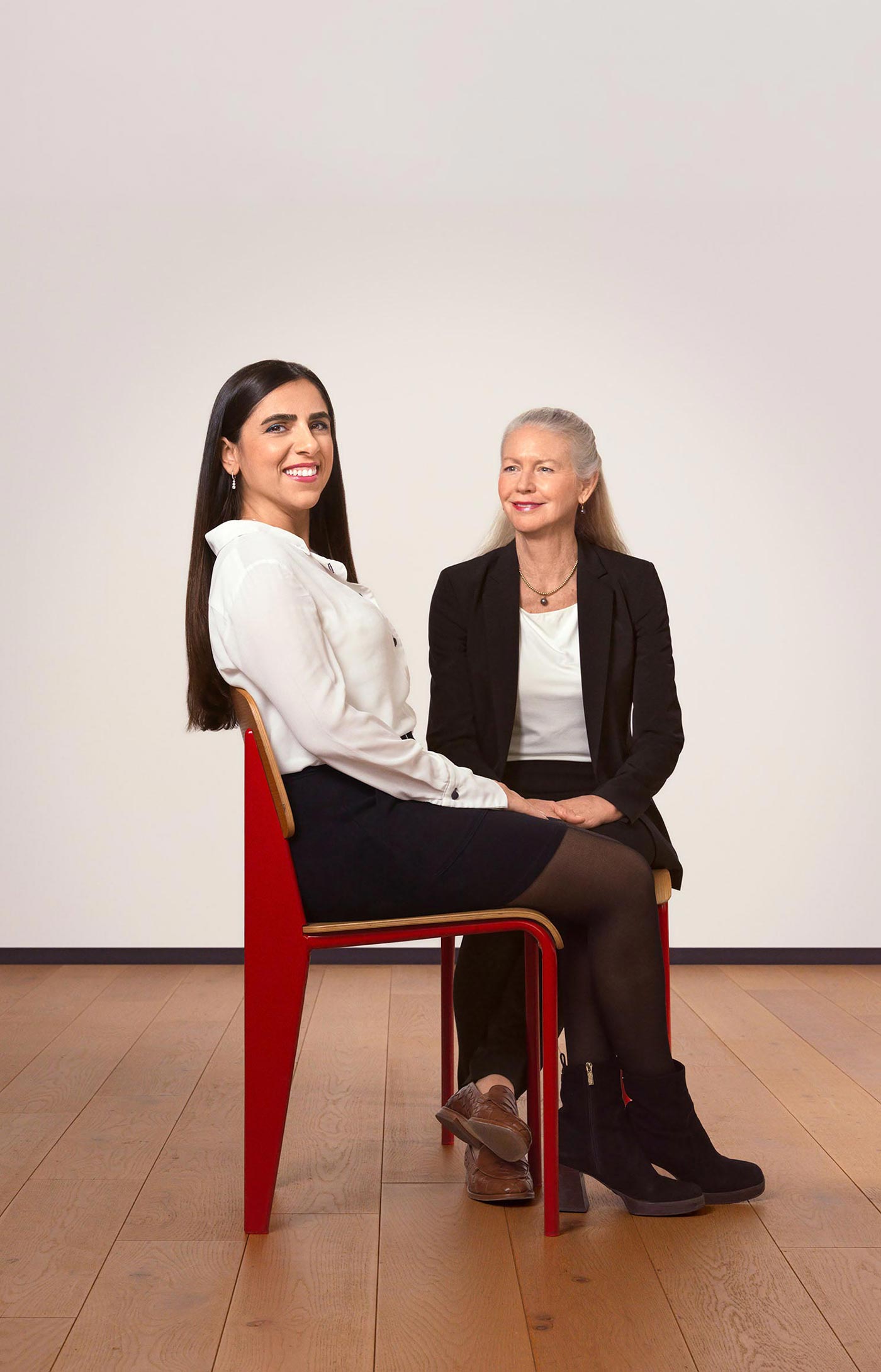
When Arzu Has Silemek, PhD, met neuroimaging expert Pascal Sati, PhD, at a neurology workgroup in Paris, they exchanged ideas about MRI and neurodegenerative disease and then returned to their separate lives.
Four years later, Has Silemek picked up her life in Hamburg, Germany, and moved to Los Angeles to pursue a postdoctoral fellowship at Cedars-Sinai. There, Sati connected her with C. Noel Bairey Merz, MD, the Irwin and Sheila Allen Chair in Women’s Heart Research and director of the Barbra Streisand Women’s Heart Center in the Smidt Heart Institute at Cedars-Sinai.
Trained in neuroimaging and skilled in mapping structural and functional connectivity using advanced MRI, Has Silemek arrived with appointments at both the Sati Laboratory and the Gao Laboratory, under the direction of Wei Gao, PhD, co-associate director of the Cedars-Sinai Biomedical Imaging Research Institute.
Has Silemek’s work was motivated by a critical question: Why do some brains adapt to vascular injury while others quietly decline? Through Bairey Merz’s mentorship, she found a clinical population where that question had immediate relevance.
“Cardiovascular disease is a two-hit hypothesis,” said Bairey Merz. “What happens in the heart and what happens in the brain are deeply connected.”
An expert in women’s heart health, Bairey Merz’s work focuses on coronary microvascular dysfunction. This underrecognized condition evades standard testing but carries significant cardiovascular risk—one clinicians couldn’t fully appreciate until they had the tools to see it.
“The arteries aren’t just in your heart,” said Bairey Merz. “They’re everywhere, including the brain.” That’s where Has Silemek’s expertise in neuroimaging became an essential asset for Bairey Merz’s work.
Medicine is still an apprentice system.
Their collaboration moved quickly from pilot data to new grant submissions and co-authored manuscripts that explore the link between microvascular disease and cognitive decline. At the same time, Has Silemek’s career advanced from postdoctoral fellow to project scientist, with a defined research identity and a team of world-class mentors.
“Dr. Bairey Merz’s mentorship is more than guidance,” said Has Silemek. “Watching her lead—how she connects with people, advances science and advocates for women’s health—completely changed how I see my own role as an investigator.”
Has Silemek now coordinates the brain-imaging component of Bairey Merz’s National Institutes of Health-funded MAE-WEST Heart, Brain and Frailty SCORE (U54) project, integrating advanced MRI, blood biomarkers and cognitive testing to detect silent vascular injury in women years before symptoms emerge. As part of that project, she works alongside cardiologists, neurologists, imaging experts and clinicians.
“Medicine is still an apprentice system,” said Bairey Merz. “You don’t learn from reading books. You learn by working with someone who is a step ahead of you—seeing how they think, how they approach problems, how they care for patients. Then you take that framework and push it forward.”
Cedars-Sinai Health Sciences University’s structure—an intimate academic enterprise embedded within a major medical center—creates an environment where the doors are open between departments, between scientists and clinicians, and between research questions and patient care.
“That proximity matters,” said Bairey Merz. “You can’t lose sight of the patient here. They’re in your orbit every day.”