The Best Stretches to Do Before and After Exercise
Date
May 18, 2026
Date
May 18, 2026
Medical providers featured in this article

In Brief
Don’t just jump right into exercise. Prepare the right way by warming up your muscles before making them work hard, and finish by stretching them when you’re done.
The U.S. Department of Health and Human Services recommends adults do at least 150-300 minutes of moderate aerobic activity or 75-150 minutes of vigorous aerobic activity and at least two sessions of strength training each week.
Studies show that for the lower limbs, in particular, warming up with dynamic stretches for just a few minutes improves muscle performance and reduces injury.
Dynamic stretches are movements that both stretch the muscles you’re going to use and warm them up before more explosive effort.
“They help get the blood flow going and loosen things up so your joints can move through their full range of motion,” said Cedars-Sinai sports medicine doctor Clarinda Hougen, MD. “They set up the mind-body connection, as well, and increase your awareness of where your body is in space, which also can help with athletic performance and injury prevention.”
{{providers}}
Static stretches—the ones you hold without moving—have been shown in studies to reduce the explosive power of your muscles if used on their own before your activity. But using them after your activity, when your muscles are warm and pliable, can improve your overall flexibility, reduce stiffness and prevent or reduce back pain.
So, modern-day coaches and physical therapists prefer to use dynamic stretches before a workout and static stretches after. Below, we list some of the most effective dynamic and static stretches. Age and fitness can play a role here, so we’ve included more and less strenuous examples, where appropriate.
You should feel a stretch, but don’t push past discomfort into a sharp pain
Some precautions before you start moving:
Only stretch to the point at which the muscle resists.
“You should feel a stretch, but don’t push past discomfort into a sharp pain,” said Cedars-Sinai physical therapist Barry Shafer. “If a stretch is causing pain, back off and maybe try a different approach.”
This is particularly important as we age and our tissues become a little less elastic and our joints may become arthritic.
“I don’t recommend that patients with arthritis stretch the affected joints,” said Hougen. “That puts more strain on the joint capsule and can exacerbate their pain and inflammatory symptoms.”
Don’t stretch an injured muscle or joint without first consulting a doctor or physical therapist. If you’re injured or pain is affecting your ability to stay active, reach out to Cedars-Sinai’s sports medicine experts. In addition to working with active people of all levels and ages, we are the medical provider to professional teams across L.A., a FIFA Medical Centre of Excellence and an Official Provider of Team USA.
{{cta-block}}
Some Great Dynamic Stretches to Warm Up Your Muscles Before Harder Exercise
Do each of these dynamic stretches for 20-30 seconds—longer if it feels easy—and repeat each one at least once before moving on to the next stretch. Pick the ones that feel relevant to the muscle groups you’re about to use. A total warm-up routine should last at least five minutes.
Standing Knee to Chest (Hip Mobility, Glutes)
Take a step and pull one knee into your chest. Repeat, alternating legs. This stretch also works balance and the muscles that support it.
Open/Close the Gate (Hip Mobility)
From standing, lift a knee straight forward to 90 degrees and rotate it out and back down to open the gate. Repeat, alternating legs. Then lift a knee to the side and rotate it toward the middle to close the gate. Repeat, alternating legs.
Hamstring Scoops (Hamstrings and Calves, With Trunk Flexion)
From standing, reach one leg forward with the knee straight, rest the heel on the ground and flex your foot (pull your toes back toward you). With a straight back, hinge at the hips reaching your arms down and “scooping” the ground on either side of your flexed foot. Keep the toes up to increase the stretch in the back of the leg. Step the other leg forward and repeat. Keep stepping.
Butt Kicks (Quads, Hamstrings)
From a standing position, run in place or move slowly forward exaggerating the back kick of each step such that your heels are kicking your butt.
Standing Hip Flexor With Open-Book Stretch (Hip Flexors, Spinal Rotation)
Take a long step forward. Bend your front leg while keeping your back leg straight to feel a stretch in the front of the hip. Rotate your torso with one or both arms toward the front leg and “open the book” to feel a stretch in your spine. Step the other leg forward and repeat. Keep stepping.
Lunge or Lunge With a Twist (Hip Flexors, Spinal Rotation)
This stretch increases the intensity of the stretch in the hip flexor. Take a long step forward dipping the back knee down almost to the ground. The front knee should be bent at about 90 degrees and pointing straight forward. Keep your upper body tall, don’t bend forward. Either step forward or step back to standing and repeat with the opposite leg.
You can add an upper body twist at the bottom of the lunge. Rotate your whole torso—shoulders, neck and head—over the forward leg.
Lateral Lunge (Hip Mobility, Adductors)
Take a wide step to the left side. Shift your weight over and bend your left knee to feel a stretch in the hip and inner thigh. Switch your weight to the opposite side and bend your right knee. Switch weight back and forth or add a rotation, and step to repeat.
Add a side stretch by reaching your opposite arm up and leaning over the bent knee.
Walk-Outs, or Inchworms (Arms, Shoulders, Core, Hamstrings)
This dynamic stretch helps prepare your upper body and arms for strength training. From standing, bend at the waist and place your hands on the ground, bending your knees as much as you need to get there. With your core engaged, walk your hands forward into plank position and then walk them back until you’re upright again. Take your time and make sure your core is engaged. Repeat.
Arm Swings and Arm Circles (Shoulders, Chest, Upper Back)
Stand comfortably with your feet a little wider than hip-distance apart, knees a little bent and arms out wide. Swing both arms across your chest and back out wide in a continuous motion. Switch the arm crossing above and the one crossing below with each swing.
You can also swing your arms front to back, either in unison or in a running motion.
For arm circles, start with your arms out wide. Draw circles with your hands. Do a set going forward and then reverse. Play with the speed and size of the circles.
Great Static Stretches for Cooling Down After Exercise
Hold each of these stretches for at least 30 seconds. Try to stay relaxed, breathe slowly and ease into the stretch. If you find yourself tensing up, pull back a little, take a deep breath or two, relax, and settle into the stretch again.
Supine Knees to Chest (Lower Back)
Lying on your back, wrap your arms around your knees and pull them in toward your chest. If you can’t quite reach around your knees, just grab both legs behind the knees. This lengthens the muscles in the lower back and should feel good.
01.jpg)
Hamstring Stretch (Hamstrings, Adductors)
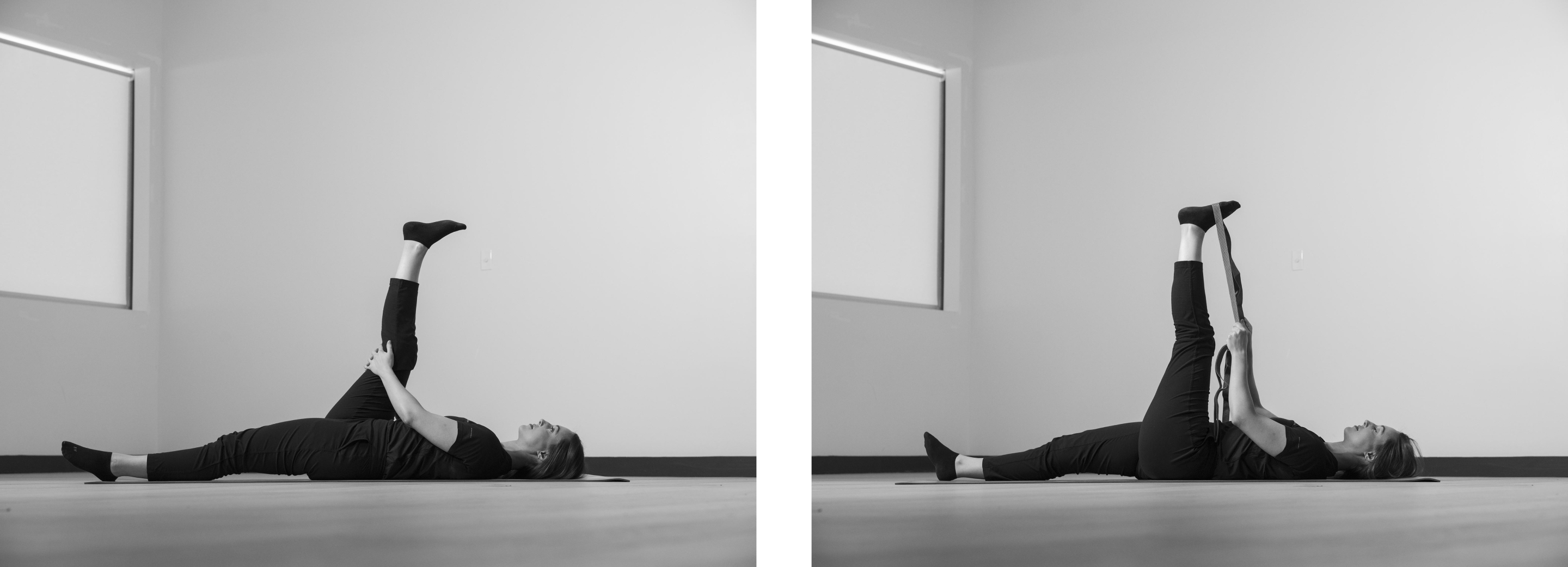
Supine: Lying on your back with your legs out straight, pull one knee toward your body. Holding behind the knee, straighten the leg until you feel a stretch in your hamstring muscle. Flex your foot toward you as you feel the stretch. If you have a strap, wrap it under your forefoot, and use it to hold your leg in place and pull the front of the foot down. Hold, release and repeat. Switch legs.
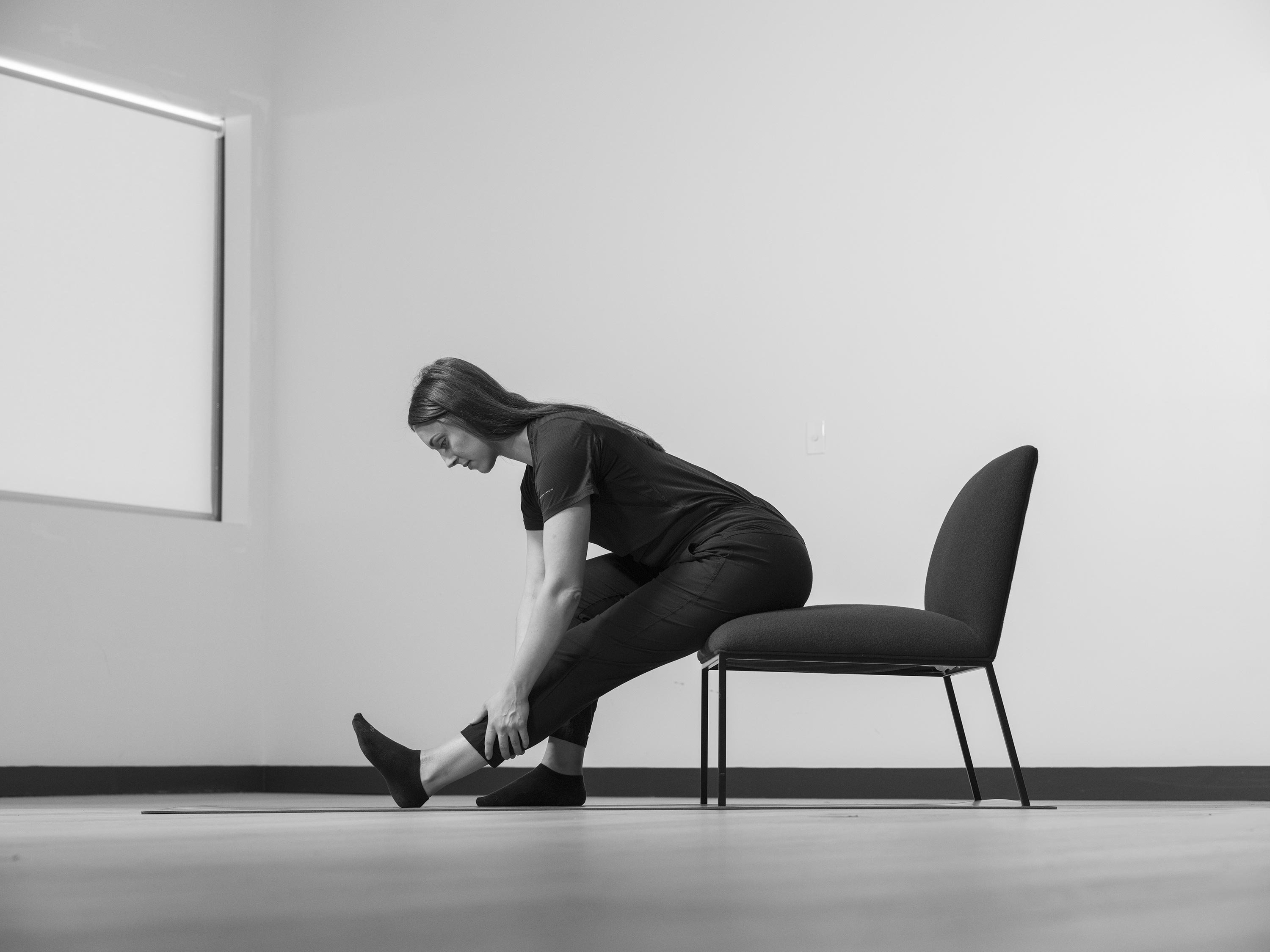
Seated variation: Sit close to the edge of a chair. With one foot flat on the floor, extend the other out straight with the heel on the ground. Flex the foot toward you and, with a straight back, lean forward over the straight leg until you feel a stretch in the hamstring. Hold there and breathe. You can play with rotating the foot to the left and right to access different parts of the hamstring muscle.
Torso Twist (Spinal Rotation)
Seated on the ground with your legs straight out in front, cross your right foot over your left knee and place it flat on the floor. Rotate your torso toward and past the left knee to feel a comfortable stretch in your spine. Use your right elbow as leverage against the left knee to increase your rotation. Switch legs and repeat.

Figure Four or Reverse Pigeon Pose (Glutes)
Lie on your back with knees bent and feet flat on the floor. Place your right ankle on your left knee. Hold behind the left knee and pull the legs toward your chest until you feel the stretch in your glutes. Flex your right foot toward the shin and hold. Switch legs and repeat.
If holding behind the knee is difficult, you can hold the shin and ankle of the crossed leg.

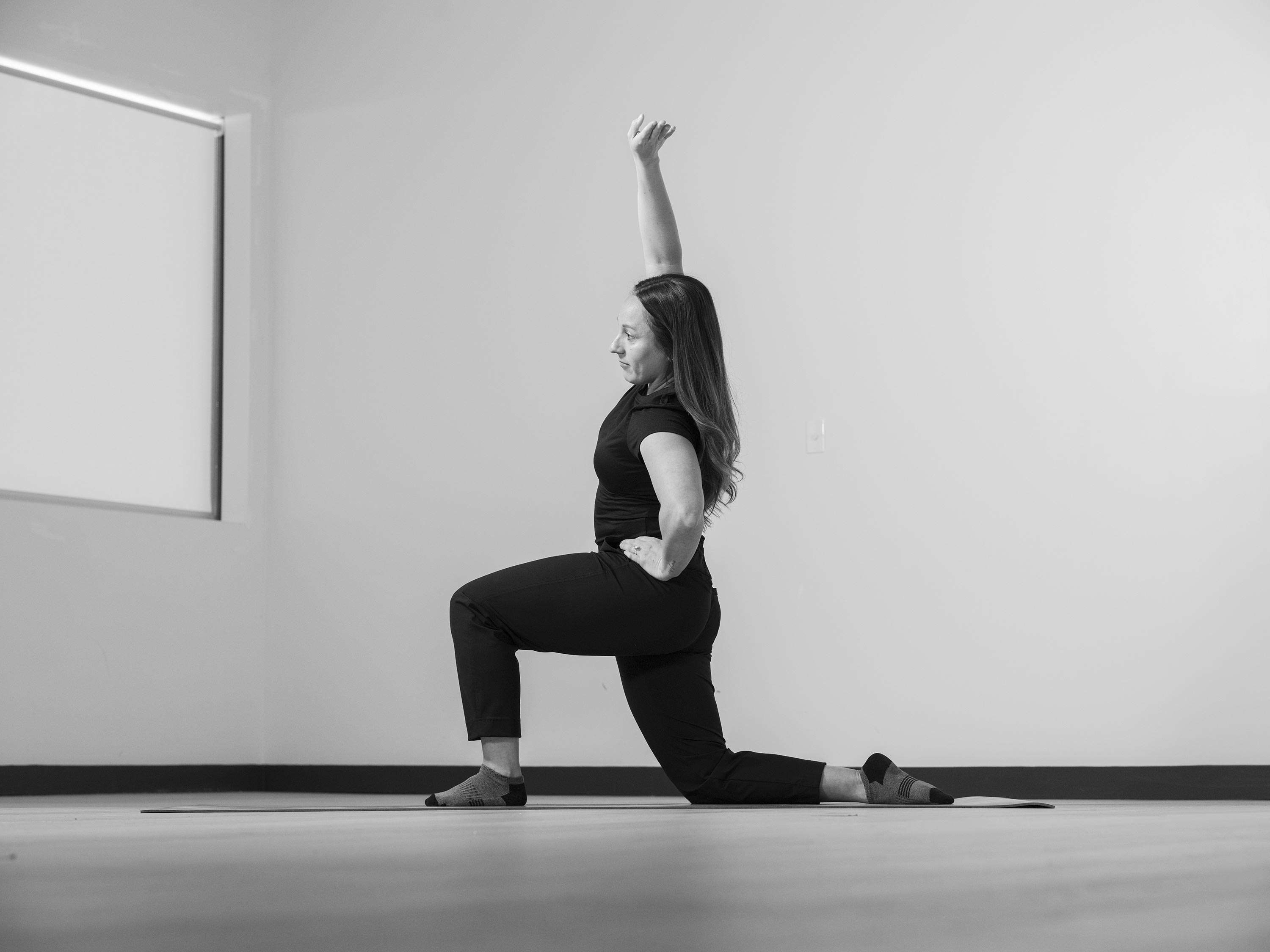
Half-Kneel Hip Flexor Stretch With Overhead Reach (Hip Flexors, Trunk Lateral Flexion, Shoulder Flexion)
Kneeling on your right knee with your left foot out in front and flat on the floor, tuck your hips under, hold your upper body tall and gently push your hips forward to feel a stretch in the front of your hip (the hip flexor). Keep the ankle of your left foot under or in front of your left knee. To increase the stretch, reach your right arm overhead and lean to the left side. Switch sides and repeat.
Calf Stretch
Calves can cause problems as we get older by tightening up and/or cramping, particularly for runners. Stretching and strengthening them is an important way to help to keep these issues at bay.
Variation 1: Using a wall or other obstacle, place one heel as close to the wall as possible. To increase the stretch, push your body closer to the wall and raise yourself up. Hold. Switch legs and repeat.

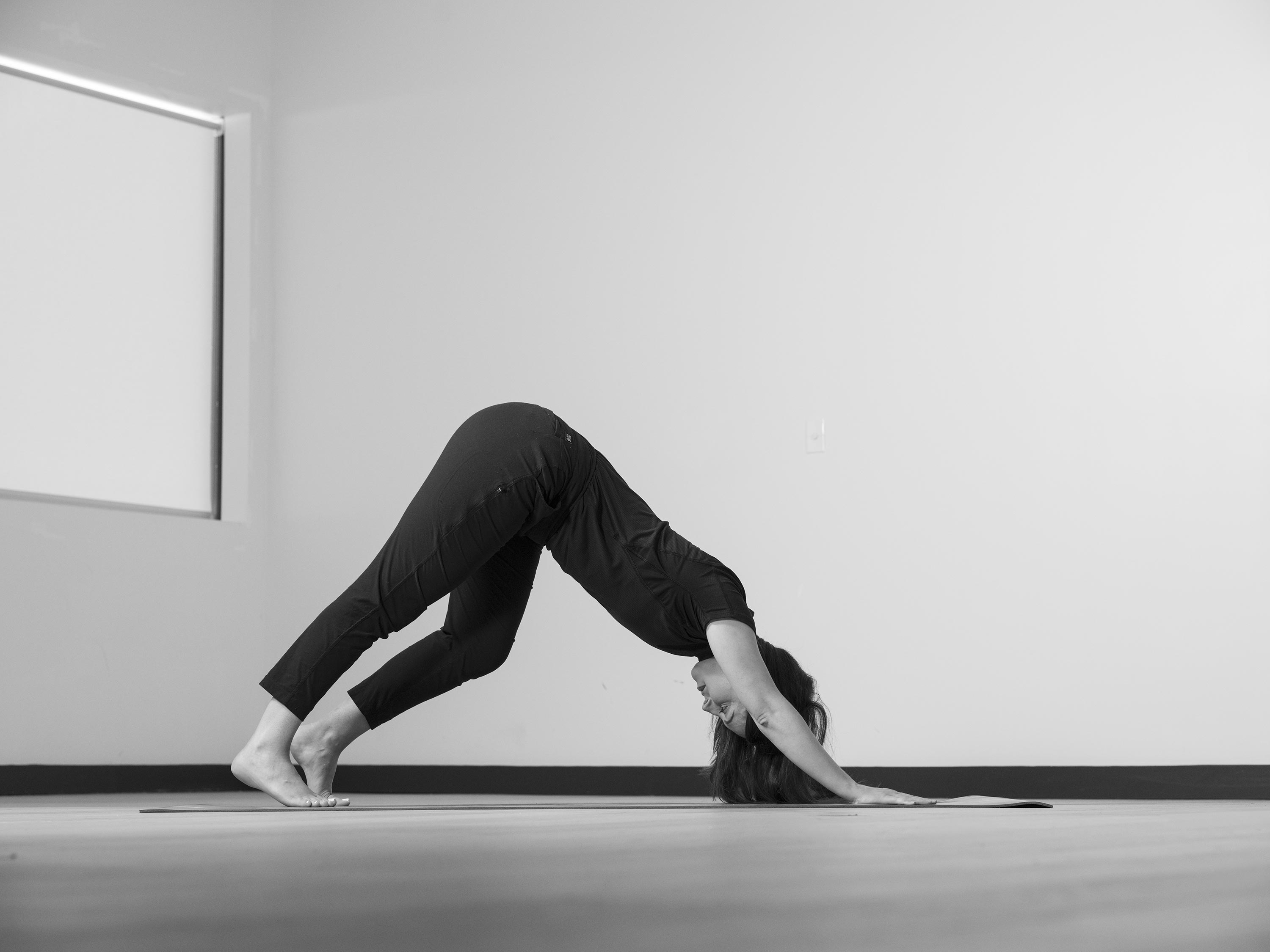
Variation 2: Get into yoga’s famous Downward-Facing Dog position: Start in plank position (hands on the ground under the shoulders, straight arms and straight back), push back with your hands and lift your rear end up high until you’re in an inverted V shape. Bend your right knee, straighten your left leg and push your left heel down toward the ground to feel a stretch in the calf. You can also bend the left knee to change the area of the calf that feels the stretch. Try pedaling back and forth, straightening one leg and then the other before you hold the stretch in one leg. Switch and repeat.
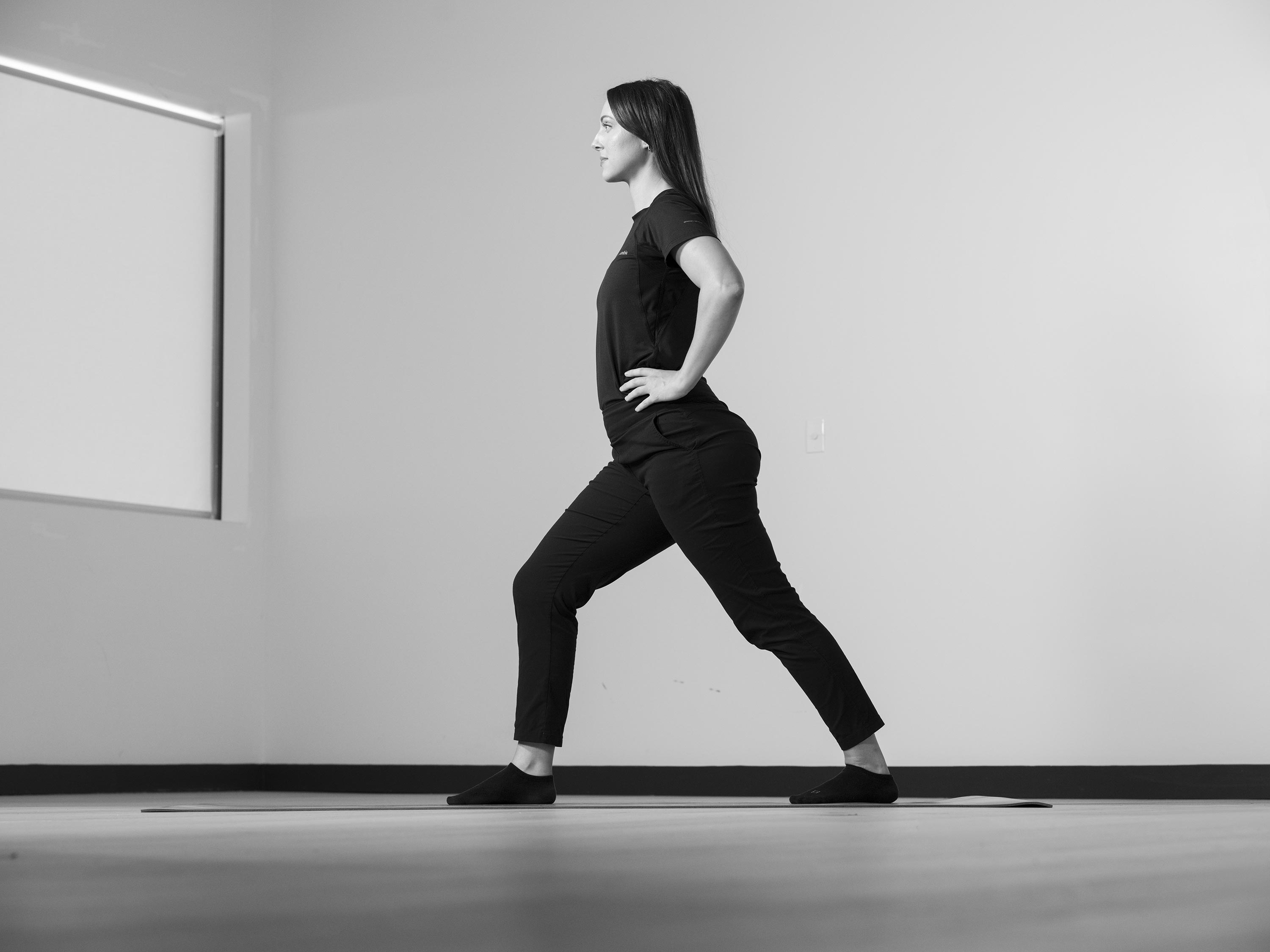
Variation 3: From a standing position, step the left foot forward. Keep the right leg straight and the right heel on the floor. Bend the left knee to increase the stretch.
Thread the Needle (Shoulders, Upper Back, Neck and Spine)
Start on hands and knees, with your wrists under your shoulders and your knees under your hips. Reach your right arm up toward the ceiling, opening your chest. Then slide it under your left arm palm up and lower your right shoulder and cheek to the floor. Breathe slowly and easily into the stretch and use your left hand to increase the twist. Come back to hands and knees and repeat on the other side.

Open-Book and Hip Twist (Trunk, Lower Back, Hips, Glutes)
Lie on your back with knees bent and feet flat on the floor. Cross your right leg over your left so the knees are stacked. Keeping your shoulders flat on the ground, let both legs drop to the left side with the knees still locked together. Hold your knees down with your left hand, reach in the opposite direction with your right arm and look to the right. Breathe into the twist. Switch sides when ready.
Neck Stretch
Stand tall. Reach your left hand behind you towards your right buttock. Tilt your head to the right side and relax your left shoulder to feel a stretch connecting the shoulder to the muscles in the side of your neck. Apply gentle pressure with your right hand to increase the stretch. Hold as you take deep, easy breaths, and switch sides when ready.

Stretches demonstrated by Cedars-Sinai physical therapists Michelle Nava and Alex Dobesh.
Frequently Asked Questions
Should you stretch before or after a workout?
Both can be helpful, but they serve different purposes. Dynamic stretching is generally recommended before exercise to warm up muscles and prepare the body for movement. Static stretching is often better after a workout, when muscles are warm and more relaxed.
What is the difference between dynamic and static stretching?
Dynamic stretches use active movements that increase range of motion while warming up muscles and preparing them for more strenuous exercise. Static stretches hold a position for a longer time to improve flexibility.
What are the best stretches before exercise?
The best stretches before exercise are dynamic stretches that focus on the muscle groups you’re going to stress when you play your sport or do your workout.
What are the best stretches after a workout?
The best stretches after a workout are static stretches that focus on relaxing and lengthening the muscles you’ve used in your exercise.
Is dynamic stretching better before exercise?
Yes, dynamic stretching is better before exercise because it increases blood flow to prepare your muscles for more strenuous activity and loosens your joints so they can move through their full range of motion. Dynamic stretches also help set up the mind-body connection and increase your awareness of where your body is in space.
Can stretching help with recovery after exercise?
Yes, static stretching after exercise can help with recovery by reducing muscle stiffness, improving range of motion and boosting blood flow. While it has not been proven to prevent injury or soreness, it can help boost long-term flexibility and cool the body down after a workout.