Unlocking Parkinson’s Disease Before It Begins
Date
January 2, 2026
Credits

Date
January 2, 2026
Credits
Medical providers featured in this article

In Brief
Parkinson’s disease has long resisted early detection. By the time motor symptoms appear, more than half of the brain’s dopamine-producing neurons are already gone. But a convergence of data, including sleep studies, digital monitoring and molecular assays, may give neurologists an opportunity to thwart the disease long before symptoms appear.
“When I started my career, neurologists were known for making brilliant diagnoses but having little to offer afterward,” said Michele Tagliati, MD, director of the Division of Movement Disorders and the Caron and Steven D. Broidy Chair in Movement Disorders at Cedars-Sinai. “Now, we’re catching these processes before they manifest clinically, when intervention might prevent or slow disease progression and preserve quality of life.”
Unveiling Parkinson’s Hidden Biology
Parkinson’s disease affects nearly 1 million people in the United States alone. For more than a century, doctors diagnosed the disease based on clinical symptoms—tremor, rigidity, slow movements and gait instability—but without a full understanding of the underlying biology.
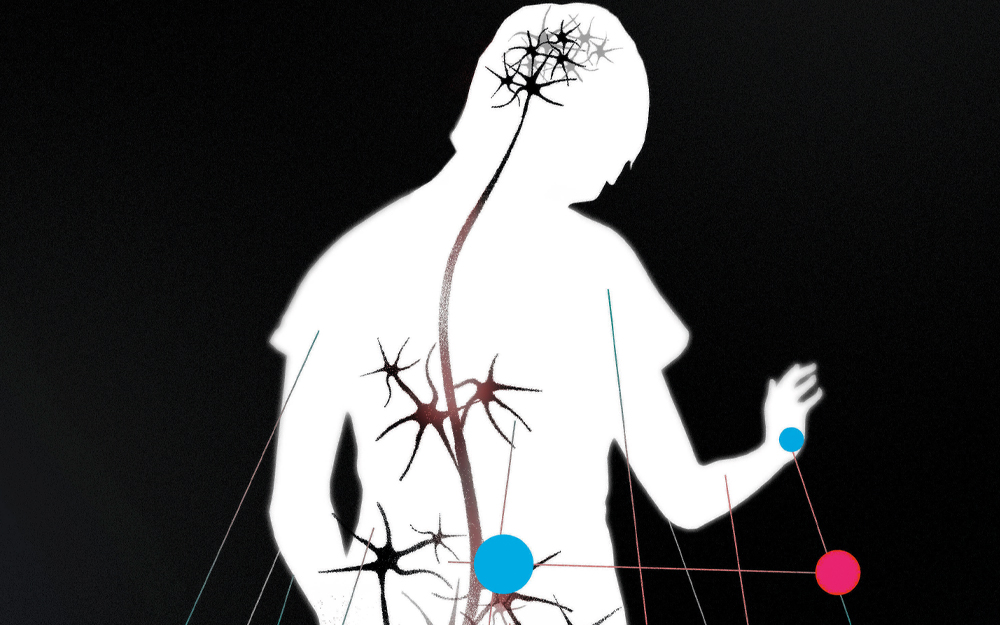
Today, researchers know that the microscopic culprit associated with disabling motor symptoms is alpha-synuclein, a naturally occurring protein that, in Parkinson’s and related disorders, misfolds and forms sticky clumps known as Lewy bodies.
“Whether these clumps cause neurons to die or are simply markers for degeneration is still up for debate,” Tagliati says. “But diagnostically, they’re extremely important.”
Alpha-synuclein is relevant to a cluster of neurodegenerative disorders widely referred to as “synucleinopathies,” which include Lewy body dementia and multiple system atrophy. Until recently, the only ways to detect aggregates of the protein were through analysis of postmortem brain tissue or invasive tests such as a spinal tap.
Now, scientists can use a simple skin biopsy to uncover abnormal accumulation of alpha-synuclein in the nerves of the skin years, or even decades, before motor symptoms appear. “The skin biopsy marks a tremendous advance,” Tagliati said. “It’s minimally invasive yet highly predictive.”
Paradoxically, my goal is to take Parkinson’s disease out of the hands of neurologists. To prevent the disease from taking root in the first place: That would be the holy grail for neurology.
An Open Window for Prevention
Every night, while most people lie still in deep REM sleep, a small subset of individuals thrash, speak or even act out their dreams—a condition known as REM sleep behavior disorder (RBD). For decades, neurologists dismissed the phenomenon as a curious sleep disturbance.
Then, in the mid-1980s, doctors began to notice that many of these patients went on to develop Parkinson’s disease, sometimes years after first exhibiting RBD. “Nearly 100% of people over age 50 who develop RBD will eventually develop Parkinson’s disease,” said Tagliati. “That makes RBD a reliable biomarker of neurodegeneration—one that clinicians can now confirm with a skin biopsy.”
Tagliati’s research suggests that roughly three-fourths of RBD patients with no neurological symptoms already test positive for alpha-synuclein in their skin. “People who appear neurologically healthy may already be harboring the biological seeds of Parkinson’s,” he said.
This early identification creates an unprecedented opportunity to intervene before neurodegeneration takes hold. Cedars-Sinai—along with Yale School of Medicine; the University of California, San Francisco; and the Mayo Clinic—is planning a multicenter clinical trial to test whether potent anti-inflammatory drugs known as TNF-alpha inhibitors can stall or halt disease progression among patients with a positive skin biopsy.
These drugs already are producing remarkable effects in diseases such as psoriasis and rheumatoid arthritis, and studies show that people who take anti-inflammatory medications have a lower incidence of Parkinson’s disease.
“We’re dramatically accelerating the pathway from concept to patient testing by using a drug that is already approved for immune disorders,” says Tagliati. “If it works as we predict, we may be able to treat abnormal inflammation early and stop the neurodegenerative cascade before it produces clinical symptoms.”

From Clinic Visits to Continuous Monitoring
Building on these biological insights, Cedars-Sinai investigators are exploring technology-driven ways to monitor subtle changes in motor function long before patients become symptomatic.
Through a collaboration with a company in the United Kingdom, the team is piloting the Kneu Health Accelerator app, which collects continuous patient-generated data via smartphones and wearable sensors.
“The app uses AI analytics to identify trends, prevent complications and potentially detect early signs of decline,” Tagliati said.
In regions of England where the technology was widely deployed, emergency visits among Parkinson’s patients decreased by 2% even as the national rate increased by 8%. At Cedars-Sinai, nearly 100 patients are already enrolled, generating more than 20,000 data points.
“This level of real-time feedback is unprecedented in Parkinson’s care,” Tagliati says. “We typically see patients every three to six months. Now we can monitor their data continuously and check on them monthly to potentially intervene before problems escalate.”
Charting a New Course in Care
The implications of this work extend beyond Parkinson’s to other neurodegenerative disorders. Doctors are now better equipped to recognize symptoms like loss of smell, constipation and sleep disturbance as early warning signs that the brain may be under dangerous chronic stress.
“These signs should be taken seriously, especially after age 50,” Tagliati says.
This change in perspective is integrated into Cedars-Sinai’s multidisciplinary model of care, which brings together neurologists, sleep specialists and primary care physicians to identify and monitor individuals at risk, often years before symptoms interfere with daily life. The result is a fundamental shift in neurology: from diagnosing disease after it emerges to proactively detecting and intervening while the nervous system is still intact.
By combining biological, behavioral and technological data, Cedars-Sinai researchers are assembling a more complete picture of disease progression and identifying opportunities for earlier, targeted therapy. The convergence of these insights—molecular biomarkers, sleep patterns and continuous digital monitoring—points toward a future in which neurodegeneration can be tracked, quantified and perhaps prevented.
“Paradoxically, my goal is to take Parkinson’s disease out of the hands of neurologists,” Tagliati says. “To prevent the disease from taking root in the first place: That would be the holy grail for neurology.”