Surgical Simulator Stems Catastrophic Blood Loss
Date
August 3, 2026
Credits
Date
August 3, 2026
Credits
Medical providers featured in this article
In Brief
- Cedars-Sinai urologist Michael Ahdoot, MD, and his team designed a surgical simulation that re-creates blood vessels in the abdomen and can demonstrate vascular injury, which is responsible for 74% to 82% of laparoscopy deaths.
- The realistic model is being used to train medical residents and surgeons across multiple specialties on how to detect, manage and curb severe bleeding.
A novel simulator developed at Cedars-Sinai is bolstering physicians’ ability to contain severe surgical-associated bleeding, a rare but lethal risk inherent in many abdominal procedures.
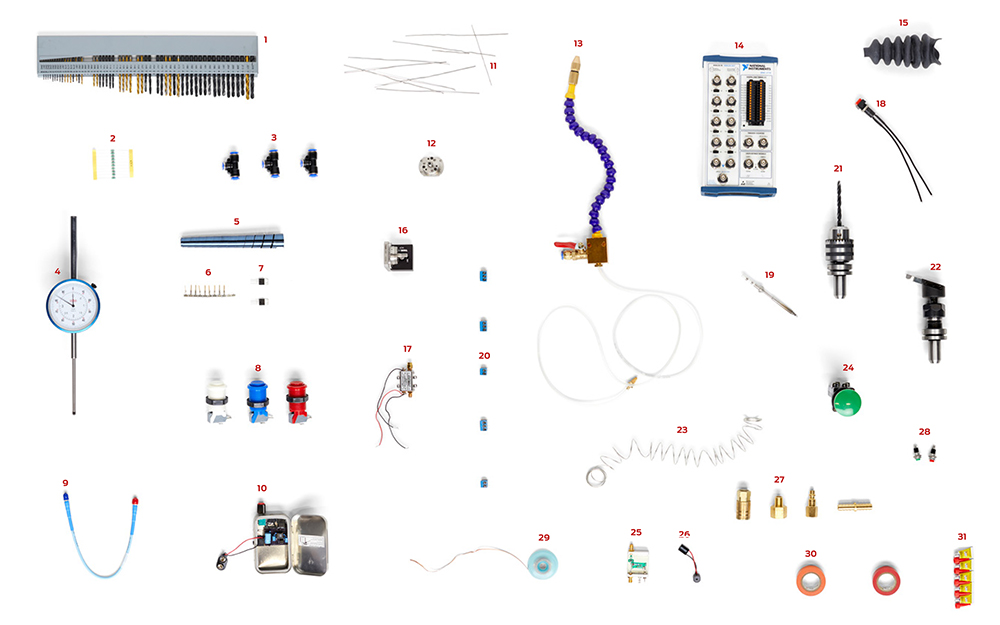
Built by urologic surgeon Michael Ahdoot, MD, and his team, the first-of-its-kind silicone model re-creates a functional circulatory system inside an artificial abdomen. The tool mimics a wide range of artery injuries, as well as the resulting blood loss. Ahdoot aims to prepare students and surgeons to navigate the alarming complication long before they have to manage an event on the operating table.
“Almost ubiquitously, trainees have a moment of panic when they encounter an extreme bleed for the first time, and they freeze. Those seconds can make the difference in successful control of life-threatening arterial bleeding,” said Ahdoot, director of Cedars-Sinai’s Minimally Invasive Urology Institute. “We designed this simulator to impart surgical skills necessary to quickly handle hemorrhage safely, repeatedly and with confidence.”
{{providers}}
The latest minimally invasive surgical methods are increasingly complex. Approximately 90% of urology procedures are now robot-assisted and demand more advanced techniques to manage bleeding than those used in traditional open surgery. Surgical residents and other trainees frequently report a lack of experience and comfort with treating severe hemorrhage, particularly during robot-assisted laparoscopic surgery. Traditional simulators are largely oriented toward basic surgical skills.
We designed this simulator to impart the surgical skills to quickly handle hemorrhage and be able to do it safely, repeatedly and with confidence.
Ahdoot’s innovative approach facilitates training on highly specialized procedures that skirt or enter large blood vessels, including the aorta, vena cava, and iliac arteries and veins. This could ultimately expand surgeons’ understanding of how to detect vascular complications and prevent devastating blood loss related to invasive, intricate surgeries.
A Swelling Movement to Curb Catastrophic Bleeding
Cedars-Sinai creators designed the artificial blood vessel system to be simple to replicate or share, so it can be used in broader teachings. Extremely realistic and much more affordable than the few existing trauma simulators, this strategy is gaining traction.
Ahdoot actively trains medical residents and surgeons across multiple specialties, including urology and gynecology. He will soon expand the training to include thoracic and vascular surgeons.
Ongoing studies into the strategy examine its clinical value. When surgeons are equipped to control heavy bleeding, patients have a lower risk of requiring multiple transfusions or extended hospitalization. Instead, many can go home the same day.
{{cta-block}}