
AI, Ethics and Spiritual Perspectives on Modern Medicine
Date
June 2, 2026
Date
June 2, 2026
Medical providers featured in this article
In Brief
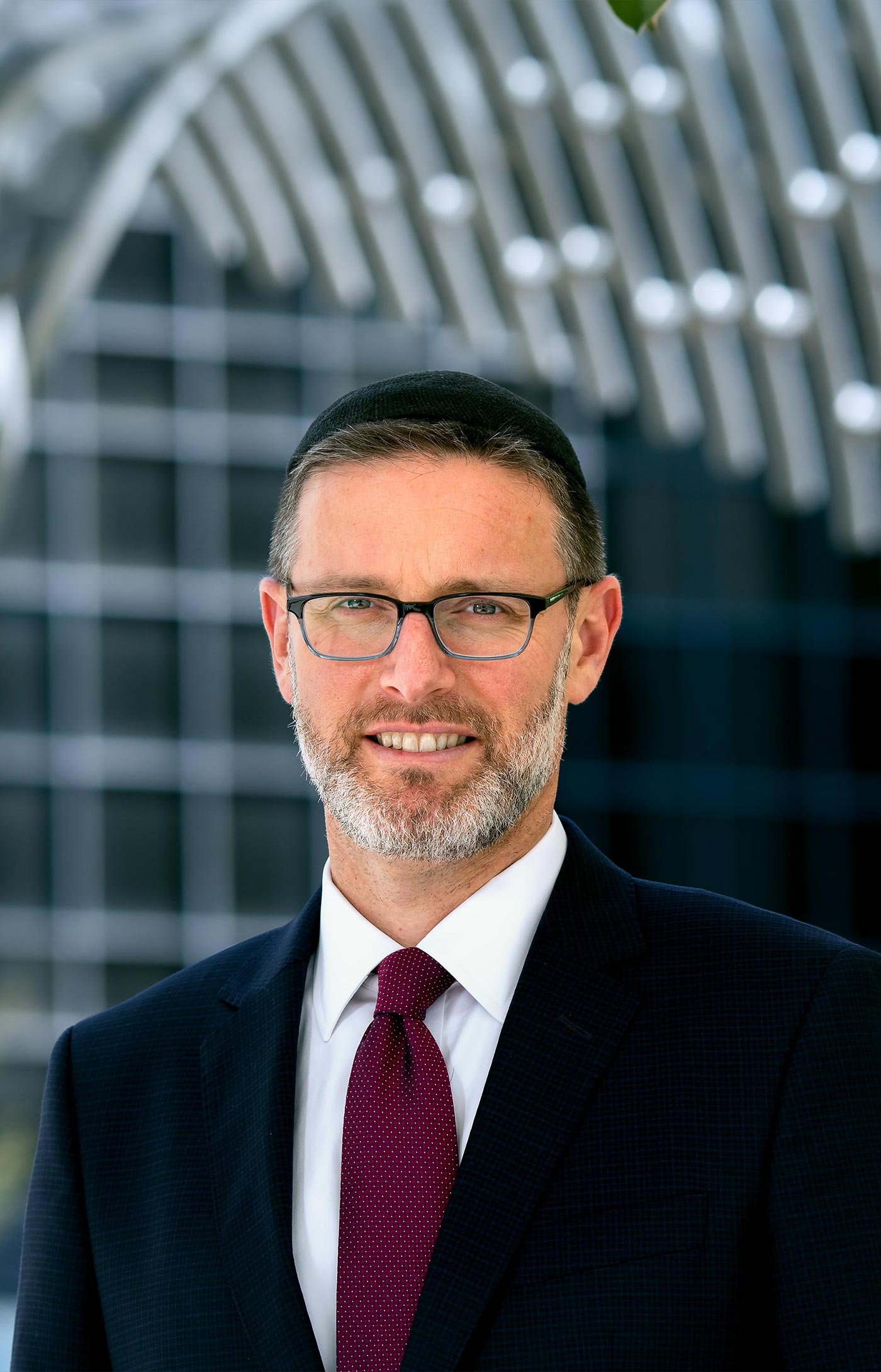
- Rabbi Dr. Jason Weiner, BCC, writes about medicine from a religious perspective to help clinicians make values-based decisions, especially related to AI and end-of-life care.
How does Jewish thought keep up with medical and technological developments?
The scholarly work of Rabbi Dr. Jason Weiner, BCC, aims to interpret rabbinic perspectives for insights into modern scenarios.
“Part of my job is to guide clinicians so they can practice medicine in accordance with their beliefs and values,” said Weiner, director of the Spiritual Care Department at Cedars-Sinai. “Writing forces me to organize my thoughts, so I can be a resource.”
Here, Weiner discusses novel aspects of his recently published work.
Should clinicians use AI for medical decision-making?
AI makes predictions that could have a lot of value, which doctors may consider when they treat patients. But without human oversight, there can be several pitfalls. For example, research has demonstrated that ChatGPT offers different treatment recommendations based on whether the prompt claims to come from a doctor versus an insurance adjuster.
As a rabbi, my main concern is ensuring we make values-based decisions, including respecting patients' values and ethics. If we can recognize when values are taking a role in decision-making, we can try to ensure they are values that we wish to follow.
Is the term goseis (the Hebrew word for the start of the dying process) still relevant to modern medicine?
Jewish law has specific restrictions about how we treat dying patients (goseis), recognizing that their lives are like a flickering flame. We don’t want to put out the candle, but we also we don’t want to unnecessarily prolong the dying process. Some rabbis have argued that there is no longer a category of goseis anymore because we have access to so many medical interventions. But chaplains and clinicians recognize clinical signs when a patient is dying, and therefore it is important to be aware of them.
What is the rabbinic perspective on artificial feeding in terminally ill patients?
Most Orthodox rabbis feel that nutrition and hydration are requirements for all patients, which often goes against standard medical practice. But one very prominent rabbi in New York believes it is acceptable to forgo artificial feeding at the very end of life. Some healthcare providers find the majority opinion about artificial nutrition and hydration frustrating, so it is important to know that at least one authority disagrees.